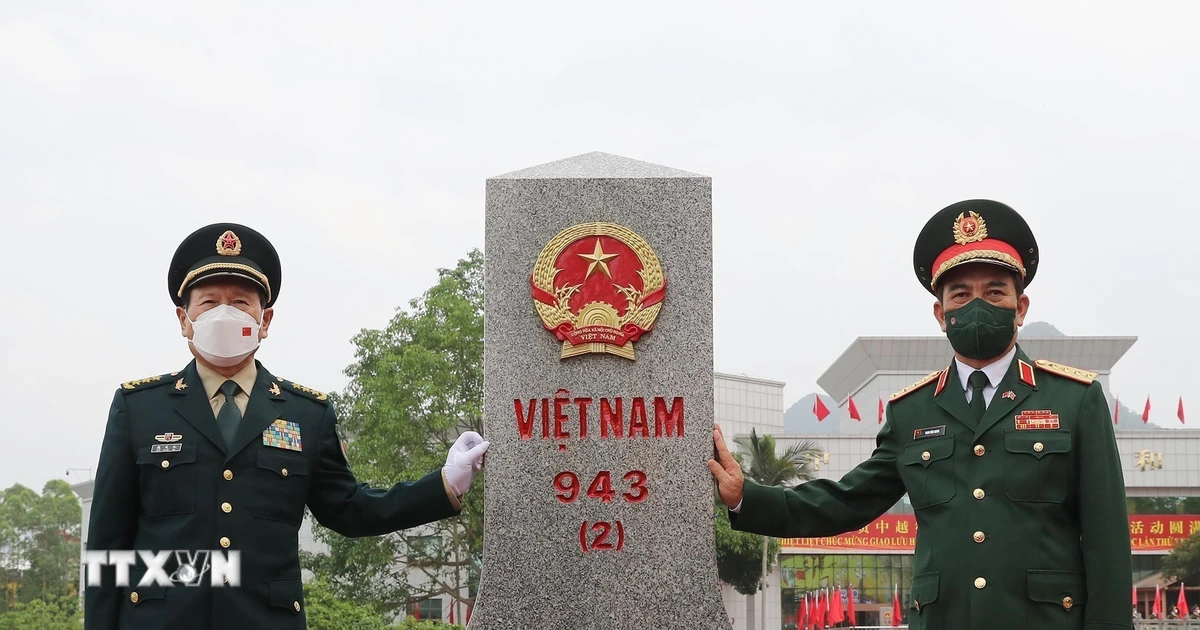
In a significant move toward stabilizing and enhancing regional security, Vietnam and China have reported a period of strengthened bilateral cooperation, characterized by a series of high-level diplomatic engagements and strategic military dialogues. On the afternoon of April 6, 2026, the Ministry of National Defense headquarters in Vietnam served as the venue for a pivotal meeting between senior officials aimed at consolidating these gains in Vietnam-China defense diplomacy.
Phan Van Giang, a member of the Politburo, Deputy Secretary of the Central Military Commission, and Minister of National Defense of Vietnam, received He Wei, the Chinese Ambassador Extraordinary and Plenipotentiary to Vietnam. The meeting, which also included the attendance of Jiang Ba, the Chinese Defense Attaché to Vietnam, focused on the trajectory of military relations and the practical implementation of strategic agreements between the two nations.
Minister Phan Van Giang emphasized that under the strategic guidance of high-level leaders from both countries and their respective parties, bilateral cooperation has evolved to become more profound, substantive, and effective. This diplomatic momentum is viewed as a cornerstone for maintaining regional stability and fostering mutual trust between the two neighboring states.
The Impact of the ‘3+3’ Strategic Dialogue
A critical milestone in the recent trajectory of Vietnam-China defense diplomacy occurred in March 2026, with the successful convening of the first ‘3+3’ Strategic Dialogue. This high-level forum brought together the Ministers of Foreign Affairs, Defense, and Public Security from both Vietnam and China, signaling a comprehensive approach to security and diplomatic coordination.
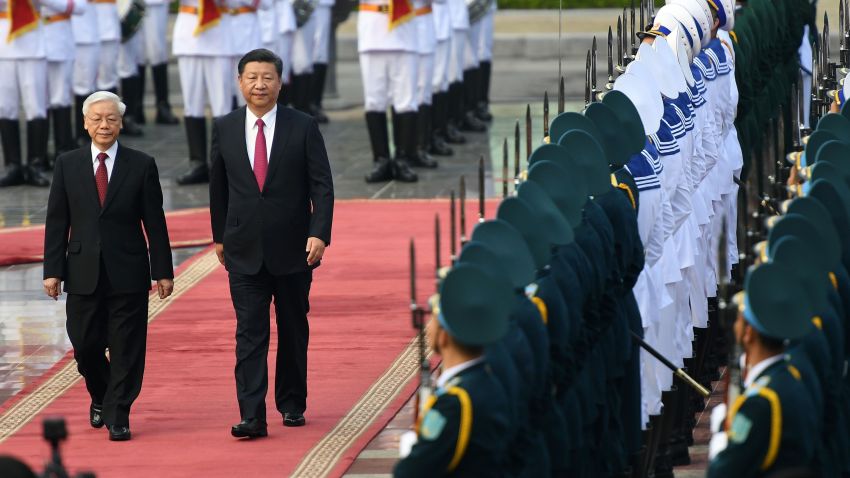
The ‘3+3’ framework is designed to synchronize efforts across multiple government sectors, ensuring that defense cooperation is not isolated but integrated with foreign policy and internal security objectives. By aligning these three key ministries, both nations aim to create a more cohesive strategy for managing border issues and enhancing regional cooperation.
Following the conclusion of the ‘3+3’ dialogue, the two nations immediately transitioned from strategic planning to practical application. This was evidenced by the hosting of the 10th Vietnam-China Border Defense Friendship Exchange. The event took place across two locations: Quang Ninh Province in Vietnam and the Guangxi Zhuang Autonomous Region in China.
The Border Defense Friendship Exchange is regarded as a vital mechanism for strengthening solidarity and friendship at the grassroots military level. By focusing on border security and mutual cooperation, the exchange contributes to a more stable frontier, which in turn supports broader economic and diplomatic goals. According to reports, these activities have been instrumental in elevating defense cooperation to a more practical and tangible level via Vietnam.vn.
Recognizing Key Diplomatic Contributions
During the reception, Minister Phan Van Giang took the opportunity to highlight the individual contributions that facilitate these state-level agreements. Specifically, the Minister praised the efforts of Colonel Cuong Ba for his dedicated service during his tenure in Vietnam.
Colonel Cuong Ba was recognized for acting as an effective bridge between the defense ministries of Vietnam and China. The Minister noted that the Colonel’s ability to collaborate closely with relevant Vietnamese agencies played a significant role in the overall success of defense diplomatic activities. This personal diplomacy is often the “connective tissue” that allows high-level strategic directives to be executed effectively on the ground.
Minister Phan Van Giang expressed confidence that Colonel Cuong Ba would continue to contribute significantly to the development of defense relations between the two countries in his new role, underscoring the importance of continuity and professional relationships in maintaining military stability.
Key Takeaways of Recent Defense Engagements
- High-Level Integration: The ‘3+3’ Strategic Dialogue successfully integrated Foreign Affairs, Defense, and Public Security ministries to streamline bilateral cooperation.
- Practical Application: The 10th Border Defense Friendship Exchange in Quang Ninh and Guangxi translated strategic dialogue into operational cooperation.
- Strategic Leadership: Current progress is attributed to the strategic guidance of the top leadership of both the parties and the governments of Vietnam and China.
- Personnel Diplomacy: The role of military attachés and specialists, such as Colonel Cuong Ba, remains critical in bridging the gap between the two defense establishments.
Strategic Implications for Regional Stability
The shift toward “substantive and effective” cooperation suggests a move away from purely symbolic gestures toward a more results-oriented relationship. For the global business community and economic analysts, this trend in Vietnam-China defense diplomacy is significant as it reduces the risk of border volatility, which can often disrupt trade and supply chains in Southeast Asia.
The emphasis on “practical levels” of cooperation indicates that both nations are prioritizing the management of their shared border and the synchronization of their security apparatuses. When defense relations are stable, it creates a more predictable environment for foreign direct investment and cross-border economic activity.
The focus on “solidarity and friendship” during the border exchanges serves as a diplomatic signal to the rest of the region that despite historical complexities, both nations are committed to a peaceful and cooperative security framework.
The next confirmed checkpoint for these relations will be the continued implementation of the agreements reached during the ‘3+3’ Strategic Dialogue and the ongoing coordination between the defense ministries. Official updates regarding the next cycle of border friendship exchanges are expected to be released through formal government channels.
We invite our readers to share their perspectives on how these diplomatic shifts might impact regional trade and security in the comments section below.