
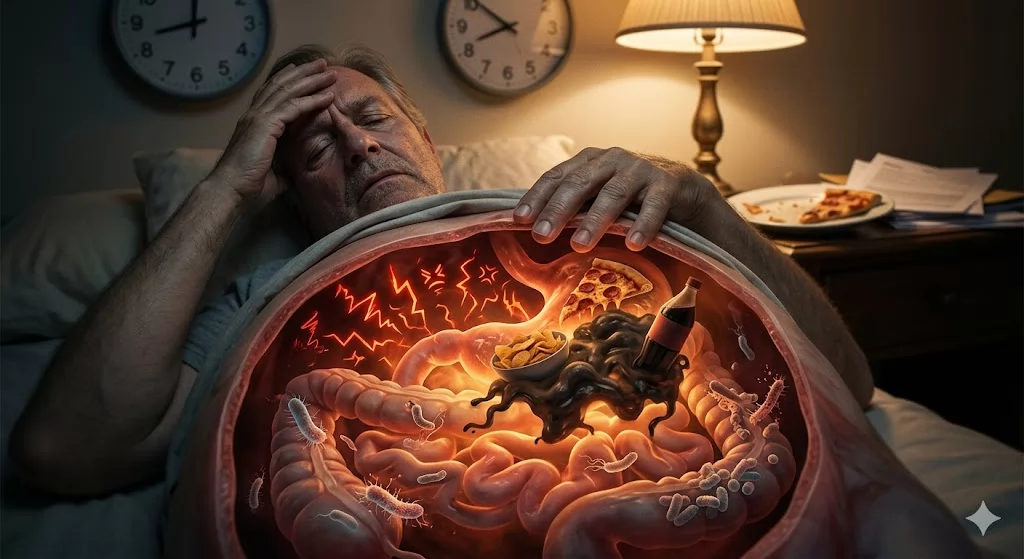
For many, the finish of a high-pressure workday is marked by a familiar ritual: a late-night meal consumed under the glow of a screen, often as a way to unwind from chronic stress. While this may feel like a harmless coping mechanism, emerging medical research suggests that the combination of psychological tension and nocturnal eating creates a biological “double hit” that can seriously compromise digestive health.
Recent data presented at Digestive Disease Week 2026 indicates that this specific behavioral pairing—high physiological stress combined with late-night eating—is significantly linked to abnormal bowel habits and a decline in gut microbial diversity. This intersection of timing and tension doesn’t just cause temporary discomfort; it may fundamentally alter the gut-brain axis, the bidirectional communication network that links our emotional state to our digestive system.
As a physician and health journalist, I have observed how the modern “always-on” culture disrupts our circadian rhythms. When we eat late, we are not just adding calories; we are sending conflicting signals to our internal biological clock, which in turn disrupts the delicate balance of the microbiome. This synergy between stress and timing can leave the gut vulnerable, potentially increasing the risk of long-term gastrointestinal dysfunction.
The “Double Hit”: How Stress and Timing Collide
The relationship between the mind and the gut is well-documented, but the compounding effect of meal timing is a critical new focal point for gastroenterologists. A two-cohort analysis involving more than 15,000 patients has revealed that those experiencing high physiological stress who also eat late at night are more likely to suffer from irregular bowel movements, including both constipation and diarrhea. Research reported by GI and Hepatology News suggests that late-night eating may actually magnify the negative impact of stress on the microbiome.
This phenomenon occurs because the gut is not a static organ; it operates on a strict circadian rhythm. The bacteria living in our intestines have their own biological clocks, fluctuating in abundance and function throughout a 24-hour cycle. When we introduce food during the body’s intended fasting period, we create “circadian misalignment.”
When chronic stress is added to this mix, the body releases cortisol and other stress hormones that can increase intestinal permeability—often referred to as “leaky gut.” This allows proinflammatory markers to enter the bloodstream more easily, while the disrupted microbiome struggles to maintain the protective mucosal lining of the intestines.
Understanding the Gut-Brain Axis and Microbial Diversity
To understand why this combination is so damaging, we must look at the gut-brain axis. This system relies on the vagus nerve and chemical messengers to regulate everything from mood to digestion. Stress triggers a “fight or flight” response that diverts blood flow away from the digestive tract, slowing down motility and altering the secretion of digestive enzymes.
According to research presented by Harika Dadigiri, M.D.
, of New York Medical College, the combination of stress and late eating is associated with reduced gut microbial diversity. Findings published via ScienceDaily highlight that participants with a high “allostatic load”—a measure of the cumulative wear and tear on the body due to chronic stress—were significantly more prone to these digestive issues when combined with nocturnal eating habits.
A loss of microbial diversity is a hallmark of dysbiosis, a state where “bad” bacteria outnumber the “good.” This imbalance can lead to several systemic issues:
- Impaired Nutrient Absorption: A compromised microbiome cannot efficiently break down complex nutrients.
- Systemic Inflammation: Dysbiosis often triggers a low-grade inflammatory response throughout the body.
- Mood Instability: Since a vast majority of the body’s serotonin is produced in the gut, a damaged microbiome can exacerbate the very stress that led to the late-night eating in the first place.
The Role of Allostatic Load in Digestive Health
The concept of “allostatic load” is central to understanding why some people are more affected by this pattern than others. Allostatic load refers to the physiological cost of adapting to chronic stressors. When a person is in a state of high allostatic load, their body is essentially operating in a state of permanent emergency.
In this state, the body’s ability to regulate glucose and insulin is impaired. Eating high-calorie or processed foods late at night—common during stress-induced “emotional eating”—further spikes insulin levels at a time when the body is biologically programmed to be insulin-resistant. This creates a metabolic conflict that stresses the gut lining and alters the composition of the microbiota.
This cycle creates a dangerous feedback loop: stress leads to late-night eating, which disrupts the microbiome, which then weakens the gut-brain axis, making the individual less resilient to stress.
Practical Strategies for Gut Recovery
Breaking the cycle of stress-induced nocturnal eating requires a two-pronged approach: managing the nervous system and respecting the biological clock. While it may be demanding to eliminate all stress, changing the timing of the response can mitigate the damage.
1. Implement a “Kitchen Closed” Window
Establishing a consistent time when eating ends—ideally three to four hours before sleep—allows the gut to enter its natural cleaning phase, known as the Migrating Motor Complex (MMC). This process sweeps undigested food and bacteria out of the small intestine, preventing the overgrowth that leads to bloating and discomfort.
2. Prioritize Parasympathetic Activation
Since the “fight or flight” response inhibits digestion, it is essential to transition the body into the “rest and digest” (parasympathetic) state before eating. Simple practices such as five minutes of deep diaphragmatic breathing or a short walk can signal to the brain that it is safe to divert blood flow back to the gut.

3. Focus on Microbiome-Supporting Foods
To combat the loss of microbial diversity, incorporate fermented foods (like kefir, sauerkraut, or kimchi) and prebiotic fibers (found in garlic, onions, and asparagus). These help repopulate the gut with beneficial strains that can help stabilize the gut-brain axis.
Frequently Asked Questions
| Question | Medical Perspective |
|---|---|
| Is all late-night eating bad? | Occasional late meals are generally fine; the risk arises when late eating is a chronic habit paired with high physiological stress. |
| What is the “Double Hit” effect? | It is the synergistic damage caused when chronic stress (which increases gut permeability) meets nocturnal eating (which disrupts circadian rhythms). |
| Can I fix my gut microbiome? | Yes. Through a combination of timed eating, stress management, and a diverse diet, the microbiome can be shifted back toward a healthy state. |
| Why does stress cause cravings? | Cortisol increases appetite and specifically triggers cravings for “comfort foods” (high-fat, high-sugar), which are often consumed at night. |
The evidence is clear: our digestive health is not solely determined by what we eat, but when we eat and how we feel while doing it. By aligning our eating habits with our natural circadian rhythms and addressing the root causes of stress, People can protect the vital ecosystem of our gut.
The medical community continues to monitor these trends, with further presentations and detailed data expected from the ongoing sessions of Digestive Disease Week in Chicago through May 5, 2026. For those experiencing chronic bowel irregularities, consulting a gastroenterologist to assess allostatic load and microbial health is recommended.
Do you struggle with late-night cravings during stressful periods? Share your experiences in the comments below or share this article with someone who needs a reminder to prioritize their gut health.