Teenager Builds Fully Functional 4K Laptop From Scratch as School Project, Shares Design Open Source
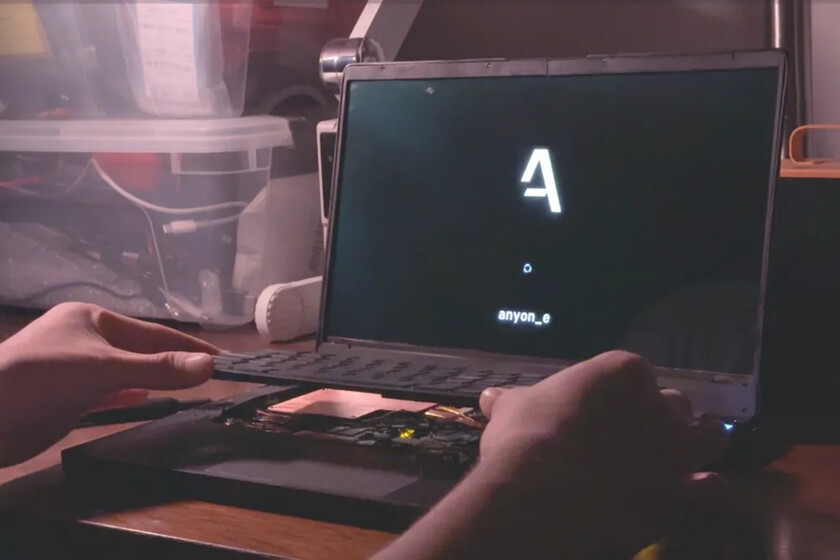
In a remarkable display of ingenuity and technical skill, Byran Huang, a senior at Phillips Exeter Academy, has designed and built a fully functional laptop, dubbed “anyon_e,” from the ground up. The project, initially sparked by a friendly challenge, evolved into a year-long endeavor culminating in a sophisticated machine boasting a 4K AMOLED display, a custom mechanical keyboard, and an estimated battery life of around seven hours. Huang’s commitment extends beyond mere functionality. he’s made the entire design and build process openly available, sharing detailed documentation and videos online, inspiring a new wave of DIY technology enthusiasts.
Huang’s creation isn’t just a proof-of-concept; it’s a fully capable computer. According to Huang, the laptop is powerful enough to run demanding applications, stating he can “play Minecraft in 4K and move heavy AI models.” This level of performance, achieved through meticulous component selection and custom engineering, highlights the potential for open-source hardware to rival commercially available products. The project has already garnered significant attention, including a recruitment offer from an engineering lead at Neuralink for a summer internship with the Robot Surgery Electrical Engineering team, as reported by Phillips Exeter Academy.
The Anatomy of a DIY Laptop
At the heart of anyon_e lies a Rockchip RK3588-based module, specifically the FriendlyElec CM3588. This system-on-a-chip (SoC) serves as the “brain” of the laptop, providing the processing power for all its functions. But, Huang didn’t simply plug the module into a pre-made board. He designed and built a custom motherboard to integrate the CM3588, demonstrating a deep understanding of circuit board design and component interaction. The choice of the RK3588 is notable, as it’s a popular choice within the maker community, offering a balance of performance and accessibility.
One of the most striking features of anyon_e is its wireless mechanical keyboard. Rather than opting for a traditional, integrated keyboard, Huang designed a detachable keyboard that connects magnetically. This design choice allows the laptop to be used with other devices and offers a unique level of flexibility. The keyboard utilizes Cherry ULP switches and an nRF52840 SoC with ZMK firmware, showcasing a commitment to high-quality components and open-source software. According to Huang’s project documentation on GitHub, the keyboard’s design prioritizes a slim profile, achieving a thickness of just 7mm.
To minimize the keyboard’s bulk, Huang employed a remarkably thin 200 mAh battery. He also utilized 3D printing with a 0.15mm nozzle to create the keycaps, a cost-effective solution that allowed him to maintain a high level of customization. The trackpad is a glass-topped, multi-touch module from Azoteq, sourced as a discontinued product for around 30 euros. Huang’s resourcefulness in sourcing components, particularly those that are no longer readily available, is a testament to his dedication to the project.
Display, Chassis, and Open-Source Philosophy
Securing a suitable display proved to be a significant challenge. Huang meticulously researched laptop panels, focusing on those used in Asus models, to determine the necessary specifications and timing parameters for compatibility with Linux. His dedication to open-source principles extended to the display, ensuring that the laptop could run a fully open operating system. The final choice is a 13.3-inch 4K AMOLED display boasting 330 pixels per inch, offering a vibrant and detailed visual experience.
The laptop’s chassis is constructed from CNC-machined anodized aluminum, providing both durability and a premium aesthetic. Huang also designed and fabricated a copper heatsink to effectively dissipate heat generated by the internal components. Power management is handled by an ESP32-S3 microcontroller and a 60Wh lithium-polymer battery, offering a substantial capacity for extended use. The battery supports USB-C charging, adding to the laptop’s convenience and compatibility.
However, the most impactful aspect of Huang’s project is his decision to release all of his research and design files on GitHub under the MIT license. The anyon_e GitHub repository contains detailed schematics, code, and build instructions, allowing anyone to replicate his perform or build upon it. This commitment to open-source hardware is a direct challenge to the traditional model of closed, proprietary technology, fostering a community of innovation and collaboration. Huang’s stated mission is to “disprove the idea that technology is either repairable and open or integrated and closed,” and anyon_e serves as a powerful demonstration of that principle.
Phillips Exeter Academy provided crucial support for Huang’s project, including funding and access to facilities like the Design Lab and Mr. Robinson’s classroom. Huang acknowledged exceeding his initial budget by two and a half times, but the school continued to support his vision. This backing underscores the Academy’s commitment to fostering student innovation and providing resources for ambitious projects.
The “Anyon” Concept
The name “anyon_e” itself is rooted in physics, referencing exotic particles called anyons. According to a footnote in Huang’s GitHub documentation, anyons have quantum statistics that are neither bosonic nor fermionic, existing as a unique state between the two. Huang draws a parallel between these particles and his laptop, describing it as “integrated like bosons, distinct like fermions,” highlighting the laptop’s blend of integration and individuality.
Huang’s senior project, advised by Mr. Brad Robinson and Mr. Charles Mamolo, exemplifies the spirit of exploration and innovation that Phillips Exeter Academy aims to cultivate. The project’s success has not only earned Huang recognition but has also inspired others to pursue their own ambitious DIY projects.
The anyon_e project is more than just a technical achievement; it’s a statement about the future of technology. By embracing open-source principles and sharing his knowledge, Byran Huang is empowering others to create, innovate, and challenge the status quo. His work demonstrates that with dedication, ingenuity, and a commitment to collaboration, anyone can build something extraordinary.
Huang is scheduled to begin an internship with the Robot Surgery Electrical Engineering team at Neuralink this summer, a direct result of the visibility gained from his anyon_e project. Further updates on the project and its community contributions can be found on the anyon_e website and the GitHub repository. We will continue to follow Huang’s work and report on any further developments.
What are your thoughts on open-source hardware? Share your comments below, and let us understand what DIY projects inspire you!