
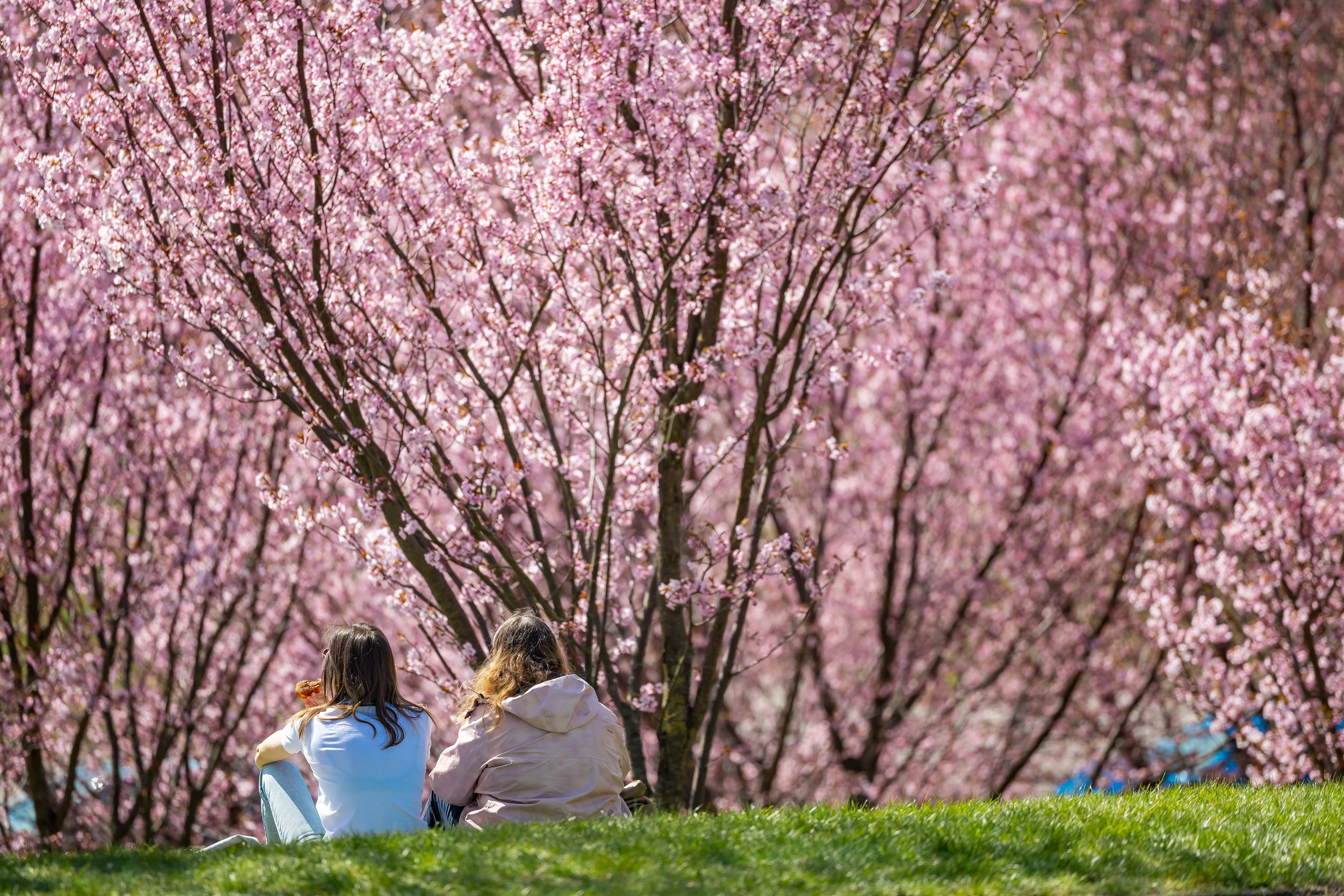
Cherry blossoms have begun to bloom earlier than expected in Vilnius, drawing crowds eager to witness the fleeting beauty of Japan’s symbolic trees. The Sugihara Cherry Blossom Park, located along the Neris River near the National Art Gallery, has seen an unusually early surge in blossoms this spring, prompting residents and visitors alike to gather for hanami, the traditional Japanese custom of flower viewing.
According to reports from local media, the sakura trees in Vilnius started flowering about a week earlier than their typical mid-April schedule. This shift has been attributed to unseasonably warm weather patterns affecting the region, which accelerated the budding process. Normally, the cherry blossom season in Vilnius lasts approximately two weeks, beginning in late April and extending into early May, but this year’s bloom has arrived ahead of schedule.
The park itself was established in 2001 as a gift from the Japanese government to Lithuania, planted to commemorate the 100th anniversary of Chiune Sugihara, the Japanese diplomat honored as Righteous Among the Nations for issuing transit visas that saved an estimated 6,000 Jewish lives during the Holocaust. Sugihara served as Japan’s consul in Lithuania during 1939 and 1940, defying orders to provide life-saving documentation to refugees fleeing Nazi-occupied territories.
Today, the Sugihara Cherry Blossom Park features approximately 200 sakura trees, all planted in 2001 and has become one of Vilnius’s most popular spring attractions. Visitors describe the experience as both visually stunning and emotionally resonant, combining natural beauty with historical reflection. Many come not only to photograph the delicate pink and white blossoms but likewise to reflect on the legacy of humanitarian courage that the park symbolizes.
Local officials and tourism representatives have noted increased public interest in the annual bloom, with crowds forming early each morning to secure prime viewing spots. Some visitors bring picnics, while others queue for professional photo sessions beneath the trees, which can cost around 40 euros for a half-hour session, according to anecdotal reports from attendees. The atmosphere remains peaceful, with people sitting on the cool grass despite chilly evenings, choosing to embrace the moment rather than wait for warmer conditions.
The early flowering has sparked conversations about climate variability and its impact on seasonal traditions. While hanami is deeply rooted in Japanese culture as a meditation on impermanence, its observance in Vilnius highlights how such practices can take on new meaning in different cultural contexts — blending appreciation for nature with remembrance of moral courage.
As of now, officials have not announced any changes to public access or special events tied to the blossom season. The park remains open to the public during daylight hours, with no admission fee required. Visitors are encouraged to check local tourism updates for any future announcements regarding guided walks or cultural programs associated with the cherry blossoms.
Whether viewed as a seasonal spectacle or a living tribute to cross-border compassion, the early bloom of sakura in Vilnius offers a poignant reminder of how beauty and history can intertwine in unexpected ways — and how a single season’s flowers can carry stories that endure far beyond their petals’ fall.