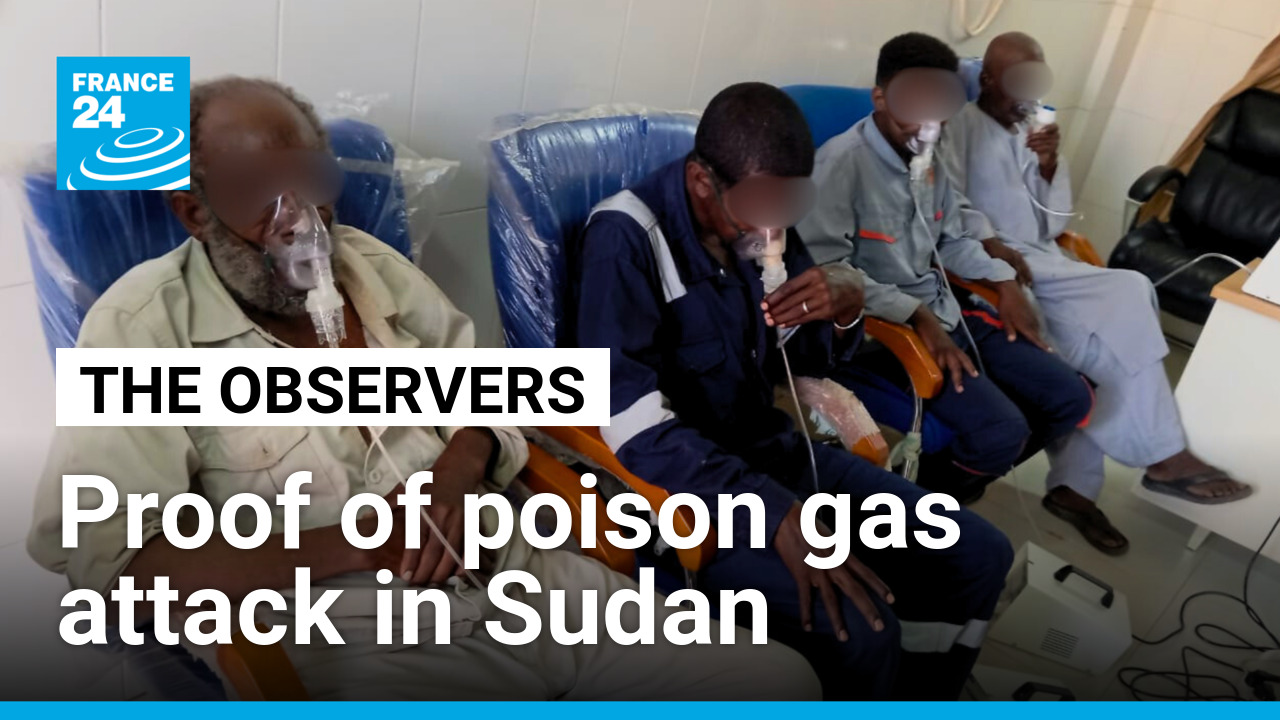
Sudan Civil War: Evidence Mounts of Chlorine Gas Use as a Weapon
The ongoing civil war in Sudan has taken a deeply disturbing turn. Investigations by the FRANCE 24 Observers team reveal compelling evidence that the Sudanese army deployed chlorine gas as a weapon against the Rapid Support Forces (RSF) militia. This represents a serious escalation in the conflict and raises grave concerns about the protection of civilians.
Here’s a breakdown of what we know, based on verified evidence and in-depth analysis.
Confirmed Chlorine Attacks Near Khartoum Refinery
On September 5th and 13th, 2024, aerial attacks utilizing barrels containing chlorine gas occurred near a strategically vital refinery north of Sudan’s capital, Khartoum. These attacks coincided wiht the army’s efforts to regain control of the facility from the RSF.
Our team employed open-source intelligence (OSINT) techniques to meticulously verify videos and photographs documenting these incidents. Five independent experts reviewed the imagery and unanimously confirmed its consistency with aerial drops of chlorine barrels. Crucially, the Sudanese army possesses the only aerial military capability within the country to execute such an operation.
From Water Purification to Weaponization: Tracing the Chlorine’s Journey
The investigation didn’t stop at identifying the attacks. We traced the origin of the chlorine gas itself, uncovering a concerning pathway from legitimate civilian use to potential weaponization.
* The Supplier: Chemtrade International Corporation, an Indian company, exported the chlorine to Sudan. They declared the shipment was solely intended for water treatment - a common and necesary submission.
* the Importer: Ports Engineering Company, a Sudanese firm specializing in public works and water treatment, received the chlorine. Their website highlights a focus on providing potable water.
* A Discrepancy Emerges: Though, no evidence suggests the chlorine was actually utilized in Sudanese water treatment facilities.
Further investigation, leveraging commercial data from the American NGO C4ADS, revealed a more complex picture. Ports Engineering Company is linked to the importation of military equipment and maintains commercial ties with an Emirati company supplying uniforms and footwear to sudanese intelligence.
As the start of the civil war, Chemtrade has shipped at least 125 chlorine gas cylinders to Sudan. The question remains: was this chlorine intended for purifying drinking water, or for use as a devastating weapon? Regrettably, neither Chemtrade nor the Sudanese army has responded to inquiries, leaving this critical question unanswered.
The Humanitarian Context & Irony of the Situation
Sudan faces a severe water crisis. Nearly 17.3 million people currently lack access to safe drinking water.The irony is stark: a single barrel of chlorine dropped in September 2024 could have possibly met the basic water needs for three months of the one million displaced people who had returned to Khartoum by March 26, 2025, following the army’s recapture of the city.
Rather, it was allegedly used as a weapon of war.
Why This Matters & What’s Next
The use of chlorine gas, even in a relatively limited capacity, is a violation of international law and a serious war crime. Chlorine is a choking agent, causing severe respiratory damage and potentially death.
This investigation underscores the urgent need for:
* independent Investigation: A thorough, impartial investigation into these incidents by international bodies.
* Accountability: Those responsible for the deployment of chlorine gas must be held accountable for their actions.
* Increased Scrutiny: Greater oversight of the export and import of dual-use chemicals like chlorine,to prevent their diversion for malicious purposes.
* Humanitarian Aid: Continued and expanded humanitarian assistance to address Sudan’s critical water needs.
Resources:
* videos show the Sudanese army’s use of chlorine gas as a weapon
* [How did chlorine imported to Sudan for water purification end up being used as a poison gas?](https://www.france24.com/en/africa/20251129-sudan-chlorine-imports-investigation-water
Keep reading