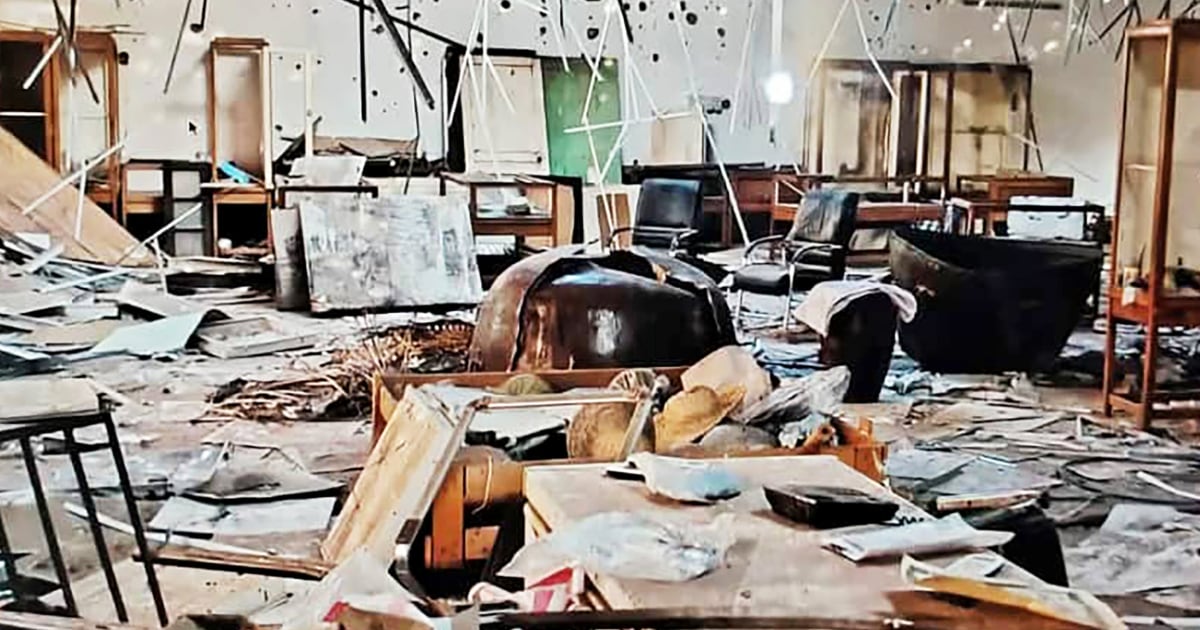
Sudan’s Cultural Heritage Under Siege as Conflict Rages
The ongoing conflict in Sudan is not only a humanitarian disaster, but also a devastating blow to the nation’s rich cultural heritage. Museums and archaeological sites, repositories of millennia of history, are being systematically looted and destroyed, threatening to erase the identity of a nation already grappling with immense suffering. Reports indicate widespread damage and theft, with artifacts appearing on international markets, raising alarm among cultural organizations and prompting calls for greater protection of Sudan’s historical treasures. The scale of the destruction is only beginning to be understood, but the loss is already immeasurable.
The conflict, which erupted in April 2023 between the Sudanese Armed Forces (SAF) and the paramilitary Rapid Support Forces (RSF), has created a chaotic environment where cultural sites are particularly vulnerable. The RSF, initially formed in 2013 to fight Sudanese rebels, has grown into a powerful force challenging the authority of the SAF, as detailed by Britannica. This power struggle has plunged the country into a brutal civil war, with devastating consequences for civilians and cultural institutions alike. The United Nations has repeatedly warned of a deteriorating humanitarian situation, with millions trapped in the crossfire and facing dire conditions.
The looting isn’t simply opportunistic; it appears to be a deliberate targeting of cultural identity. UNESCO has expressed alarm over the illicit trafficking of cultural goods from Sudan, stating that threats to culture have reached an “unprecedented level.” This destruction represents more than just the loss of objects; it’s an attack on the collective memory and identity of the Sudanese people.
Museums Ravaged by Violence and Looting
The extent of the damage to Sudan’s museums is staggering. In the Darfur region, at least three museums have suffered complete destruction and looting. The Nyala Museum was reportedly robbed of its antiquities and destroyed, followed by the looting and destruction of the Al-Geneina Museum and the destruction of the Sultan Ali Dinar Museum building in El Fasher. The Gezira Museum in Wad Madani also met the same fate following the RSF’s invasion of Gezira state. The Sudan National Museum in Khartoum, once home to over 150,000 artifacts spanning from the Stone Age to the Islamic period, has been largely emptied, with reports of trucks being used to transport stolen artifacts.
A recovery committee has managed to retrieve 570 pieces taken from museums and heritage sites, according to Graham Abdel Qader, undersecretary of the Ministry of Culture and Information. However, approximately 8,000 pieces remain missing from the National Museum alone. The loss extends beyond mere numbers; as one official stated, these artifacts represent “a people’s history and a nation’s entity, reflecting cultural identity and embodying the national memory.”
World Heritage Sites at Risk
The threat isn’t limited to museums. Archaeological sites, many of which are of global significance, are also under siege. Ikhlas Abdel Latif, head of the looted antiquities recovery committee and an official at the Sudan Antiquities and Museums Authority, has expressed fears for the future of Naqa and Musawwarat es Sufra, both UNESCO World Heritage Sites located in northern Sudan. These sites, remnants of the Meroitic civilization, are vulnerable to damage and looting due to the ongoing conflict. Naqa and Musawwarat es Sufra, recognized for their unique architectural and artistic achievements, could potentially lose their World Heritage status if they suffer irreparable harm.
Beyond the immediate threat of looting, the war has disrupted essential maintenance and security measures at these sites. Archaeological missions have been halted, and the massive displacement of people has led to unintended consequences. Some displaced individuals have sought shelter within archaeological sites, resulting in vandalism, graffiti, and even the construction of homes on historically significant land, claiming ancestral rights. These actions, although born of desperation, further jeopardize the preservation of Sudan’s cultural heritage.
The Broader Context of Conflict and Cultural Destruction
The situation in Sudan is particularly alarming given the recent findings by a UN fact-finding mission detailing evidence of genocide in El Fasher, as reported by UN News on February 19, 2026. The mission found that the Rapid Support Forces (RSF) committed ethnically targeted killings, widespread sexual violence, and enforced disappearances during their takeover of the city in October 2023, targeting the Zaghawa and Fur communities. This violence underscores the fragility of the region and the urgent need for international intervention to protect both human lives and cultural heritage. The UN report highlights that the crimes committed were not random acts of war, but rather part of a planned and organized operation.
The conflict in Sudan is rooted in a complex history of political instability and economic grievances. The RSF’s emergence as a powerful force, initially as a counter-insurgency group in Darfur, has fundamentally altered the power dynamics within the country. The ongoing struggle for control between the SAF and the RSF has created a vacuum that allows for the exploitation and destruction of cultural resources. The international community faces a critical challenge in addressing both the immediate humanitarian crisis and the long-term preservation of Sudan’s cultural identity.
What Can Be Done?
Protecting Sudan’s cultural heritage requires a multifaceted approach. Increased international pressure on all parties to the conflict to respect cultural sites is paramount. Enhanced security measures, including the deployment of specialized cultural heritage protection units, are needed to safeguard vulnerable sites. International cooperation is essential to track and recover stolen artifacts, preventing their illicit sale on the global market. UNESCO is already actively monitoring the situation and working with Sudanese authorities to assess the damage and develop a recovery plan.
The recovery of looted artifacts will be a long and arduous process. It will require significant financial resources, technical expertise, and international collaboration. Beyond the physical recovery of objects, there is a need to document and preserve the intangible cultural heritage of Sudan, including oral traditions, music, and crafts, which are also at risk of being lost.
As of March 8, 2026, the conflict continues with no clear resolution in sight. The UN Security Council is scheduled to discuss the situation in Sudan again on March 15, 2026, and further updates on the humanitarian and cultural situation are expected following that meeting. The international community must remain engaged and committed to supporting Sudan in its efforts to protect its cultural heritage and rebuild its future.
What are your thoughts on the destruction of cultural heritage in conflict zones? Share your comments below and assist spread awareness about this critical issue.
Keep reading