
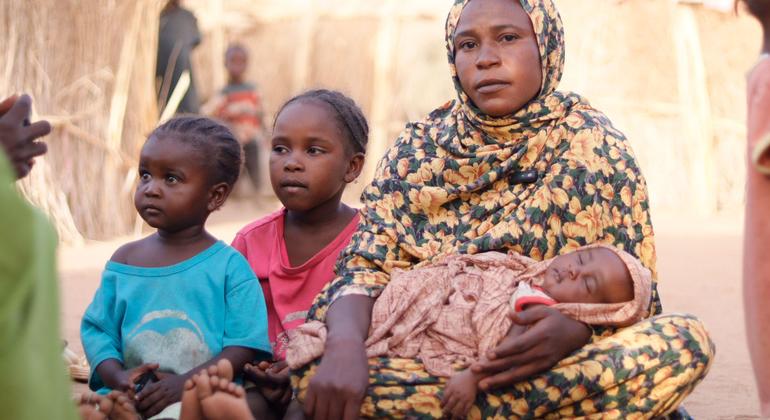
Sudan’s Al Fasher: A City Under Siege and the Imminent Threat to 260,000 Civilians
The situation in Al Fasher, North Darfur, Sudan, has spiraled into a catastrophic humanitarian crisis. For over 16 months, approximately 260,000 civilians – a staggering 130,000 of whom are children – have been effectively trapped, cut off from essential aid and facing starvation.This isn’t simply a conflict zone; it’s a deliberate obstruction of life-saving assistance, pushing an entire population to the brink.
the Rapid support forces (RSF),engaged in a brutal power struggle with the Sudanese military government as 2022,are responsible for the complete blockade. Al Fasher represents the last significant urban area still under government control, making it a focal point in the conflict and, tragically, a target for siege tactics.A devastating Toll on Children
the consequences are particularly harrowing for children. UNICEF executive Director Catherine Russell starkly describes the reality: “We are witnessing a devastating tragedy - children in Al Fasher are starving while UNICEF’s lifesaving nutrition services are being blocked.” This isn’t hyperbole. Recent reports detail a surge in violence, including the alleged killing of seven children in an attack on the Abu Shouk camp for internally displaced people.
The scale of atrocities is deeply disturbing. as the siege began in May 2024, over 1,100 grave violations against children have been verified in El Fasher alone. This includes the horrific killing and maiming of over 1,000 children,alongside documented cases of rape,sexual abuse,abduction,and recruitment by armed groups – at least 23 children have been subjected to sexual violence.
Systematic Attacks on Essential Infrastructure
The crisis extends beyond direct violence. Health and education infrastructure are under sustained attack.Thirty-five hospitals and six schools have been struck, resulting in casualties among both children and adults. This deliberate targeting cripples the already fragile capacity to provide basic services.
The Blockade and the Collapse of Healthcare
The UN Office for the Coordination of Humanitarian Affairs (OCHA) has repeatedly warned that the situation is deteriorating rapidly. Blocking humanitarian access isn’t just a logistical issue; it’s a grave violation of children’s rights. The suspension of medical services due to depleted supplies has left an estimated 6,000 children suffering from Severe Acute Malnutrition (SAM) without treatment.
Without immediate access to therapeutic food and medical care, these children face a near-certain risk of death.Recent reports indicate at least 63 people,predominantly women and children,succumbed to malnutrition in a single week – a chilling indicator of the escalating crisis. UNICEF continues to urgently call for unimpeded humanitarian access to deliver essential supplies.
cholera Outbreak compounds the Suffering
Adding to the already dire circumstances, Sudan is experiencing it’s worst cholera outbreak in decades, with over 2,400 deaths reported as July 2024. Overcrowded camps around Tawila, Zamzam, and El Fasher create ideal conditions for the spread of disease. Children, already weakened by hunger, are particularly vulnerable to cholera and other waterborne illnesses.
What Needs to Happen Now
The situation demands immediate and decisive action. The international community must prioritize:
Unimpeded Humanitarian Access: The RSF must immediately lift the blockade and allow the free flow of aid to Al Fasher.
Protection of Civilians: All parties to the conflict must adhere to international humanitarian law and prioritize the protection of civilians, especially children.
Increased Funding: Sustained and increased funding is crucial to support humanitarian organizations working on the ground.
Accountability: Perpetrators of violations against children must be held accountable for their actions.
The crisis in Al Fasher is a stark reminder of the devastating consequences of conflict on vulnerable populations.Children must be protected at all times, and they must have access to the life-saving aid they desperately need. The world cannot stand by and watch as an entire generation is decimated by starvation and violence.





