Lost City Unearthed Beneath Kyrgyzstan’s Lake Issyk-Kul Reveals Medieval Secrets
A remarkably well-preserved medieval city has been discovered submerged in the depths of Lake Issyk-Kul, a high-altitude lake nestled in the Tian shan mountains near Kyrgyzstan’s border with kazakhstan. Recent expeditions have unveiled captivating insights into the city’s history, culture, and the lives of its inhabitants, offering a unique window into Central Asia’s past.
A Submerged Metropolis
The city, known as Toru-Aygyr, flourished between the 10th and 13th centuries, serving as a vital trading hub along the Silk Road. Researchers beleive a catastrophic event led to the city’s submersion, though the exact cause remains under examination. The remarkably cold and clear waters of Lake Issyk-Kul have aided in the remarkable preservation of the site, allowing archaeologists to recover artifacts and structures in astounding condition.
Discoveries from the Depths
Several key discoveries have emerged from the underwater excavations:
* A Vast Muslim Cemetery: A 14-acre (6 hectare) Muslim cemetery, roughly the size of 11 football fields, was identified. Remains recovered from the site were found facing Mecca, a customary practice in Islamic burials.
* 13th-Century Dating: Archaeologists estimate the cemetery dates back to the 13th century, coinciding with the introduction of Islam to the region by the Golden Horde.
* Multicultural Origins: toru-Aygyr was initially a multicultural city, with residents practicing Tengrianism, Buddhism, and Nestorian Christianity before the rise of Islam.
* Islamic Influence: The arrival of Islam shifted the city’s dynamics, as residents increasingly favored trade with other Muslim communities.
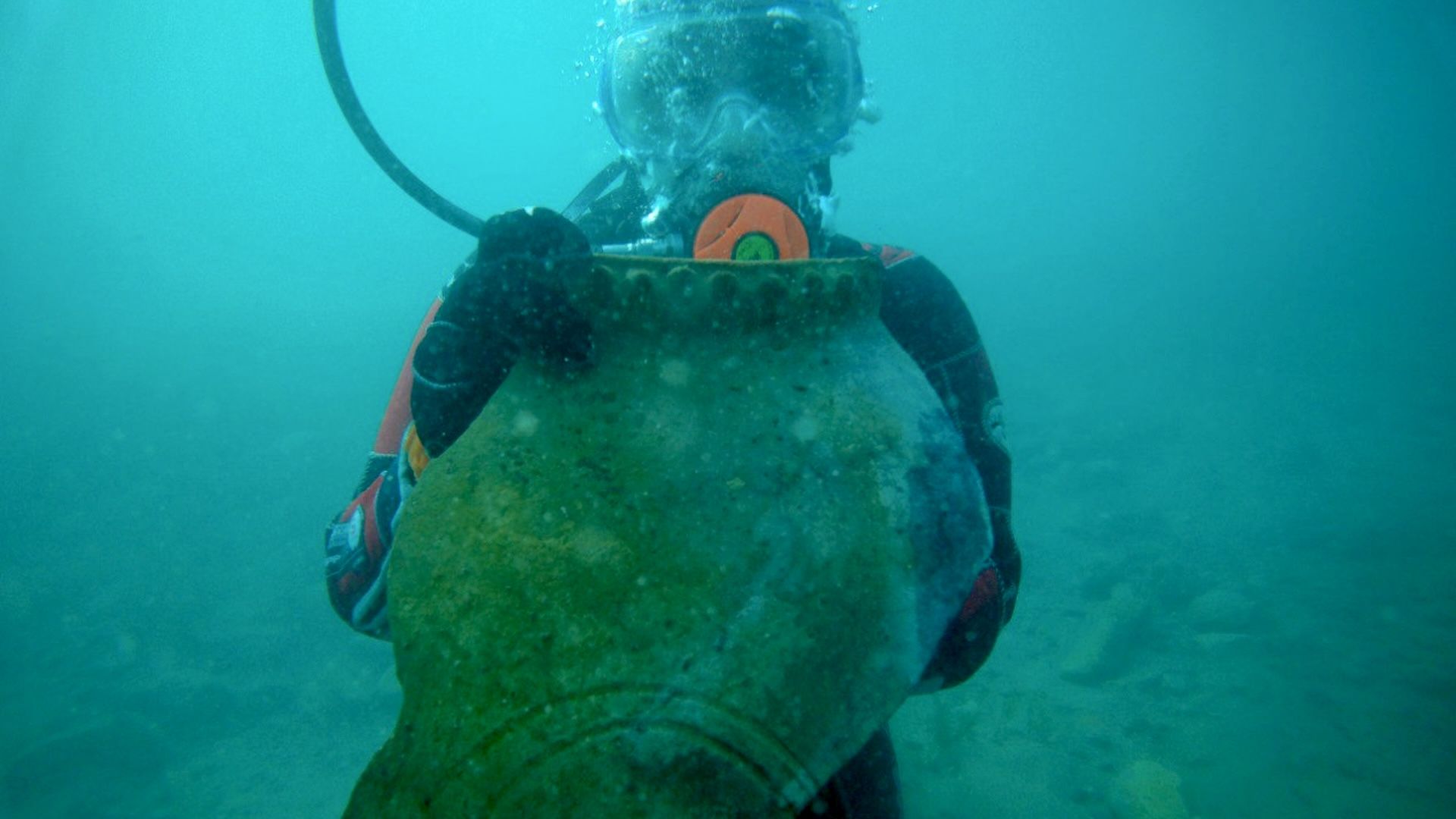
* medieval Pottery: Intact pieces of medieval Muslim pottery,including a large water jar (khum),have been recovered and are slated for retrieval in future expeditions.
* Earlier Burials: Three burials predating the islamic cemetery suggest the site held significance long before the 13th century.
* Architectural Remains: The remnants of mud-brick buildings have been identified, providing clues about the city’s layout and construction techniques.
Unraveling the City’s History
Expedition leader Maksim Menshikov, of the Institute of Archaeology of the Russian Academy of Sciences, emphasizes the city’s diverse past. He notes that Toru-Aygyr’s initial multicultural character evolved with the growing influence of Islam and its associated trade networks.
Researchers are utilizing sediment cores obtained through underwater drilling to reconstruct the city’s development over time. this analysis will help determine the sequence of events leading to its eventual submersion.
What This Means for You
This discovery offers you a rare glimpse into the complex history of central Asia. It highlights the region’s role as a crossroads of cultures and religions,and the impact of major historical events like the rise of the Golden Horde. The ongoing research promises to reveal even more about the lives of the people who once called Toru-Aygyr home, enriching our understanding of the Silk Road and the medieval world.
The preservation of this underwater city is a testament to the unique environmental conditions of Lake Issyk-Kul. Future expeditions will undoubtedly uncover further treasures, continuing to rewrite the history of this fascinating region.
Worth a look