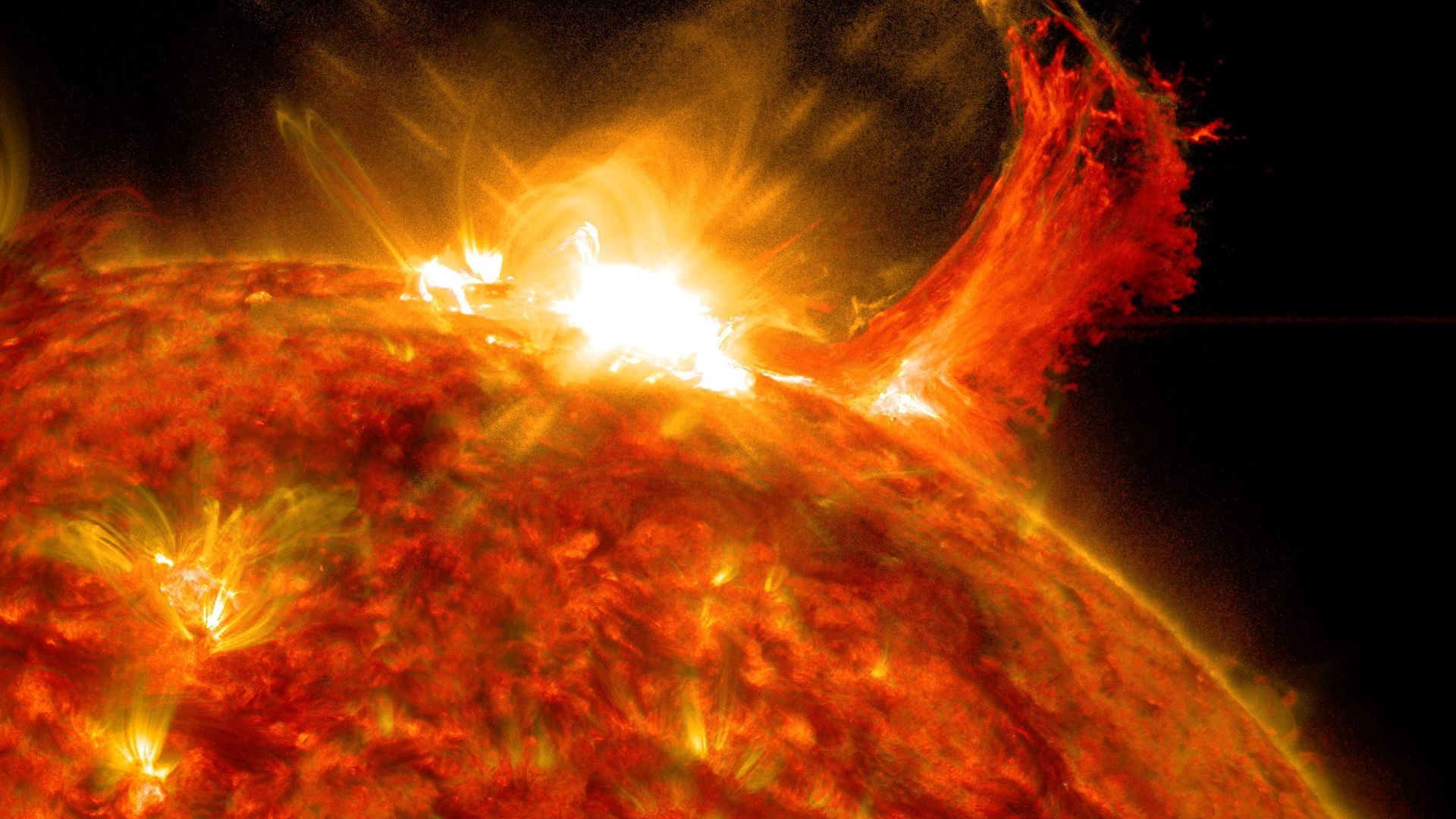
Unlocking the Sun’s Secrets: Alfvén Waves and the Coronal Heating Mystery
For decades, astronomers have wrestled with a basic question: what heats the sun’s corona – the outermost layer of its atmosphere – to millions of degrees Fahrenheit? New observations from the Daniel K. Inouye Solar Telescope (DKIST) are providing crucial insights, revealing the pervasive presence and meaningful energy carried by Alfvén waves. These findings are reshaping our understanding of solar dynamics and have implications far beyond our own star.
The Alfvén Wave Signature: A magnetic Twist
Alfvén waves are a fundamental phenomenon in plasma physics, and they manifest as a back-and-forth twisting of the sun’s magnetic field. Imagine a guitar string vibrating – that’s a helpful analogy.
Researchers, led by Dr. Stuart morton, were able to observe this twisting directly. They identified the waves through a distinctive pattern: alternating red and blue Doppler shifts on opposite sides of magnetic fields. This indicates movement along the magnetic field lines.
What’s especially exciting is that these waves appear to be continually present, even in relatively quiet regions of the sun.This suggests they are a common feature throughout the solar atmosphere, not just during flares or eruptions.
A Two-pronged Approach to Coronal Heating
The intense heat of the corona has long been attributed to two primary mechanisms:
* Magnetic Reconnection: This occurs when magnetic field lines become tangled and suddenly “snap,” releasing enormous amounts of energy.
* Solar Waves (specifically, Alfvén waves): These waves propagate along magnetic field lines, transferring energy as they travel.
Previously, the debate centered on which process was dominant. Though, the new DKIST data, combined with observations from NASA’s parker Solar Probe and the European Space Agency’s Solar Orbiter, paints a more nuanced picture.
It’s not an either/or situation. Both magnetic reconnection and alfvén waves are actively occurring throughout the sun’s atmosphere, contributing to coronal heating.
Alfvén Waves: A Major energy Contributor
The DKIST observations demonstrate that Alfvén waves carry a ample amount of energy. In fact, researchers estimate they could account for at least half of the energy needed to heat the corona.
While precisely quantifying the energy carried by these waves remains a challenge, this finding is a major step forward. it confirms their importance and provides a new avenue for investigation.
Beyond the Sun: Implications for Stellar Physics and Space Weather
Understanding the interplay between Alfvén waves and magnetic reconnection isn’t just about solving a solar mystery. It has broader implications for:
* Stellar Evolution: The ratio of energy carried by these two mechanisms influences the radiative output of stars, impacting how planetary systems evolve.
* Space Weather: The sun’s activity, driven by these processes, directly affects space weather – the conditions in space that can disrupt satellites, communication systems, and even power grids on Earth.Accurate predictions of solar wind production are crucial for mitigating these risks.
* Exoplanetary Systems: By studying our sun, we gain insights into the behavior of stars throughout the universe and the potential habitability of planets orbiting them.
Further research, building on these findings, will focus on refining our understanding of Alfvén wave properties. This will improve the accuracy of solar models and enhance our ability to predict space weather events. As Dr.Morton notes, continued study is key to unlocking the full potential of this research and illuminating the complex dynamics of our star.
Resources:
* NASA’s Parker solar Probe spots powerful magnetic explosion aimed at the sun’s surface
* Parker Solar probe captures closest-ever photos of the sun during record-breaking flight
Worth a look
- Why Does My Dog Smell? When Dog Odor Could Be a Health Warning
- Alzheimer’s Protein May Identify CTE in Contact Sport Athletes: Early Findings
- Google Maps Integrates Conversational AI for Location Search (archyworldys.com)
- Japan Earthquake Death Toll Rises to 34 as Search Efforts Continue in Kumamoto (time.news)