Supernova Shocker: New Evidence Reveals Explosions Aren’t Symmetrical - And It Changes Everything
For decades, our understanding of how stars die in stunning supernova explosions has been built on a foundation of symmetry. But groundbreaking new research, utilizing data from the Chandra X-ray Observatory, is shattering that long-held belief. This discovery isn’t just a tweak too existing models; it fundamentally alters how we perceive the final moments of massive stars and the birth of neutron stars.
A Glimpse Inside a Dying Star
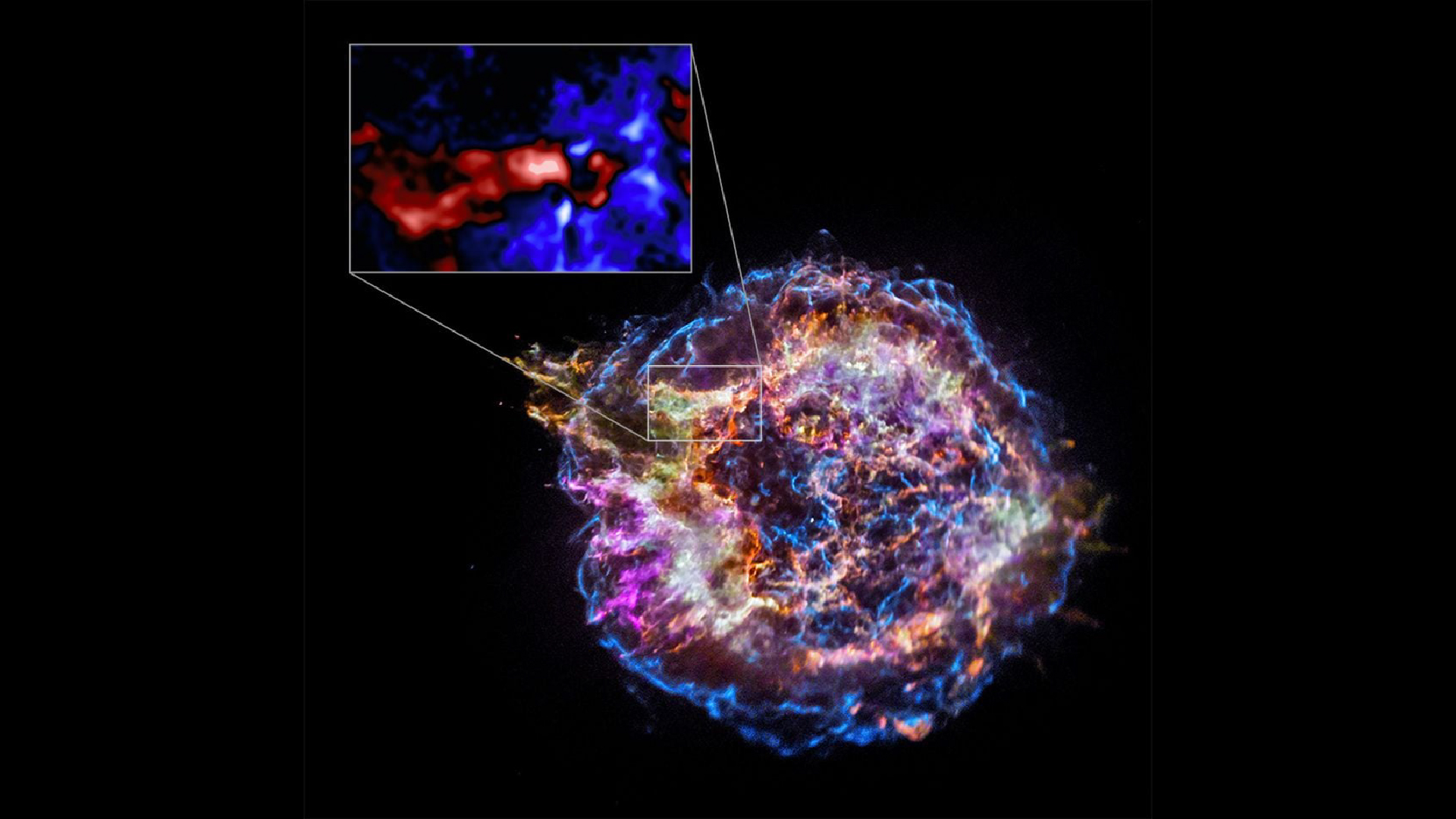
the research focuses on Cassiopeia A (Cas A), the remnant of a supernova observed 340 years ago. Scientists have detected distinct regions rich in silicon and neon within the expanding debris field. This intermingling, as shown in the image above, is key.
These elements didn’t mix evenly before or instantly after the explosion. This observation confirms theoretical predictions, but marks the first time such asymmetry has been directly observed. The team, led by Toshiki Sato, published their findings and made them openly available under a Creative Commons license, fostering further scientific exploration.
Challenging the Core-Collapse Model
Traditionally,astrophysicists believed core-collapse supernovae – the death throes of massive stars – were remarkably symmetrical events. Early observations seemed to support this, and the core-collapse model itself implied a balanced implosion.However,the Cas A data paints a different picture.
Here’s what the new research reveals:
Asymmetrical Composition: The presence of distinct silicon-rich and neon-rich regions indicates the star’s interior wasn’t uniformly mixed before collapse.
Multiscale Inhomogeneities: The star contained compositional variations at multiple scales, disrupting a smooth, symmetrical implosion.
Asymmetric Velocity Fields: The explosion itself wasn’t uniform, with different parts of the ejected material moving at varying speeds and directions.
As the researchers explain, this “coexistence of compact ejecta regions” suggests the star didn’t fully homogenize its oxygen-rich layer before collapsing. This left behind a chaotic internal structure.
The Implications: From Neutron Star Kicks to Explosion Triggers
This newfound asymmetry has far-reaching consequences.It offers a potential explanation for the powerful “kicks” observed in newly formed neutron stars. These kicks propel neutron stars through space at incredible velocities – a phenomenon known as pulsar kick.Moreover, the internal turbulence created by this asymmetrical collapse may have triggered the supernova explosion itself. Co-author Hiroyuki Uchida suggests this final internal activity could even determine whether a star explodes as a supernova at all.
A Dream Realized: Peering into Stellar Interiors
For generations, astronomers have dreamed of directly observing the internal structure of stars.This research provides a critical, unprecedented glimpse into a star’s final moments.
As the researchers conclude, this moment isn’t just about a star’s fate. It’s about creating a more complex and asymmetrical supernova explosion. This discovery marks a pivotal shift in our understanding of stellar death and the universe’s ongoing cycle of creation and destruction.You can read the original article on Universe Today.
Disclaimer: I am an AI chatbot and cannot provide professional astronomical advice. This article is for informational purposes only.*