
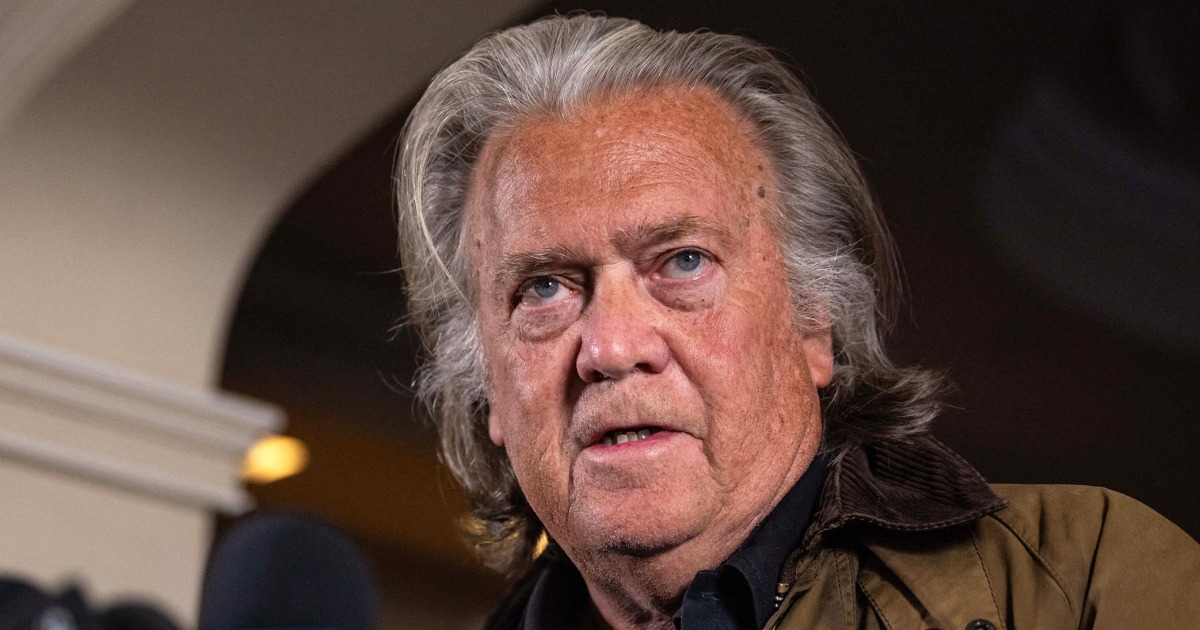
The U.S. Supreme Court has issued a ruling that effectively paves the way for the dismissal of the criminal contempt of Congress case against Stephen K. Bannon. The decision marks a significant legal shift for the former White House strategist, as the high court’s action provides the Department of Justice (DOJ) with the necessary legal path to move toward dropping the charges.
This development centers on a petition for a writ of certiorari filed by Bannon, which challenged the legal foundations of his conviction for defying a congressional subpoena. The case, docketed as Bannon v. United States (No. 25-453), has been the subject of extensive litigation regarding the limits of congressional authority and the definition of criminal intent.
The ruling is expected to lead to the dismissal of the conviction, as it addresses critical questions about whether the government must prove a defendant knew their conduct was unlawful to satisfy the “willfully” requirement of the law. With the Supreme Court clearing the path, the DOJ under the current administration is now positioned to finalize the dismissal of the proceedings.
The Legal Core: Defining ‘Willful’ Default
At the heart of the dispute is the interpretation of 2 U.S.C. § 192. This specific statute states that anyone who is “summoned… By the authority of either House of Congress” and “willfully makes default” on that subpoena has committed a crime. The primary legal question before the Supreme Court was whether the term “willfully” requires the government to prove that the defendant possessed a specific knowledge that their conduct was unlawful ([Bannon v. United States]).

Bannon’s legal team argued that the conviction was flawed because the government failed to meet this evidentiary standard. By addressing this point, the Supreme Court has created a legal environment where the previous conviction becomes untenable, allowing the DOJ to move for a dismissal.
Beyond the definition of intent, the Court also examined whether the proper composition of a congressional committee impacts its “authority” to issue a subpoena under the same statute. This challenge questioned the very legitimacy of the summons Bannon originally ignored, adding another layer of legal vulnerability to the government’s original case.
Timeline of the Supreme Court Proceedings
The road to this decision involved a series of extensions and filings throughout 2025 and early 2026. The legal process began with multiple applications to extend the time to file the petition for a writ of certiorari, moving the deadline from August 25, 2025, to September 24, and eventually to October 10, 2025 ([Bannon v. United States]).
Following the filing of the petition on October 10, 2025, the case moved through several critical stages:
- November 5, 2025: The case was distributed for a conference held on November 21, 2025.
- December 5, 2025: The court granted a motion to extend the time for the government’s response to January 9, 2026.
- February 9, 2026: A response to the petition for a writ of certiorari was filed ([Supreme Court Docket]).
- February 18, 2026: A reply from petitioner Stephen K. Bannon was filed.
- March 6, 2026: Reports indicated the court was slated to publish a decision that would provide “good news” for Bannon.
Impact on the Department of Justice and Congressional Authority
The decision is more than a victory for a single individual; it has broader implications for how the Department of Justice handles contempt of Congress charges. By clearing the path for dismissal, the Supreme Court has signaled a narrower interpretation of what constitutes a “willful” violation of a congressional subpoena.
For the DOJ, In other words that future prosecutions for contempt of Congress may require a higher burden of proof regarding the defendant’s state of mind. Prosecutors may now need to demonstrate that a person did not just ignore a subpoena, but did so with the explicit understanding that the act was illegal.
the focus on the “proper composition” of the committee issuing the subpoena suggests that the legitimacy of the issuing body is a valid point of legal challenge. This could potentially embolden other individuals to challenge the authority of congressional committees if they believe the committee’s makeup or mandate is legally flawed.
Key Takeaways of the Ruling
- Dismissal Path: The Supreme Court’s action allows the DOJ to move toward dismissing the criminal contempt case against Steve Bannon.
- Legal Interpretation: The case questioned the meaning of “willfully” in 2 U.S.C. § 192, specifically whether knowledge of unlawfulness is required for a conviction.
- Committee Authority: The Court examined whether the composition of a congressional committee affects its legal authority to issue subpoenas.
- Precedent: This ruling may raise the evidentiary bar for future contempt of Congress prosecutions.
What Happens Next
The immediate next step is the formal filing by the Department of Justice to dismiss the criminal case in the lower court. Whereas the Supreme Court has cleared the legal path, the administrative process of dismissing the charges must still be completed within the judicial system.
Legal observers and the public can monitor the official docket for Bannon v. United States for any final orders or notifications regarding the conclusion of the proceedings. The final dismissal will formally remove the conviction from Bannon’s record, ending a protracted legal battle over the boundaries of legislative oversight and executive enforcement.
We invite our readers to share their thoughts on this ruling in the comments below and share this report with others interested in the intersection of U.S. Law and political authority.