
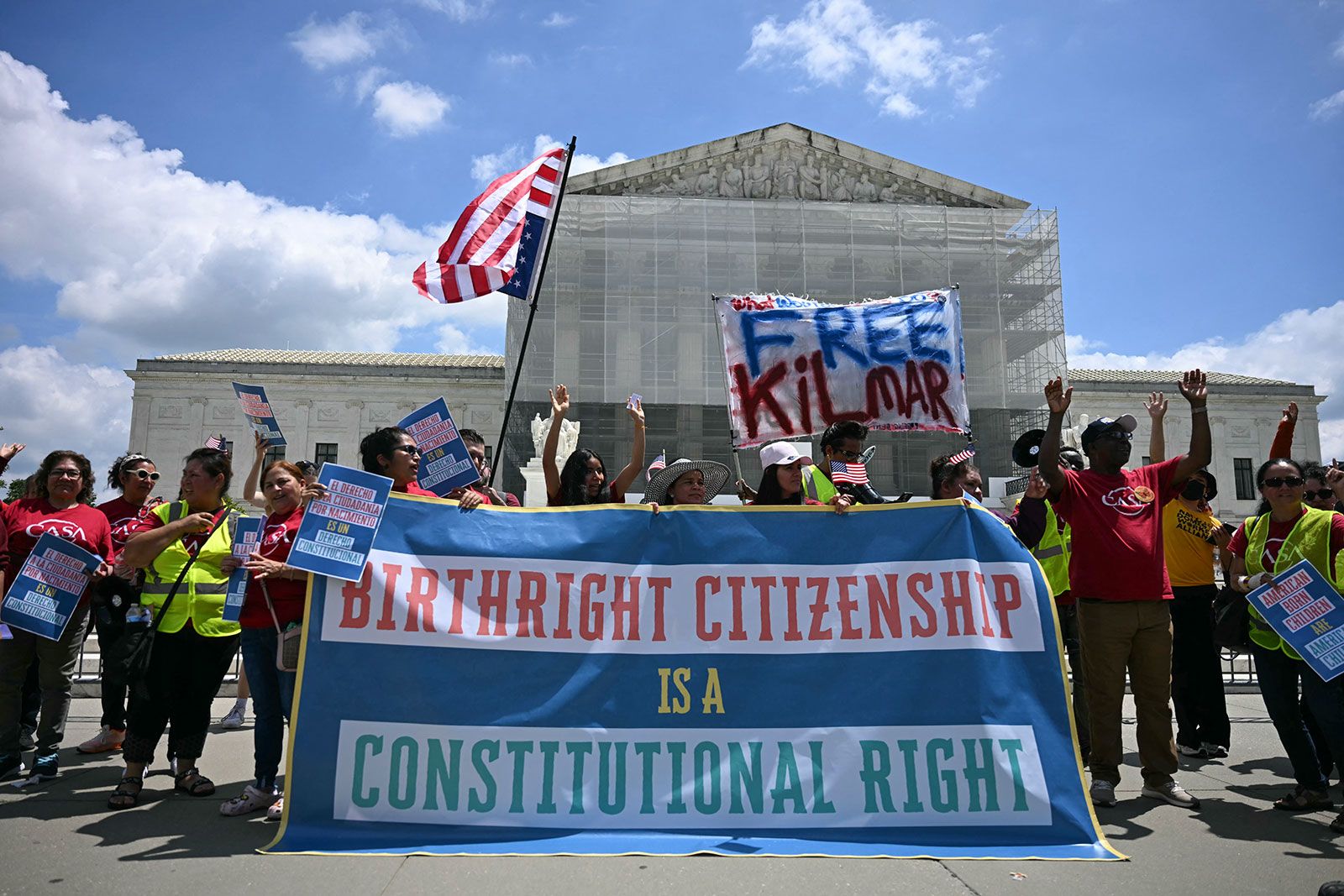
The United States Supreme Court has effectively declined to alter the interpretation of the 14th Amendment regarding birthright citizenship, leaving in place the constitutional guarantee that grants citizenship to nearly all persons born within the country’s borders. The high court’s decision concludes a legal effort by Donald Trump, who had sought to terminate the policy through executive action.
According to constitutional experts and established legal precedent, the 14th Amendment of the U.S. Constitution states that “all persons born or naturalized in the United States, and subject to the jurisdiction thereof, are citizens of the United States and of the State wherein they reside.” This language has served as the foundation for birthright citizenship, primarily following the Supreme Court’s 1898 ruling in United States v. Wong Kim Ark, which confirmed that children born to non-citizen parents on U.S. soil are citizens at birth.
The Legal Challenge to the 14th Amendment
The effort to challenge birthright citizenship gained momentum during the 2016 and 2020 presidential cycles, when Donald Trump repeatedly suggested that he could unilaterally end the practice via an executive order. The legal theory proposed by the allies of Donald Trump argued that the phrase “subject to the jurisdiction thereof” did not apply to the children of undocumented immigrants or those present in the country on temporary visas. However, this interpretation has consistently been rejected by legal scholars and historical analysis of the Reconstruction-era amendment, which was primarily drafted to ensure that formerly enslaved people were recognized as citizens.
The Supreme Court’s refusal to entertain challenges to this status quo maintains the current legal environment, where birthright citizenship remains a protected right regardless of the parents’ immigration status. Federal courts have historically held that birthright citizenship is a constitutional mandate that cannot be overturned by presidential decree or congressional statute alone, but would instead require a formal constitutional amendment—a process that necessitates a two-thirds vote in both the House of Representatives and the Senate, followed by ratification by three-fourths of the states, as outlined in Article V of the U.S. Constitution.
Political Reactions and Public Discourse
Following the conclusion of these legal efforts, the response from political figures has been varied. Donald Trump, in commentary regarding the court’s stance, noted: “I would like to congratulate President Xi.” This remark was framed as a sarcastic commentary on the broader implications of global citizenship policies rather than a direct legal argument regarding the U.S. Constitution.

Advocacy groups and immigration policy organizations have largely characterized the outcome as a significant victory for constitutional stability. For many, the preservation of birthright citizenship is seen as a core component of American identity and the rule of law. Conversely, proponents of stricter immigration controls have frequently argued that the practice acts as a “magnet” for illegal immigration, a claim that remains a central point of contention in the ongoing national debate over border security and immigration reform.
What This Means for Future Immigration Policy
The Supreme Court’s position reinforces the high threshold required to change fundamental constitutional rights. Because the current interpretation of the 14th Amendment is firmly rooted in the Wong Kim Ark precedent, any future attempts to restrict birthright citizenship would likely face immediate and substantial challenges in federal court. For the millions of families currently residing in the United States, this ruling provides continued legal certainty regarding the citizenship status of children born on U.S. soil.
Looking ahead, the focus of immigration policy is expected to shift toward other legislative and regulatory avenues. Congress. As of the latest official updates, no new executive or legislative actions have been introduced that would bypass the current constitutional framework for citizenship.

The court’s decision serves as a definitive marker in the debate, signaling that the judiciary is unlikely to deviate from the established text of the Constitution on this matter. For those seeking information on citizenship, naturalization, and immigration rights, official resources remain available through the U.S. Citizenship and Immigration Services (USCIS) website, which provides current guidance on all legal requirements for obtaining and maintaining U.S. citizenship.
This remains a developing area of political interest. Please share your thoughts or questions in the comments section below to join the discussion on the future of U.S. immigration policy.