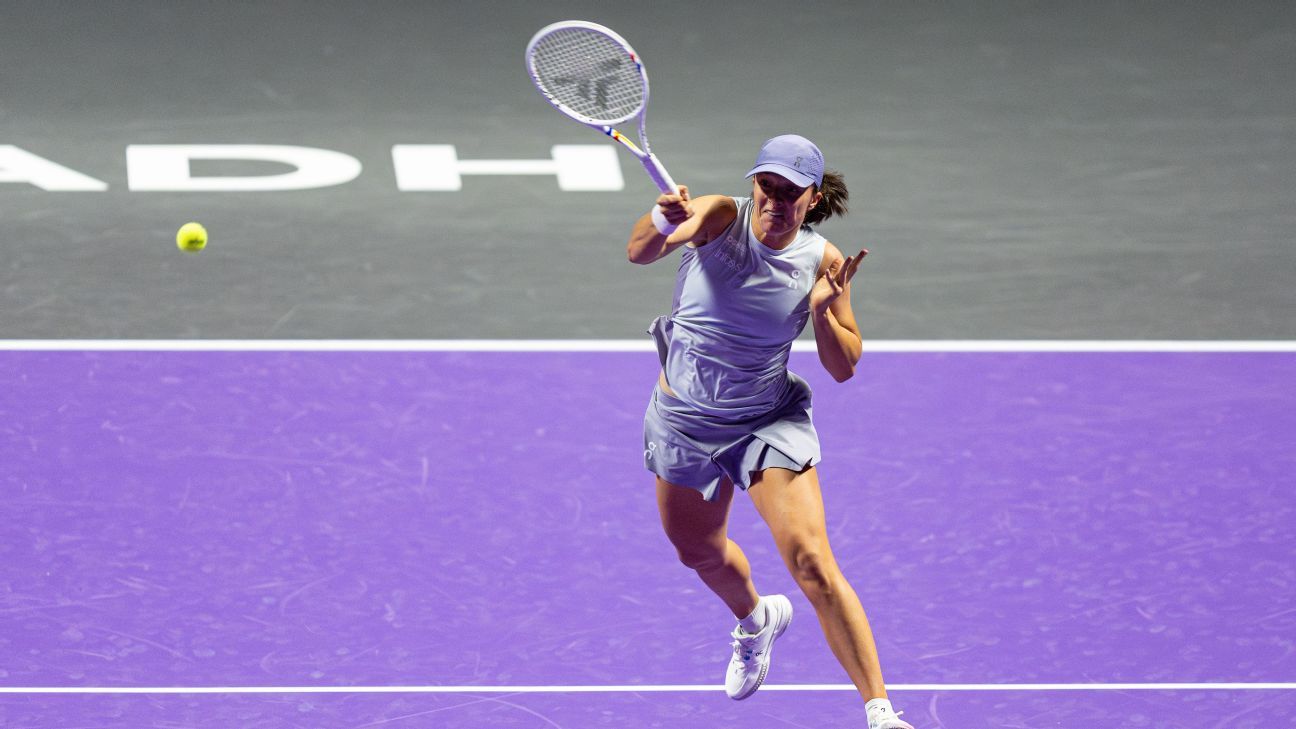
Iga Swiatek Dominates WTA Finals Opener: A Deep dive into Performance and Championship Contenders
The 2025 WTA Finals in Riyadh kicked off with a statement, as world No.1 Iga swiatek delivered a commanding performance, defeating Australian Open champion Madison Keys 6-1, 6-2. This opening match wasn’t just a victory; it was a exhibition of form, strategy, and the challenges facing players returning from extended breaks. This article provides an in-depth analysis of Swiatek’s win, the implications for the Serena Williams Group, and a broader look at the dynamics shaping the WTA Finals – a crucial event in professional tennis. We’ll explore the tactical nuances, the impact of Keys’ recent hiatus, and what lies ahead for both players in this elite eight-player competition.
Swiatek’s Masterclass: Deconstructing a Dominant Performance
Swiatek’s victory wasn’t simply about winning; it was how she won. Controlling 58 of 87 points,she exhibited a level of consistency and intensity that Keys struggled to match. A key element of Swiatek’s success was her ability to dictate play with her forehand, consistently pushing Keys wide and opening up the court. Her return game was also exceptional,neutralizing Keys’ powerful serve and immediately putting pressure back on the American.
Pro Tip: Pay attention to the first return point. swiatek consistently aims deep and cross-court, forcing opponents into uncomfortable positions and disrupting their rhythm. This is a hallmark of her strategic approach.
Beyond the statistics, Swiatek’s mental fortitude was evident. She maintained focus throughout the match, avoiding unforced errors and capitalizing on Keys’ vulnerabilities. This mental resilience is a defining characteristic of championship players, and it was on full display in Riyadh. Analyzing her shot selection reveals a calculated risk-reward approach, opting for aggressive angles when the prospect presented itself, but maintaining a solid baseline game when under pressure. This balance is what separates her from many of her competitors.
The Impact of a 68-Day Hiatus: Keys’ Return to Competition
Madison Keys’ lengthy absence from competition - 68 days since her first-round exit at the US Open – undoubtedly played a role in her performance. While Keys is a formidable opponent when in form, the rustiness was palpable. Her timing was off, her serve lacked its usual bite, and she struggled to find her rhythm.
Did You Know? Extended breaks in professional tennis can considerably impact a player’s performance. Muscle memory, timing, and court awareness all require consistent maintenance through competitive play.
swiatek herself acknowledged this, stating that such a long break “can make you a bit rusty.” This isn’t an excuse for Keys’ loss, but rather a realistic assessment of the challenges facing players returning from injury or extended periods away from the tour. Keys will need to quickly rediscover her form if she hopes to advance from the Serena Williams Group, which also includes Amanda Anisimova and Elena Rybakina. Her upcoming matches will be crucial tests of her ability to adapt and overcome this initial setback. I’ve personally witnessed numerous players struggle with reintegration after notable time off; the mental adjustment is often as challenging as the physical one.
Serena Williams Group Dynamics: A Path to the Semifinals
The serena Williams Group is shaping up to be a fiercely competitive one. elena Rybakina’s dominant 6-3, 6-1 victory over Amanda Anisimova further complicates the equation. rybakina’s powerful serve and aggressive baseline game make her a perilous opponent for anyone.
Here’s a speedy comparison of the group’s key players:
| Player | Ranking (Nov 2, 2025) | Key Strength | Potential Weakness |
|---|---|---|---|
| Iga Swiatek | 1 | Consistency, Mental Fortitude | Vulnerability to aggressive counter-punching |
| Madison Keys | 8 | Powerful Serve, Aggressive Forehand | In
Keep reading |