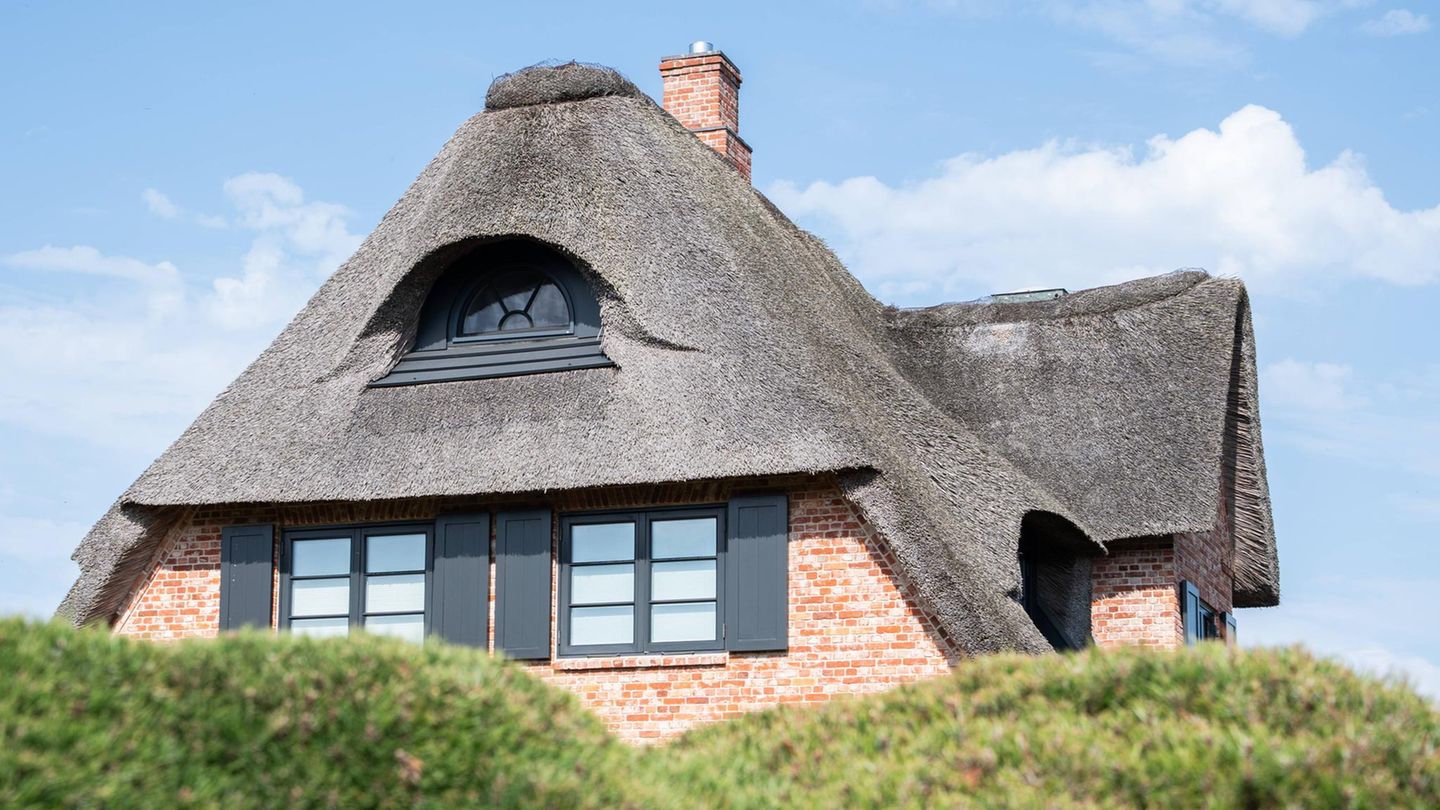
For the global elite, the North Frisian island of Sylt has long served as more than just a seaside retreat; We see a high-yield asset class and a potent symbol of social standing. In the corridors of European luxury real estate, the island is often whispered about as the “Hamptons of Germany,” where the scarcity of land meets an insatiable demand from high-net-worth individuals (HNWIs).
However, recent market data suggests that the island’s property landscape has transitioned from merely expensive to an echelon of “real estate madness.” In prime locations, the cost of entry has reached staggering heights, with some premium properties commanding prices of up to €12,500 per square meter and in the most exclusive enclaves, figures can climb significantly higher.
As a financial journalist who has tracked global market bubbles and luxury trends for nearly two decades, I find the Sylt phenomenon particularly instructive. It is a textbook example of the “scarcity principle” in economics: when supply is strictly capped by geography and stringent building regulations, price becomes decoupled from traditional utility and instead reflects pure prestige and speculative value.
For investors and homeowners alike, the current trajectory of Sylt real estate prices raises critical questions about sustainability, local displacement, and the resilience of the luxury market in an era of fluctuating interest rates.
The Economics of Exclusivity: Why Sylt Defies Gravity
The price surge on Sylt is not an accident of the market but a result of a perfect storm of economic factors. First and foremost is the absolute limitation of land. As an island with strict environmental protections and rigid zoning laws, there is virtually no room for new large-scale developments. This creates a closed loop where the only way to acquire prime land is to buy an existing property, driving prices upward in a perpetual bidding war.

Sylt has become a “safe haven” asset. During periods of volatility in the global stock markets or instability in mainland European currencies, the wealthy often pivot toward tangible, high-value real estate in stable jurisdictions. Germany’s legal framework for property ownership provides a level of security that makes a villa in Kampen as attractive as a penthouse in Manhattan or a chalet in Courchevel.
The psychological component—the “Veblen effect”—also plays a massive role. In the world of luxury goods, demand for a product often increases as its price rises because the high price itself becomes a signal of status. On Sylt, owning a property in a prestigious neighborhood is not just about the square footage; it is about the exclusivity of the club.
Prime Locations: The Divide Between Kampen and the Rest
While the average prices across the island are high, the distribution is heavily skewed toward specific “hotspots.” Kampen, located on the western side of the island, remains the undisputed epicenter of luxury. Here, the combination of dunes, beachfront access, and a historic concentration of wealth creates a micro-market where prices often deviate from the island’s general averages.
In contrast, areas like Westerland offer more commercial activity and a different profile of property, though they still command premiums far above the German mainland. The disparity between these zones illustrates a fragmented market: one driven by lifestyle and prestige (Kampen), and another driven by tourism and rental yields (Westerland).
For those tracking the metrics, the square meter price is the most revealing indicator. When a property reaches the €12,500 per square meter mark, the buyer is no longer paying for bricks, mortar, or even the view. They are paying for the rarity of the location. In many cases, these properties are held as “land banks,” where the structure is secondary to the value of the plot itself.
The Social Cost of the Property Boom
From a macroeconomic perspective, the “real estate madness” on Sylt has a dark side: the systematic displacement of the local workforce. As properties are converted into secondary residences or short-term luxury rentals, the available housing stock for permanent residents has plummeted.
This creates a paradoxical crisis. The very people required to maintain the island’s luxury infrastructure—hospitality staff, artisans, and healthcare workers—can no longer afford to live within a reasonable distance of their workplaces. This “gentrification on steroids” threatens the long-term operational viability of the island’s tourism industry.
Local government efforts to curb this trend have seen mixed results. While some regulations aim to limit the conversion of residential homes into vacation rentals, the sheer volume of capital flowing into the island often overwhelms local policy. The result is a hollowed-out community where many villages are ghost towns for half the year, only to swell with wealthy visitors during the peak seasons.
Market Outlook: Is a Correction Coming?
The central question for any investor is whether Sylt is a bubble waiting to burst. Historically, ultra-luxury real estate is more resilient to economic downturns than the middle market. High-net-worth individuals are less dependent on mortgages and more capable of absorbing periods of stagnation.
However, the current economic climate introduces new variables. Higher interest rates across the Eurozone have cooled the broader German property market, leading to a slight correction in prices for standard residential homes. While the ultra-prime segment on Sylt has remained largely insulated, a prolonged global economic slowdown could eventually dampen the appetite for speculative luxury acquisitions.
there is the growing trend of “sustainable luxury.” Modern buyers are increasingly looking for properties that meet rigorous energy efficiency standards. Many of Sylt’s older, prestigious villas require massive renovations to meet current environmental mandates, which could lead to a price divergence between “green-certified” luxury homes and traditional estates.
Key Market Indicators for Sylt Real Estate
| Metric | Trend | Primary Driver |
|---|---|---|
| Prime Sqm Price | Increasing | Limited land supply & HNWI demand |
| Rental Yields | Stable/High | Strong demand for luxury short-term lets |
| Local Availability | Decreasing | Conversion to secondary residences |
| Buyer Profile | International/National Elite | Safe-haven asset seeking |
What Happens Next?
The trajectory of Sylt’s property market will likely be determined by two factors: the evolution of regional building laws and the continued appetite for “trophy assets” among the global wealthy. If the state of Schleswig-Holstein introduces more aggressive measures to protect local housing, we may see a shift in how properties are valued and utilized.

For the observer, Sylt serves as a microcosm of a global trend where real estate in “super-prime” locations is becoming a separate asset class entirely, detached from the local economy and tied instead to the movement of global capital.
The next official market valuation report from the Schleswig-Holstein state government is expected to provide more granular data on the impact of recent zoning changes and price shifts. We will be monitoring these filings closely to see if the “madness” is reaching a ceiling or if the climb continues.
Do you believe the luxury real estate market on Sylt is a sustainable investment or a speculative bubble? Share your thoughts in the comments below or join the conversation on our professional networks.