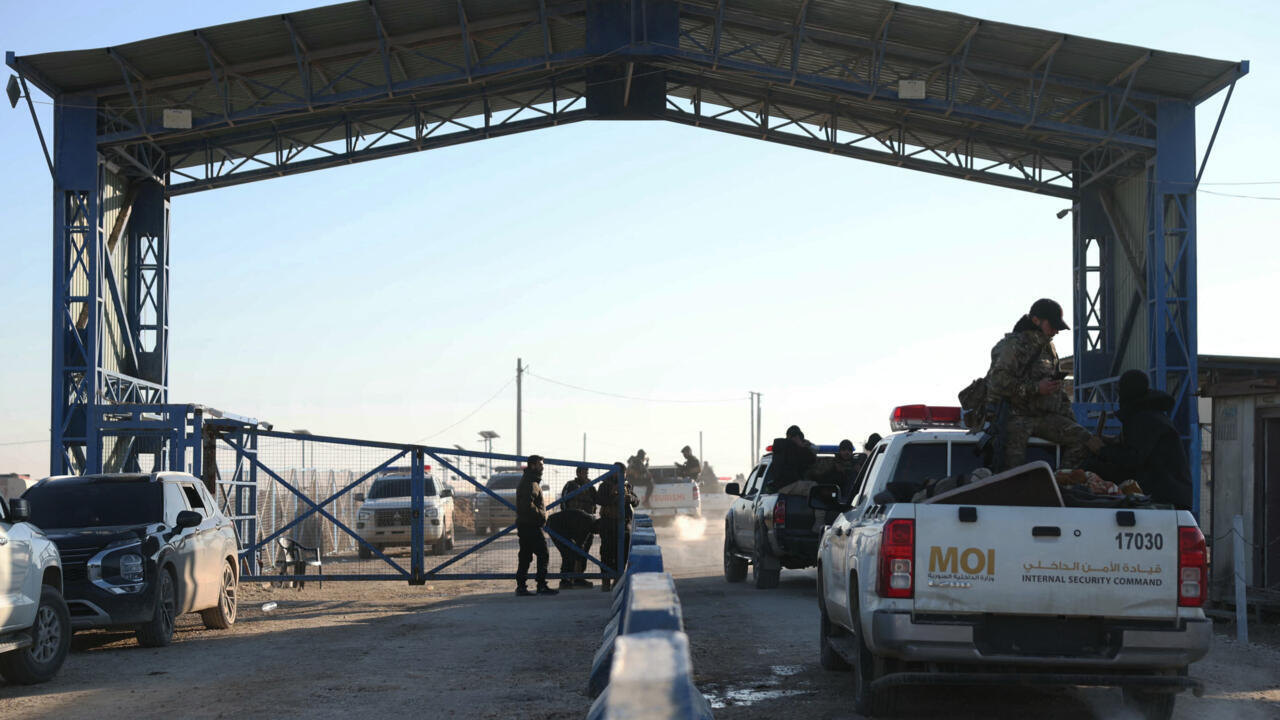
Northeastern Syria – A mass escape from al-Hol camp, the largest detention facility for individuals linked to the Islamic State (IS) group, has been confirmed by Syrian authorities, raising significant security concerns across the region. The escape, involving potentially thousands of individuals, occurred following the withdrawal of Kurdish-led Syrian Democratic Forces (SDF) from the camp last month, leaving a security vacuum exploited by those detained within its walls. The unfolding situation underscores the ongoing challenges in addressing the fate of IS-affiliated individuals and their families, and the potential for renewed instability in a region already grappling with complex geopolitical dynamics.
The Syrian interior ministry confirmed on Wednesday that the camp had been compromised following the SDF’s departure, with more than 138 breaches discovered in the 17-kilometer perimeter wall. Noureddine al-Baba, a spokesperson for the ministry, stated that the withdrawal was conducted without prior coordination with Syrian authorities or the international coalition against IS, creating a “chaotic situation” that facilitated the mass escape. The scale of the exodus is still being assessed, but estimates range from 15,000 to 20,000 individuals, including those affiliated with IS, according to US intelligence agencies, as reported by the Wall Street Journal. An internal memo circulated among European Union member states also indicated that thousands may have fled, raising alarms about potential security risks.
The Withdrawal and Subsequent Chaos at al-Hol
Al-Hol camp, located in the al-Hassakeh province of northeastern Syria, had long been under the control of the SDF. For years, the SDF managed the camp, which housed not only suspected IS fighters but also their wives and children, many of whom were brought to the camp as the territorial caliphate collapsed in 2019. The camp became a focal point for international concern due to the challenging humanitarian conditions and the radicalization risks within its population. The SDF’s decision to withdraw stemmed from what they described as “international indifference” to the plight of those in the camp and a failure by the international community to accept responsibility for addressing the issue, as stated in January.
The withdrawal on January 20th left a void quickly filled by Syrian government forces. However, the abrupt handover and lack of coordination created a security lapse that was immediately exploited. According to al-Baba, the SDF’s sudden departure left the camp “opened up in a haphazard manner,” allowing for the organized escape of detainees. The discovery of over 138 breaches in the perimeter wall confirms the extent of the security failures. The situation highlights the complexities of managing a large population of individuals with ties to a designated terrorist organization, particularly in a region marked by ongoing conflict and political instability.
The Composition of al-Hol Camp and the Fate of Escapees
Prior to the mass escape, al-Hol camp housed approximately 23,500 people, the majority of whom were Syrian and Iraqi nationals. However, a significant portion of the population – around 6,500 individuals – consisted of foreigners from 44 different countries, held in a high-security section of the camp. The presence of foreign nationals further complicates the situation, raising questions about repatriation efforts and the legal frameworks governing their return to their home countries.
The fate of those who escaped remains largely unknown. Syrian authorities have moved the remaining families still at al-Hol to another site in the country’s north, but the whereabouts of the escapees are uncertain. The potential for these individuals to regroup and re-engage in terrorist activities is a major concern for regional and international security officials. The escapees include not only committed radicals but also women and children who were victims of IS, creating a complex humanitarian and security challenge.
International Response and Concerns
The mass escape from al-Hol has prompted a renewed focus on the broader issue of managing IS detainees and their families in Syria and Iraq. Prior to the SDF withdrawal, the United States military had already begun transferring detained IS suspects from Syrian prisons to Iraq, with over 5,700 individuals transferred and plans to move around 7,000 in total. This move, while intended to alleviate the burden on Syrian facilities, has also raised concerns about due process and the conditions of detention in Iraq.
The European Union has expressed particular concern about the potential security implications of the mass escape, with an internal memo highlighting the unclear status of third-country nationals who fled the camp. The memo underscored the need for increased intelligence sharing and coordinated efforts to monitor and potentially apprehend those who escaped. The incident has also reignited the debate about the responsibility of individual nations to repatriate their citizens who were involved with IS, a process that has been hampered by legal and political obstacles.
The Broader Context of IS in Syria and Iraq
The rise and fall of the Islamic State group between 2014 and 2019 left a lasting impact on Syria and Iraq. IS swept across both countries, committing atrocities and establishing a self-proclaimed caliphate. Backed by a US-led international coalition, Iraqi forces declared victory over IS in 2017, and the SDF ultimately defeated the group in Syria two years later. However, despite the territorial defeat of IS, the group continues to pose a threat through its network of sleeper cells and its ability to inspire attacks around the world.
The detention of thousands of suspected jihadists and their families in camps like al-Hol represents a significant challenge to long-term stability in the region. The conditions within these camps, characterized by overcrowding, limited resources, and radicalization risks, create a breeding ground for resentment and potential future conflict. Addressing this challenge requires a comprehensive strategy that includes not only security measures but also rehabilitation programs, deradicalization efforts, and a commitment to addressing the underlying factors that contribute to extremism.
Key Takeaways
- Mass Escape Confirmed: Syrian authorities have confirmed a large-scale escape from al-Hol camp following the withdrawal of SDF forces.
- Security Vacuum: The abrupt SDF withdrawal created a security vacuum that allowed for the organized escape of potentially thousands of individuals.
- International Concerns: The incident has raised significant security concerns among international actors, particularly regarding the fate of foreign nationals who escaped.
- Ongoing Threat: Despite its territorial defeat, IS continues to pose a threat through its network of sleeper cells and its ability to inspire attacks.
The situation at al-Hol camp serves as a stark reminder of the enduring challenges posed by the legacy of the Islamic State. The mass escape underscores the need for a coordinated international response to address the fate of IS-affiliated individuals and their families, and to prevent the resurgence of the group in Syria and beyond. Further updates on the situation are expected as Syrian authorities continue to assess the extent of the escape and the potential security implications.
As investigations continue and the full scope of the escape becomes clearer, the international community faces a critical juncture in its efforts to counter terrorism and promote stability in the region. The coming weeks and months will be crucial in determining whether this incident represents a temporary setback or a harbinger of a more significant resurgence of IS.
What are your thoughts on the situation in Syria? Share your comments below and let us know what you think should be done to address this complex issue. Please also share this article with your network to raise awareness about this critical situation.
Worth a look