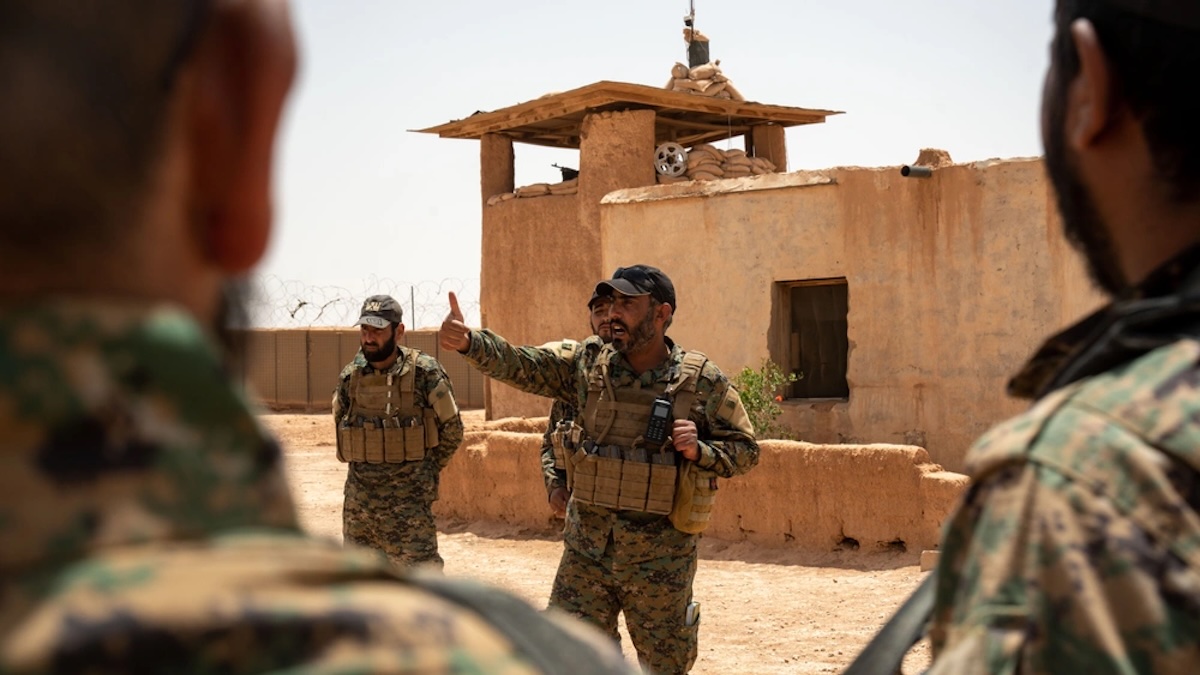
The withdrawal of U.S. Forces from Syria has reshaped the geopolitical landscape, leaving a vacuum that has prompted a reassessment of counterterrorism strategies and regional power dynamics. While the initial rationale for intervention centered on combating the Islamic State (ISIS), the evolving situation has led to questions about the efficacy of continued military presence versus a shift towards alternative approaches. The recent handover of control from U.S. Forces to the Syrian government, particularly at al-Tanf, has been a pivotal moment, prompting analysis of whether the outcome aligns with earlier strategic recommendations.
In 2024, Thanassis Cambanis, director of Century International, argued for a U.S. Withdrawal from Syria coupled with sustained investment in counterterrorism measures. His analysis posited that allowing the Syrian government to assume responsibility for controlling ISIS, while simultaneously bolstering counterterrorism efforts, would be a more effective long-term strategy. Now, two years after the American withdrawal and with a fresh Syrian government in power, the reality on the ground appears to diverge from that envisioned scenario, according to Cambanis himself. The withdrawal, rather than facilitating a smooth transition, has been characterized by chaos and the creation of power vacuums.
A Disrupted Withdrawal and Shifting Alliances
Cambanis notes that the U.S. Withdrawal failed to capitalize on opportunities to strengthen relationships with Iraq, a key partner in the fight against ISIS. Instead of leveraging the withdrawal to enhance regional cooperation, the process resulted in a destabilizing situation. A significant consequence of the U.S. Departure was the Syrian government’s takeover of territory previously held by the Syrian Democratic Forces (SDF), effectively abandoning its Kurdish allies. The fate of high-risk ISIS detainees during this transition remains a concern, with the exact number of those who escaped remaining unknown. This uncertainty poses a continuing threat to regional and international security.
The United States, according to Cambanis, gained little political capital from either Syria or Iraq in exchange for its withdrawal. While the Syrian government likely appreciates the removal of an obstacle to its territorial ambitions, the relationship with Iraq appears to have been more transactional. Baghdad accepted a “bulk transfer of Islamic State detainees” from the U.S., a move Cambanis suggests benefited Iraq more than the United States. This highlights a broader pattern of the U.S. Receiving limited returns on its investment in the region.
The Assad Regime’s Consolidation of Power
Since the U.S. Withdrawal, the Assad regime has been actively consolidating its control over Syrian territory. This has involved not only reclaiming areas previously held by the SDF but also suppressing any remaining opposition forces. The Syrian government, backed by its allies, has demonstrated a willingness to use force to achieve its objectives, raising concerns about human rights abuses and the potential for further instability. The re-establishment of Syrian government authority, while potentially contributing to a reduction in ISIS activity in some areas, has arrive at a significant cost to the local population and the prospects for a political resolution to the conflict.
The situation in Syria remains complex and volatile. The ongoing presence of ISIS, despite its territorial losses, continues to pose a threat. The group has demonstrated an ability to adapt and operate as an insurgency, carrying out attacks in Syria and neighboring countries. The withdrawal of U.S. Forces has created opportunities for ISIS to regroup and exploit the security vacuum, particularly in areas where the Syrian government’s control is weak. Cambanis’s earlier work, published in *The Atlantic* in 2017, highlighted the dangers of allowing ungoverned spaces to emerge, providing fertile ground for extremist groups to flourish.
Counterterrorism in a Post-Withdrawal Syria
The question now is how to effectively counter the threat of ISIS in a Syria where the U.S. Military presence has been significantly reduced. Cambanis’s original argument centered on the importance of investing in sustainable counterterrorism measures, rather than relying on a long-term military occupation. This could include strengthening the capacity of local security forces, improving intelligence gathering, and addressing the underlying socio-economic factors that contribute to radicalization. However, the current situation presents significant challenges to implementing such a strategy.
The Syrian government’s track record on counterterrorism is mixed. While it has demonstrated a willingness to confront ISIS, its brutal tactics and disregard for human rights have alienated large segments of the population, potentially fueling resentment and creating new opportunities for extremist groups to exploit. The Syrian government’s close ties to Iran and Russia raise concerns about its willingness to cooperate with Western countries on counterterrorism efforts. The lack of transparency and accountability within the Syrian government also makes it difficult to assess the effectiveness of its counterterrorism strategies.
The Role of Iraq and Regional Cooperation
The role of Iraq is crucial in any long-term strategy to counter ISIS in Syria. As Cambanis pointed out, Iraq’s acceptance of ISIS detainees was a pragmatic step, but it also highlights the need for greater regional cooperation on counterterrorism. This could involve sharing intelligence, coordinating border security, and addressing the flow of foreign fighters. However, political tensions between Iraq and Syria, as well as the involvement of other regional actors, complicate efforts to forge a unified approach.
The ongoing conflict in the Middle East, coupled with the rise of new geopolitical challenges, has diverted attention and resources away from the fight against ISIS. The war in Ukraine, for example, has consumed much of the international community’s focus, leaving less room for addressing the situation in Syria. This creates a dangerous situation, as ISIS could exploit the distraction to rebuild its capabilities and launch new attacks.
Looking Ahead: Challenges and Uncertainties
The U.S. Withdrawal from Syria has created a complex and uncertain situation. While Cambanis’s initial argument for withdrawal and a focus on counterterrorism remains relevant, the actual implementation has fallen short of expectations. The chaotic nature of the withdrawal, the abandonment of Kurdish allies, and the limited gains in regional cooperation have all contributed to a less favorable outcome. The Assad regime’s consolidation of power, while potentially reducing ISIS activity in some areas, has come at a significant cost to the Syrian people and the prospects for a political solution.
The future of Syria remains deeply uncertain. The ongoing presence of ISIS, the involvement of multiple external actors, and the lack of a clear political roadmap all pose significant challenges. The international community must remain engaged in Syria, not only to counter the threat of terrorism but also to address the humanitarian crisis and support efforts to achieve a lasting peace. The situation requires a nuanced and comprehensive approach that takes into account the complex political and security dynamics on the ground.
The next key development to watch will be the Syrian government’s continued efforts to consolidate control over remaining areas of opposition and the potential for further escalation of conflict. Monitoring the movement and activities of ISIS fighters, as well as the fate of detainees transferred to Iraq, will also be crucial. Continued analysis and reporting on the evolving situation in Syria are essential to inform policy decisions and mitigate the risks posed by terrorism and instability.
What are your thoughts on the U.S. Withdrawal from Syria and its impact on the fight against ISIS? Share your perspectives in the comments below, and please share this article with your networks to foster informed discussion.
Keep reading