
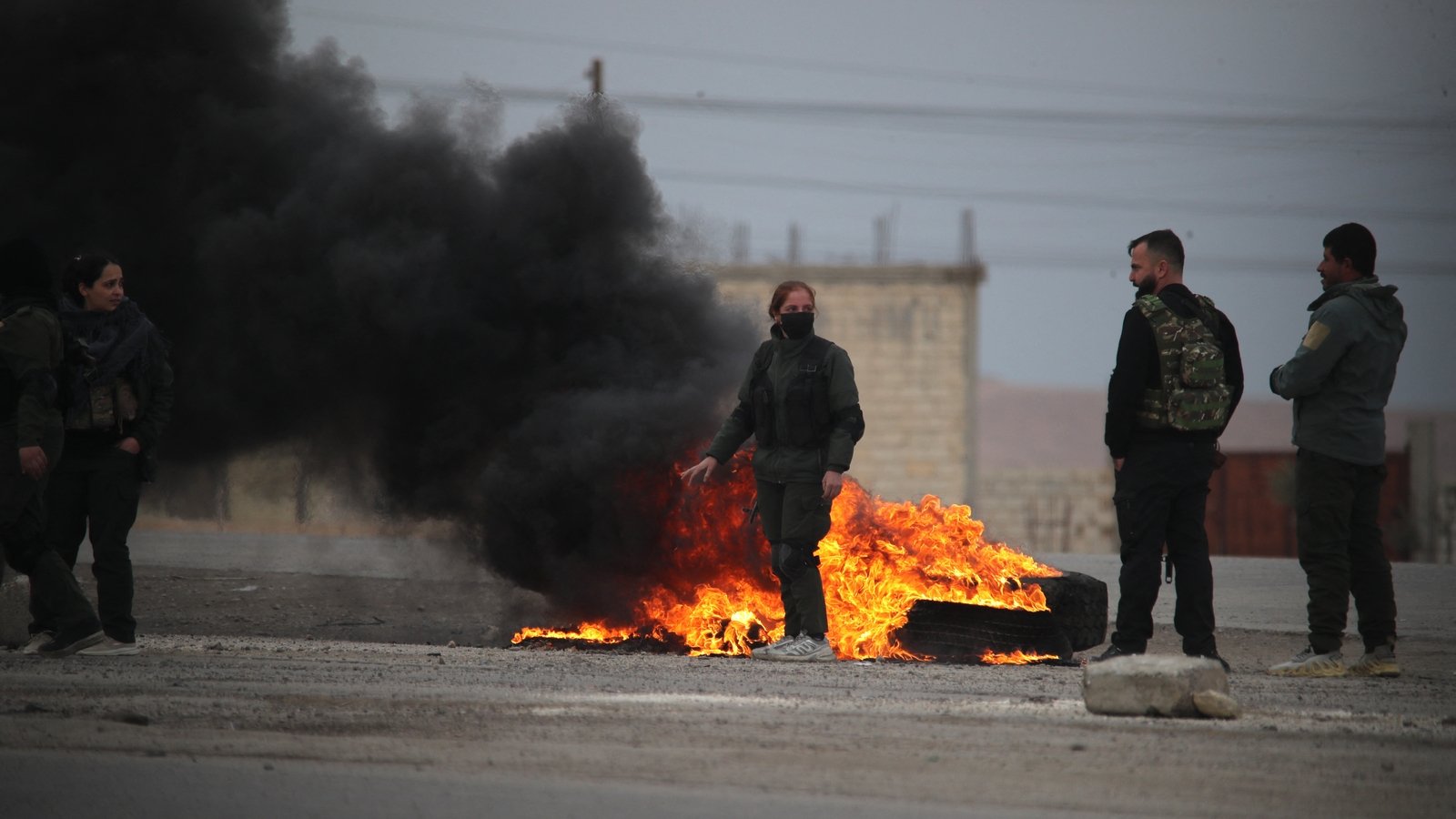
Syria Reasserts Control Over Kurdish-Held Territories Amidst Lingering Tensions
Beirut, Lebanon – The Syrian army has intensified its campaign to regain control of northern Syria, successfully dislodging Kurdish forces from areas where they had maintained de facto autonomy for over a decade. This recent surge in government control follows a presidential decree recognizing Kurdish as a national language,a move viewed by Kurdish leaders as insufficient to address their long-standing demands for greater self-governance.
The military operation gained momentum after a march agreement aimed at integrating Kurdish forces into the Syrian army stalled, prompting the government to take decisive action. Over the past week,Syrian troops have driven Kurdish fighters from two neighborhoods in Aleppo and secured territory east of the city. Yesterday, the army entered Tabqa in Raqa province, seizing the city’s military airport and two key oil fields, as reported by the state-run SANA news agency.
Eyewitness accounts from Deir Hafer, located approximately 50km east of Aleppo, confirm the withdrawal of Kurdish-led Syrian Democratic Forces (SDF) fighters and the subsequent arrival of Syrian army personnel. While the government claims four soldiers were killed during the operations, Kurdish forces report several fatalities on their side, wiht both parties accusing each other of violating the terms of the stalled integration agreement.
The Syrian army has declared a swathe of territory southwest of the Euphrates River a “closed military zone,” imposing a curfew in the Raqa region and warning against any military activity. Mazloum Abdi, the commander of the SDF, had previously committed to redeploying forces east of the Euphrates, but the SDF now alleges that Syria has “violated the recent agreements and betrayed our forces,” citing clashes south of Tabqa. Damascus has urged the SDF to fully withdraw to the east of the Euphrates River as initially agreed.
The SDF’s control over significant portions of Syria’s oil-rich north and northeast, acquired during the civil war and the fight against the Islamic State group, is central to the current conflict. The recent developments have drawn international attention, with US envoy Tom Barrack meeting with SDF chief Mazloum abdi in Erbil.The United States, while historically supportive of the Kurds, also maintains ties with the Syrian government.
The US military’s Central Command has called for Syrian government forces to halt offensive actions between Aleppo and al-Tabqa. Furthermore, France’s President Emmanuel Macron and the president of Iraqi Kurdistan, Nechirvan Barzani, have jointly appealed for de-escalation and a ceasefire.
Kurdish Recognition and Unmet Aspirations
President Ahmed al-Sharaa’s decree recognizing Kurdish as a national language marks the first formal acknowledgement of Kurdish rights in Syria’s history. The decree designates Kurds as “an essential and integral part” of Syria and restores nationality to Kurds who had been stripped of it under a 1962 census. Though, Kurdish authorities have characterized the decree as a “first step” that falls short of their broader aspirations for constitutional recognition and self-governance.
“Rights are not protected by temporary decrees, but through permanent constitutions that express the will of the people and all components of society,” a statement from the Kurdish management in northeast Syria asserted. Residents in qamishli echoed this sentiment, emphasizing the need for constitutional guarantees.
According to Nanar Hawach, a senior Syria analyst at the International Crisis Group, the decree represents a strategic move by the Syrian government to consolidate military control while offering limited cultural concessions.”Sharaa is comfortable granting cultural rights, but draws the line at power-sharing,” Hawach explained, suggesting that the government is attempting to “drive a wedge between Kurdish civilians and the armed forces that have governed them for a decade.”
Meanwhile, the US military reported a strike in northwest Syria that eliminated a militant linked to a recent attack targeting three Americans. The situation remains volatile as the Syrian government continues its efforts to reassert control over the north, and the future of Kurdish autonomy hangs in the balance.
Keywords: Syria, Syrian Army, Kurdish Forces, SDF, Raqa, Aleppo, Tabqa, Deir Hafer, Syrian Civil War, Kurdish Rights, Ahmed al-Sharaa, Mazloum Abdi, US involvement, France, International Crisis group, Oil Fields, euphrates River.





