Syria currently functions as a central, highly contested theater in Middle East geopolitics, characterized by a “frozen” conflict rather than widespread peace. While large-scale frontline shifts seen during the height of the civil war have diminished, the country remains divided among several competing factions, including the government of Bashar al-Assad, Kurdish-led forces, and various opposition groups. This fragmentation has turned Syrian territory into a primary arena for proxy tensions involving Iran, Israel, and the United States.
The current landscape in Syria is defined by a complex intersection of internal stabilization and external military friction. While some analysts note a reduction in major domestic combat operations, the country continues to experience frequent aerial strikes and localized skirmishes. According to reports from the Reuters news agency, these strikes are often linked to the ongoing shadow war between Israel and Iranian-aligned militias operating within Syrian borders.
How has the nature of the Syrian conflict changed?
For much of the last decade, Syria was defined by high-intensity civil warfare involving multiple international actors. Since roughly 2020, the conflict has transitioned into what many geopolitical analysts describe as a stalemate. The frontline has largely stabilized, with the Assad government maintaining control over the majority of the population centers, including Damascus, Aleppo, and Homs.
However, this stability is not uniform across the country. Syria remains split into three primary zones of influence:
- Government-controlled areas: The central government, supported by Russian and Iranian military assets, controls the western and southern portions of the country.
- Northeast Syria: The Syrian Democratic Forces (SDF), backed by a United States military presence, control much of the oil-rich eastern regions.
- Northwest Syria: The Idlib province remains under the influence of various opposition groups, most notably Hayat Tahrir al-Sham (HTS), while parts of the north are under Turkish military influence.
This division means that while the “war” as a total state collapse has subsided, the country remains a patchwork of competing jurisdictions. The reduction in large-scale movement between these zones has led some to describe the situation as a “calm,” though this term is contested by humanitarian organizations that point to the ongoing volatility of the region.
What is the impact of Iran and the U.S. on Syrian stability?
Syria’s role in the broader Middle East conflict is heavily dictated by the presence of foreign powers. The country serves as a critical corridor for Iranian influence, which extends from Tehran through Baghdad and Damascus to Hezbollah in Lebanon. This presence has made Syria a frequent target for Israeli military operations aimed at disrupting Iranian logistics and weapon transfers.
The United States maintains a strategic presence in eastern Syria, primarily to support the SDF in the fight against remnants of ISIS and to monitor Iranian expansion. This presence creates a persistent point of friction. According to the BBC, the risk of direct or indirect confrontation between U.S. and Iranian-aligned forces in Syria remains a significant driver of regional instability.
The tension is not limited to ground presence. The airspace over Syria is frequently utilized for intelligence gathering and kinetic strikes. The “war between wars”—a term often used to describe Israel’s campaign against Iranian assets—has become a routine aspect of the Syrian landscape. These operations are intended to prevent the “entrenchment” of Iranian forces, which Israel views as a direct threat to its national security.
Why is the Syrian economy struggling despite reduced fighting?
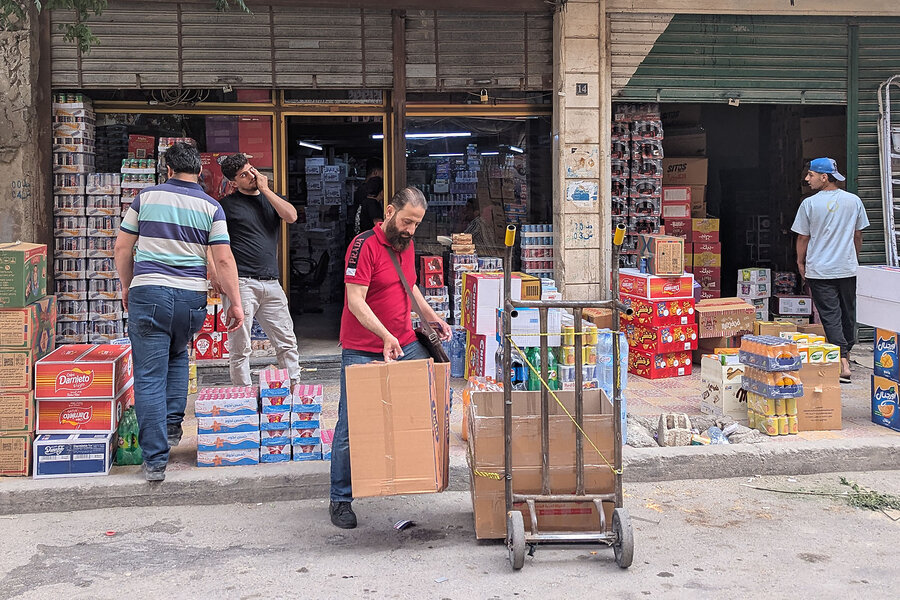
The lack of high-intensity combat has not translated into economic recovery for the Syrian population. Instead, the country faces a profound humanitarian and economic crisis that many international agencies suggest is as damaging as the war itself. The Syrian pound has experienced massive devaluation, and the cost of basic necessities has climbed beyond the reach of much of the population.
Several factors contribute to this economic stagnation:
- International Sanctions: The United States’ Caesar Act, passed in 2019, imposes heavy sanctions on entities supporting the Assad government, significantly limiting Syria’s ability to engage in international trade and reconstruction.
- Infrastructure Damage: Over a decade of conflict has decimated Syria’s power grids, water systems, and transportation networks, making large-scale rebuilding efforts prohibitively expensive.
- Resource Scarcity: The loss of control over major oil and gas fields in the northeast has deprived the central government of vital revenue streams.
The UNHCR has noted that the combination of economic collapse and the destruction of livelihoods has left millions of Syrians dependent on international aid. Even in areas where active fighting has ceased, the lack of economic opportunity continues to drive migration and internal displacement.
Comparison: Syria’s Conflict Status (2015 vs. 2024)
| Feature | Peak Conflict Era (c. 2015) | Current Status (2024) |
|---|---|---|
| Frontline Movement | High; frequent territorial shifts | Low; largely frozen/static lines |
| Primary Combat Style | Large-scale ground offensives | Aerial strikes and proxy skirmishes |
| Territorial Control | Highly fragmented and fluid | Structured into three main zones |
| Major External Drivers | Direct intervention by global powers | Regional proxy management |
How is Syria being reintegrated into the Arab world?
A significant geopolitical shift occurred in May 2023, when the Arab League voted to readmit Syria into the organization. This move signaled a departure from the previous policy of isolation that had characterized much of the post-2011 era. Several Arab nations have moved to normalize relations with the Damascus government, viewing the Assad administration as a necessary component of regional stability and a tool for managing the refugee crisis.

This normalization, however, remains incomplete. Many Western nations and several regional neighbors continue to tie full diplomatic and economic reintegration to political reforms and the return of refugees. The tension between the “normalization” trend in the Arab world and the “isolation” policy of the West remains a defining feature of Syria’s current diplomatic standing.
Frequently Asked Questions
Is the war in Syria over?
No. While the scale of combat has decreased significantly compared to previous years, the conflict is considered “frozen” rather than resolved. The country remains divided among different controlling factions, and localized violence continues.
What role does Russia play in Syria?
Russia maintains a significant military presence in Syria, including airbases at Hmeimim and naval facilities in Tartus. Russia’s intervention in 2015 was a decisive factor in helping the Assad government regain control of major cities.
Why is the U.S. still in Syria?
The United States maintains a presence in northeastern Syria primarily to support the Syrian Democratic Forces (SDF) in their mission to prevent the resurgence of ISIS and to maintain a strategic counterweight to Iranian influence in the region.
When will reconstruction begin?
Large-scale reconstruction is currently hindered by international sanctions, particularly those from the U.S., and the lack of a unified political settlement. Most reconstruction efforts are currently limited to localized, small-scale projects.
The next significant checkpoint for Syrian geopolitics will be the upcoming regional summits scheduled for late 2024, where the status of Syrian reintegration and the management of cross-border security will be central topics of discussion.
Please share your thoughts on the changing landscape in the Middle East in the comments below.
Worth a look