
The struggle over Taiwan’s national security spending has evolved into a high-stakes political drama, pitting the government’s ambitious defense goals against a fractured opposition. At the center of this tension is a massive dispute over the Taiwan military procurement budget, as the Kuomintang (KMT) struggles to find a unified voice on how much the island should spend on weaponry and where those funds should be allocated.
Taichung Mayor Lu Shiow-yen, a prominent figure within the KMT, has emerged as a moderating force amid the turmoil. Speaking at a dinner with the American Chamber of Commerce in Taichung, Lu emphasized that the party’s official stance on procurement remains fluid. She noted that although the KMT has discussed a “380 billion + N” funding model, no final agreement has been reached—a situation mirrored by the ruling Democratic Progressive Party (DPP), whose own proposals are still under legislative negotiation.
The current impasse centers on a proposed defense special ordinance submitted by the Executive Yuan, which calls for a budget of 1.25 trillion TWD to bolster Taiwan’s defense capabilities. The scale of this spending has triggered a wide range of reactions within the KMT, ranging from cautious skepticism to calls for significantly higher investment to ensure national survival.
The Budget Battle: 1.25 Trillion vs. 380 Billion + N
The legislative deadlock is defined by two starkly different financial visions. The government’s 1.25 trillion TWD proposal is designed to accelerate the buildup of military forces to ensure combat readiness in the short term. In contrast, a faction of the KMT has advocated for a “380 billion + N” version, which bases additional spending on specific lists provided by the United States rather than a blanket appropriation.
However, the “380 billion + N” approach has faced significant internal pushback. Reports indicate a growing divide within the KMT, with some members arguing that the figure is too low to meet actual security needs. Mayor Lu Shiow-yen, following a visit to the United States, has suggested that a more reasonable procurement figure would fall between 800 billion and 1 trillion TWD to adequately strengthen the island’s defenses.
Other KMT figures have echoed this sentiment. Legislator Hsu Chiao-hsin has proposed an 800 billion TWD version, while party leader Chao Shih-kuan has mentioned the need to first earmark 810 billion TWD. This fragmentation has left the KMT caucus in a state of “fighting,” with recent party meetings ending without a formal resolution as the two factions—those supporting the 380 billion + N model and those favoring the 800 billion+ range—clashed over the proper strategy.
Internal Friction and the Call for Unity
The disagreement over numbers has spilled over into personal and political attacks within the KMT. The tension reached a boiling point when KMT Vice Chairman Ji Lin-lian criticized Legislative Speaker Han Kuo-yu, alleging that Han’s perceived support for an 800 billion TWD procurement plan constituted “selling out the party.” Ji went as far as to suggest that Han should be expelled from the party if these rumors were proven true.
Mayor Lu Shiow-yen has stepped in to defend Han, urging the party to prioritize stability over internal disputes. Speaking on April 30 during a labor event, Lu described Han as someone who is “working for the country and the people” and urged party members to respect and cherish his role in the legislature while navigating the pressures of his office. Lu stressed that in a century-old democratic party, differing opinions on major issues are natural, but insisted that the KMT “must remain united.”
This internal strife comes at a critical time, as the Legislative Yuan attempts to move the defense ordinance forward. The lack of a unified opposition stance has complicated the negotiation process, though Lu has publicly argued that national defense should not be used as a tool for political maneuvering between parties.
Defense Autonomy and the ‘Taichung Model’
Beyond the budgetary numbers, a deeper philosophical debate is unfolding regarding “defense autonomy”—the ability of Taiwan to develop its own military hardware rather than relying solely on foreign imports. During her interaction with the American Chamber of Commerce, Lu Shiow-yen argued that the “380 billion + N” model, which focuses heavily on U.S.-provided lists, might not align with the needs of local industry.
Lu positioned Taichung as a “pioneer city for drones,” highlighting the city’s unique concentration of industries including aerospace, AI, optics, machinery, and semiconductors. She pointed to the presence of Aerospace Industrial Development Corporation (AIDC), Taiwan’s largest defense company, as evidence that the city is already equipped to drive defense autonomy. According to Lu, this transition to local production is not a future goal but a current reality, noting that the drone company Thunder Tiger is already investing in the United States with American assistance.
For Lu, the goal is to ensure that military spending supports a domestic ecosystem that can sustain Taiwan’s security independently. By integrating AI and chip technology into defense production, she believes Taiwan can move toward a more sustainable model of self-reliance that complements its strategic partnership with the U.S.
Key Stakeholders in the Procurement Dispute
| Stakeholder | Proposed Budget / Position | Primary Objective |
|---|---|---|
| Executive Yuan (DPP) | 1.25 Trillion TWD | Rapid buildup of combat readiness and short-term force formation. |
| KMT (Conservative Faction) | 380 Billion + N | Spending based on specific U.S. Lists; cautious appropriation. |
| Lu Shiow-yen / Reformists | 800 Billion to 1 Trillion TWD | Balanced procurement with a focus on defense autonomy and local industry. |
| Han Kuo-yu | Legislative Mediator | Facilitating cross-party negotiations to break the deadlock. |
What Happens Next?
The immediate future of Taiwan’s defense spending rests on the ability of the legislature to find a middle ground. The “380 billion + N” proposal remains a point of contention, while the government continues to push for the full 1.25 trillion TWD budget to avoid delays in critical hardware acquisitions.
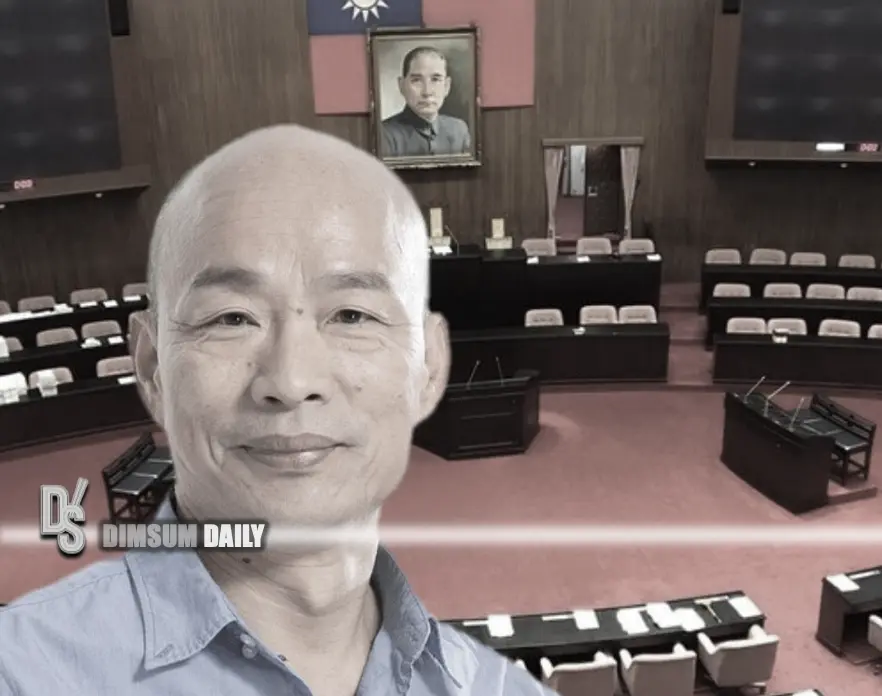
The next critical checkpoint is scheduled for May 6, when Legislative Speaker Han Kuo-yu is expected to convene the fourth round of negotiations on the defense special ordinance to attempt a breakthrough in the deadlock. Whether the KMT can present a unified front or if the party will remain split between its “budget-conscious” and “security-first” wings will likely determine the final amount approved for Taiwan’s military modernization.
World Today Journal will continue to monitor the legislative proceedings in Taipei. We invite our readers to share their perspectives on the balance between defense spending and economic autonomy in the comments below.
Worth a look