
The “Thucydides Trap”—the theory that a rising power and an established hegemon are destined for conflict—faces renewed scrutiny as contemporary geopolitical crises in Ukraine and the Middle East challenge traditional models of great power confrontation. Scholars and analysts are increasingly questioning whether this framework, popularized by political scientist Graham Allison, remains a relevant tool for assessing the risk of conflict between the United States and China or whether it overlooks the complexities of modern, asymmetric warfare and the limitations of superpower influence.
Recent developments, including the ongoing war in Ukraine and regional tensions involving Iran, suggest that the ability of major powers to dictate outcomes has diminished. According to an analysis by the Wall Street Journal, global superpowers are increasingly confronting the reality that they are no longer omnipotent, as regional actors and localized conflicts force shifts in strategic priorities and military resource allocation. This shift complicates the binary logic of the Thucydides Trap, which assumes a linear path toward a zero-sum struggle between two primary antagonists.
Beyond the Thucydides Trap: A Shifting Global Order
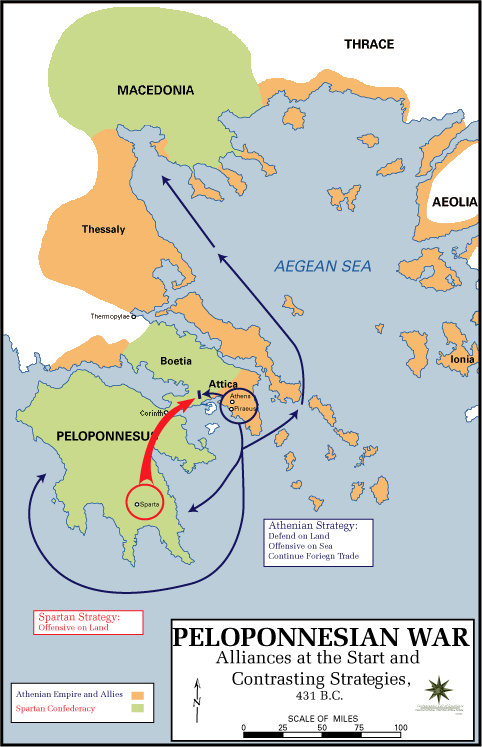
The Thucydides Trap relies on the historical precedent of the Peloponnesian War, where the rise of Athens threatened the dominance of Sparta. However, current international relations experts argue that the modern landscape is defined less by a single inevitable collision and more by a fragmented environment where even smaller nations can alter the strategic calculations of major powers. The conflict in Ukraine, for instance, has demonstrated that a nation’s defensive capacity and international coalition-building can stall a larger military force, defying traditional expectations of rapid, decisive outcomes in great power competition.
In the Middle East, the involvement of Iran and its proxies further illustrates the limits of superpower leverage. As noted in reports regarding regional instability, the U.S. has struggled to contain the influence of non-state actors despite its significant military presence in the region. This suggests that the “trap” model fails to account for the role of third-party escalations and the strategic autonomy of smaller regional players who are not mere pawns in a US-China rivalry.
Ukraine and the “Gamification” of Conflict
A significant point of discourse among analysts involves the lessons Taiwan might draw from the Ukrainian experience. The concept of “war gaming” or the “gamification” of defense—where nations utilize asymmetric tactics, rapid innovation, and public-private partnerships to enhance their resilience—has become a central theme in military strategy circles. While some proponents argue that Taiwan should adopt similar decentralized, high-tech defensive postures, others warn against the narrative that war can be managed like an industry or a game.
According to assessments from regional security observers, the danger of framing war as a “peace industry” or a manageable competition is that it may underestimate the catastrophic nature of kinetic conflict. Unlike the theoretical models of the Thucydides Trap, which often focus on naval parity or economic sanctions, modern warfare requires a comprehensive societal commitment to resilience that cannot be fully replicated through simulation or strategic modeling alone.
Comparing Strategic Realities: Ukraine, Iran, and Taiwan
The geopolitical challenges facing Taiwan differ fundamentally from those observed in the Ukraine-Russia or the U.S.-Iran contexts. While Ukraine serves as a case study for conventional defense against a land-based invasion, the Taiwan Strait presents a complex maritime and technological theater. Analysts emphasize that the U.S. and its allies are shifting toward a “distributed lethality” model, which focuses on making a potential invasion of the island prohibitively costly rather than relying solely on traditional deterrence.

The following table outlines the comparative strategic challenges currently influencing the debate on global power dynamics:
| Context | Primary Strategic Challenge | Superpower Role |
|---|---|---|
| Ukraine | Conventional territorial defense | Logistical support and sanctions |
| Middle East/Iran | Asymmetric/Proxy warfare | Containment and regional stability |
| Taiwan | Maritime/Technological deterrence | Strategic ambiguity and naval presence |
What Happens Next?
The international community remains focused on the upcoming U.S. Department of Defense reports on military developments involving the People’s Republic of China, which are expected to provide updated assessments on the balance of power in the Indo-Pacific. These documents, usually released annually, serve as a critical benchmark for how the U.S. views the evolution of the Thucydides Trap in the current decade. As these tensions continue to unfold, the focus will likely shift from historical inevitability to the practical, daily management of crisis points and the strengthening of multilateral alliances.
Whether the Thucydides Trap remains a valid framework or an outdated relic of 20th-century thinking will be determined by how major powers manage the next series of regional flashpoints. For now, the consensus among observers is that the world is moving toward a more unpredictable multipolar reality, one that demands more nuance than historical analogies can provide. We invite our readers to share their perspectives on these evolving global dynamics in the comments section below.
Worth a look
- NC Tourism Spending Reaches Record $37.2 Billion in 2025 Amid Hurricane Helene Recovery
- Construction Workers Uncover $10 Million in Gold at Belgium Brewery Site
- South African Envoy Warns Canada Peacekeeping Cuts Weaken Middle-Power Strategy (newsdirectory3.com)
- Toronto Blue Jays Playoff Hopes: Wild Card Race & Strategy (archynewsy.com)