
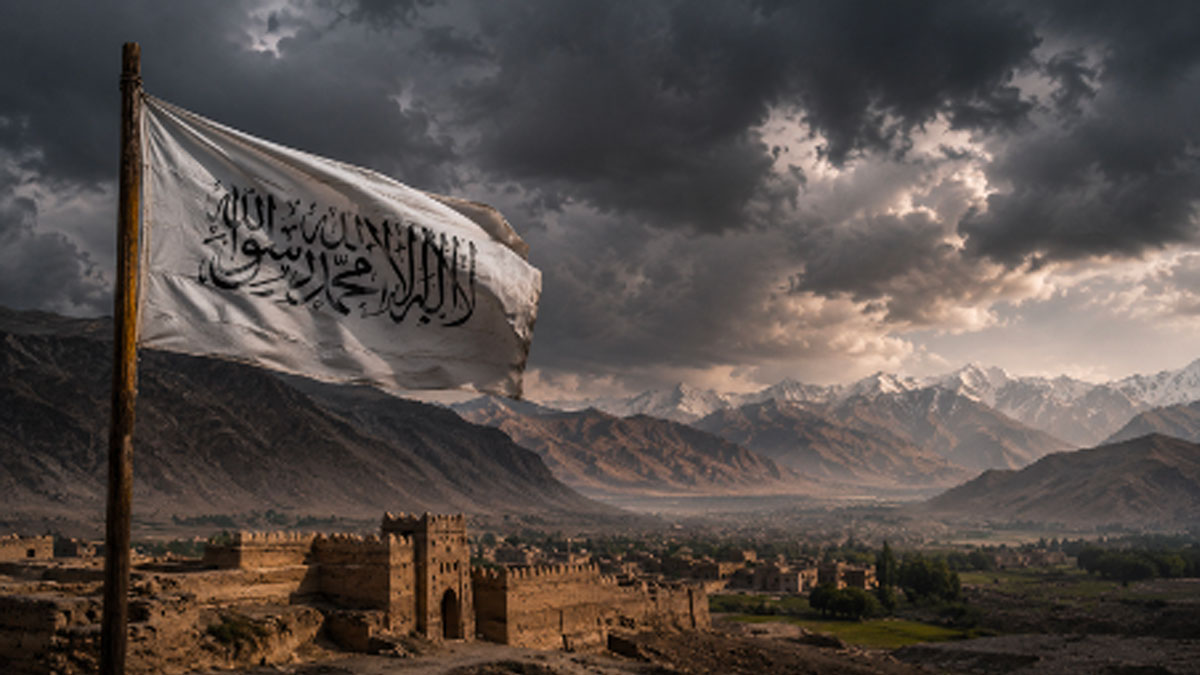
The concept of the “rule of law” is designed to protect the individual from the arbitrary whims of the state. In a functioning democracy, the judiciary acts as a shield, ensuring that power is exercised within defined legal boundaries. However, when a regime shifts toward totalitarianism, the law is no longer a shield; it becomes a weapon. This transformation converts the courtroom from a place of adjudication into a theater of political repression.
Analyzing totalitarian judicial systems reveals a chilling pattern that transcends geography, era and ideology. While the justifications for oppression may change—shifting from the racial purity of the Third Reich to the strict theological mandates of the Taliban—the mechanical application of “justice” remains remarkably consistent. In both instances, the judiciary is stripped of its independence and repurposed to enforce the will of a singular authority, effectively criminalizing dissent and dehumanizing perceived enemies of the state.
For those observing the current trajectory of Afghanistan under the Taliban, the parallels to historical totalitarian regimes are not merely academic; they are a blueprint for systemic control. By dismantling previous legal frameworks and replacing them with an opaque, ideologically driven system, the regime ensures that “justice” is defined not by evidence or statute, but by loyalty to the ruling entity. This systemic erasure of due process is the hallmark of a state that views the law not as a means of order, but as a means of subjugation.
The Architecture of Control: From Independence to Instrument
The first step in establishing a totalitarian judicial system is the systematic removal of judicial independence. In Nazi Germany, this was achieved through the “Gleichschaltung” (coordination) of the legal system. The regime purged “unreliable” judges and replaced them with those committed to the National Socialist ideology. The creation of the Volksgerichtshof (People’s Court) in 1934 epitomized this shift, as it dealt with “political offenses” and operated outside the norms of traditional jurisprudence, reporting directly to the leadership.
A similar pattern is evident in the current Afghan landscape. Following the takeover in 2021, the Taliban effectively dismantled the constitutional legal system. The removal of female judges and lawyers was not merely a social policy but a structural dismantling of the previous judiciary’s capacity for diverse legal interpretation. According to reports from the Office of the United Nations High Commissioner for Human Rights (OHCHR), the current system relies heavily on the interpretation of Sharia law as defined by the regime’s leadership, leaving little to no room for independent legal defense or appellate review.
In both systems, the court’s primary function shifts from determining guilt or innocence based on evidence to confirming a predetermined verdict based on the regime’s needs. When the judiciary becomes an arm of the executive, the trial serves as a formality to legitimize the removal of “undesirables” from society.
Ideology as the Sole Source of Law
Totalitarian regimes replace written, predictable laws with flexible ideological mandates. In the Third Reich, the concept of gesundes Volksempfinden (healthy folk sentiment) was often used to justify convictions. If an action was deemed contrary to the “spirit” of the German people, it was criminal, regardless of whether a specific law had been broken. This allowed the state to criminalize almost any behavior—from listening to foreign radio to expressing private doubt about the leadership.

Under the Taliban, the “divine” nature of their interpretation of law serves a similar purpose. By framing their decrees as immutable religious mandates, the regime renders any opposition not just a political crime, but a spiritual one. This effectively silences legal challenges, as questioning a court’s ruling is equated with questioning the will of God. The result is a legal environment where the “law” is whatever the current leadership deems necessary for the preservation of their power.
This shift from “Rule of Law” to “Rule by Law” is critical. Rule of Law implies that the law applies equally to the rulers and the ruled. Rule by Law means the rulers use the law as a tool to manage the population while remaining exempt from those same constraints.
The Machinery of Terror: Summary Justice and Public Spectacle
A defining characteristic of these systems is the use of “summary justice”—rapid trials with minimal evidence and no real opportunity for defense. The Nazi People’s Court was notorious for its theatrical cruelty, where judges frequently screamed at defendants and verdicts of death were handed down in minutes. These trials were not meant to find the truth; they were meant to intimidate the public.

The Taliban employs a similar strategy through the use of mobile courts and summary judgments. Public punishments, including lashings and executions, serve as visceral reminders of the state’s absolute power. These spectacles are designed to induce a state of perpetual fear, ensuring that the populace self-censors to avoid falling into the regime’s crosshairs. The lack of transparent proceedings and the absence of qualified legal counsel mean that the accused are essentially powerless against the machinery of the state.
Comparison of Totalitarian Judicial Mechanisms
| Feature | Nazi Judicial System | Taliban Judicial System |
|---|---|---|
| Judicial Status | Purged of independents; “coordinated” with party | Dismantled constitutional courts; female judges removed |
| Legal Basis | “Healthy folk sentiment” / Racial ideology | Strict, singular interpretation of Sharia law |
| Trial Process | Predetermined verdicts; theatrical “People’s Courts” | Summary judgments; limited to no legal defense |
| Purpose of Sentencing | Removal of “enemies of the state” / Intimidation | Enforcement of ideological purity / Public terror |
Targeted Persecution and the “Other”
Totalitarian justice always requires a target—a group defined as the “Other” whose rights can be legally stripped away. In Nazi Germany, the legal framework was systematically used to dehumanize Jews, Romani people, LGBTQ+ individuals, and political dissidents. The Nuremberg Laws of 1935 provided the “legal” basis for stripping citizenship and prohibiting marriage, turning the state’s legal apparatus into a tool for genocide.

In contemporary Afghanistan, the “Other” is primarily defined by gender and political affiliation. The systemic erasure of women from public life—including bans on secondary and higher education—is enforced through a legal framework that treats women as legal minors. Those associated with the previous government or international organizations are frequently targeted for “crimes” against the new order. By legally codifying the inferiority or criminality of specific groups, the regime justifies violence as a necessary act of “purification” or “justice.”
The danger of this approach is that the definition of the “enemy” is always expanding. Once the primary targets are neutralized, the regime inevitably turns inward, targeting its own members to ensure absolute loyalty. This cycle of suspicion is a fundamental component of maintaining totalitarian control.
The Global Imperative: Why This Matters
Understanding the parallels between these regimes is essential for the international community. When we witness the dismantling of a judiciary, we are not seeing a mere change in administration; we are seeing the removal of the final barrier between the citizen and the state. History shows that once the courts are captured, the path to mass human rights violations is cleared.
The international community’s role is not only to monitor these developments but to maintain pressure on regimes to restore transparent, independent legal systems. The restoration of the rule of law is the only sustainable path toward stability and the protection of human dignity. Without a judiciary that can say “no” to the leader, there is no justice—only the will of the powerful.
The next critical checkpoint for the international community will be the upcoming reports from the UN Special Rapporteur on the situation of human rights in Afghanistan, which are expected to further document the impact of the current judicial practices on the civilian population. These findings will be vital for any future efforts toward accountability and legal reform.
We invite our readers to share this analysis and join the conversation in the comments below. How can the global community better support the restoration of the rule of law in fragile states?