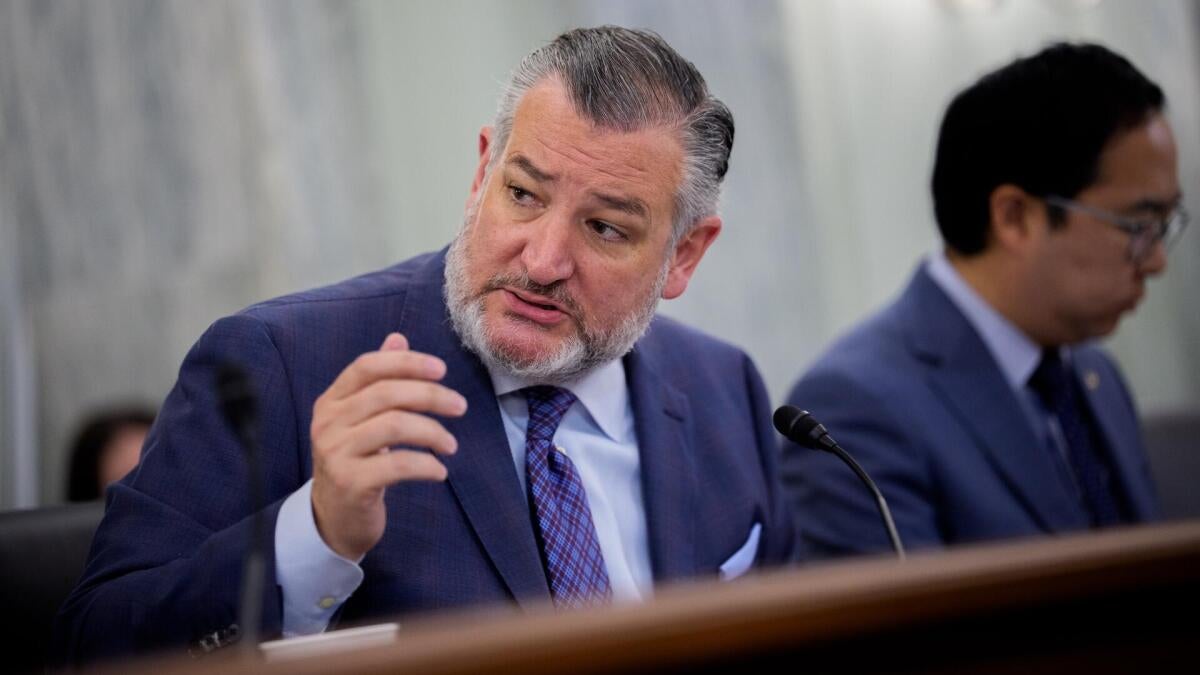
Texas Senator Ted Cruz has stated his expectation that the Protect College Sports Act will clear the United States Senate this week, positioning the legislative push ahead of the 2026 college football season. Speaking in an interview with CBS Sports, the Republican lawmaker outlined an ambitious timeline for the measure, though he acknowledged that the legislative process remains far from complete as negotiations continue on Capitol Hill.
The proposed legislation aims to establish a unified national standard for collegiate athletics, addressing a patchwork of state-level name, image, and likeness (NIL) laws that have complicated recruitment and roster management across Division I sports. Proponents argue that federal intervention is necessary to stabilize the collegiate sports ecosystem, while critics and legal scholars debate the appropriate scope of congressional oversight in amateur and collegiate athletics.
Cruz co-authored the Protect College Sports Act to address ongoing uncertainty surrounding athlete compensation and regulatory enforcement by the NCAA. While the bill’s sponsors are pressing for swift floor action, the measure faces procedural hurdles and potential opposition from lawmakers who favor decentralized state policies or stronger labor protections for student-athletes.
Legislative Hurdles and Senate Realities
Although congressional champions are targeting a swift passage through the upper chamber, moving complex sports legislation through the Senate requires navigating strict procedural rules and potential bipartisan disagreements. Senate consideration involves committee reviews, potential amendments, and debate over how federal regulations would preempt existing state laws passed in Texas, California, and other major athletic hubs.
The legislative vehicle must also account for shifting dynamics within collegiate sports governance. The NCAA and major athletic conferences have repeatedly called for federal legislation to protect the traditional structure of college sports against antitrust challenges and conflicting state statutes. However, athlete advocates argue that federal bills restricting compensation rights or limiting employment status fail to address the fundamental economic realities facing modern competitors.
According to legislative tracking, the bill’s advancement depends heavily on securing bipartisan consensus before the current congressional session reaches key scheduling bottlenecks. Observers note that while committee discussions have progressed, floor time remains tightly contested as senators weigh competing priorities ahead of upcoming recess periods.
Implications for the 2026 College Football Season
The timing highlighted by proponents aims to provide regulatory clarity well in advance of the 2026 college football season, a period when athletic departments face mounting operational pressures. A standardized federal framework would fundamentally alter how universities manage recruitment, compliance, and collective bargaining agreements if athlete unionization efforts advance in federal courts or before the National Labor Relations Board.
Athletic directors, conference commissioners, and legal counsel continue to monitor the Senate proceedings closely. Implementation timelines remain uncertain, as any bill passing the Senate must still be reconciled with the House of Representatives before reaching the president’s desk for signature.
For updates on committee hearings, legislative text, and congressional scheduling, readers can consult official resources provided through Congress.gov or track institutional statements via the National Collegiate Athletic Association.
The next major checkpoint depends on Senate floor scheduling and committee announcements regarding upcoming votes. Share your thoughts on the proposed legislation in the comments below.
Keep reading