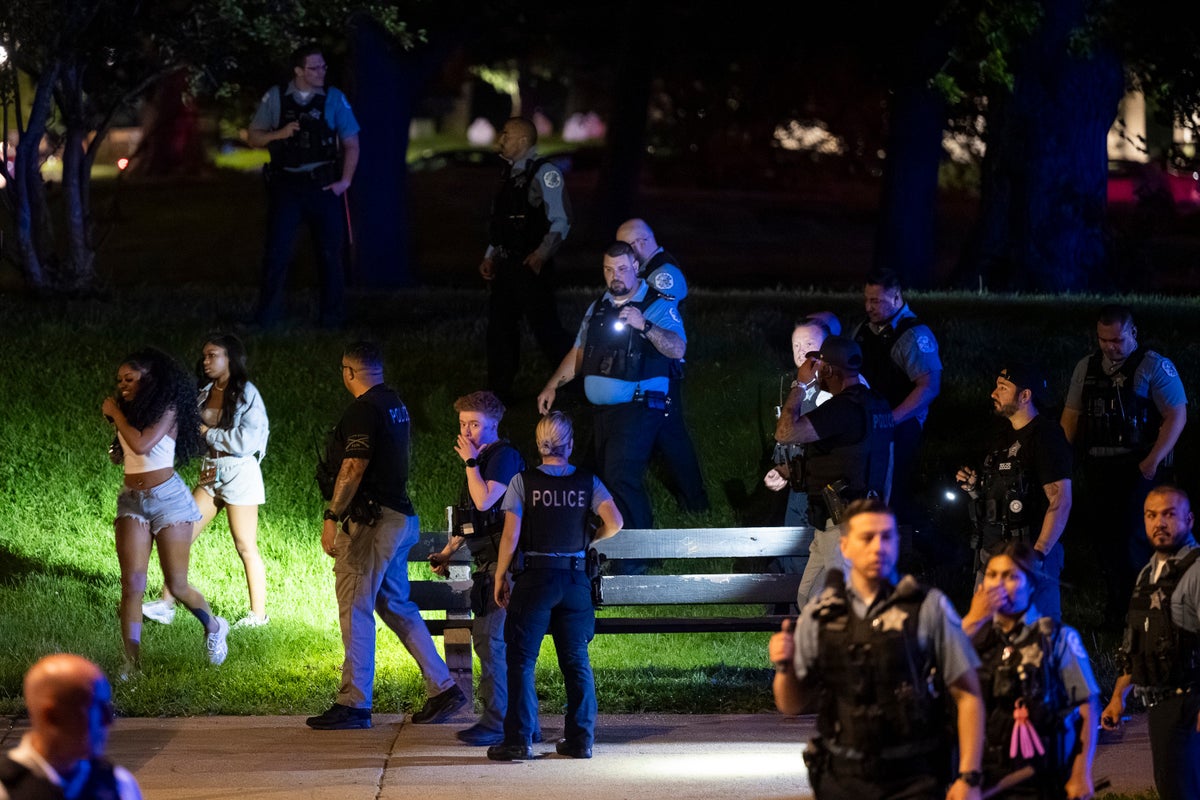
What began as casual invitations shared across social media platforms like TikTok and Instagram has transformed into a complex security challenge for local law enforcement agencies worldwide. The phenomenon of flash-mob style teen takeovers, where hundreds of juveniles converge rapidly on localized commercial strips, transit hubs, and public squares, increasingly draws intervention from municipal police departments concerned with crowd control and public safety.
According to municipal reports and police advisories issued in various urban centers, these unauthorized gatherings often start with viral videos or digital flyers promoting spontaneous meetups. While many participants arrive simply to socialize, the sheer volume of people flooding narrow retail corridors frequently overwhelms local infrastructure, leading to blocked roadways, retail disruptions, and occasional instances of property damage or interpersonal conflict.
Urban planners and law enforcement officials note that social media algorithms play a central role in accelerating these events. A digital invitation posted by an influencer or local account can accumulate tens of thousands of views within hours, drawing teenagers from multiple neighborhoods to a single municipal zone before municipal authorities can deploy adequate personnel.
How Digital Platforms Accelerate Flash Mobs
Modern telecommunications allow adolescents to organize large-scale gatherings with minimal friction. Unlike traditional event planning, digital flash mobs rely on encrypted messaging apps, disappearing stories, and location-sharing features that make it difficult for monitoring agencies to detect coordination efforts until crowds begin forming on site.
Municipal police departments have adapted their monitoring strategies by assigning cyber-patrol units to track trending hashtags and localized keywords. However, the decentralized nature of these digital networks creates significant hurdles for emergency responders. When a crowd of five hundred teenagers materializes outside a downtown transit station or shopping district within a thirty-minute window, frontline officers face immediate logistical strains.
Public safety officials emphasize that the vast majority of participating youths do not engage in criminal acts. Nevertheless, the dense concentration of people in confined spaces creates acute crowd-management risks, particularly when pedestrian pathways become entirely blocked or emergency vehicle access is restricted.
Municipal Responses and Community Partnerships
City leaders and police administrators are increasingly turning to multi-agency coordination models to manage unauthorized teen gatherings without escalating tensions. Rather than relying solely on enforcement, many jurisdictions now deploy youth outreach workers, transit security personnel, and community mediation teams alongside patrol units.
Several municipalities have also engaged directly with commercial property managers and transit authorities to establish early-warning communication channels. When anomalous foot traffic is detected via security cameras or social media monitoring, officials can implement proactive pedestrian routing or temporary access restrictions to prevent overcrowding.
At the same time, lawmakers and civic organizations continue to debate the balance between public safety and the freedom of assembly for young people. Advocates for youth programming point out that the rise of these events highlights a broader shortage of accessible, supervised public spaces where teenagers can gather safely during evenings and weekends.
Looking Ahead: Preventive Measures and Next Steps
As digital platforms evolve, municipal agencies are preparing for seasonal spikes in unauthorized gatherings, particularly during school holidays and summer breaks. Law enforcement administrators stress that public awareness campaigns directed at parents and teenagers remain a critical component of prevention.
City councils and local police departments regularly update their public safety portals with advisories regarding unauthorized gatherings and the legal consequences of obstructing public thoroughfares. Residents and business owners seeking further information on local municipal policies or community safety meetings can consult official city government websites and police department announcements for scheduled public briefings and updates.
We invite readers to share their perspectives on balancing youth socialization and public safety in the comments section below, and to share this report to help keep local communities informed.
Related reading
- Finals 2026 und Leichtathletik: Heute Tag des deutschen Sports LIVE! | Sportmix | Sportbild.de
- Donald Trump ‘jokes’ about running for third term as US president
- Trump’s Luxury Air Force One: Rushed Retrofit Raises Safety and Cost Concerns (archynewsy.com)
- Trump’s Aircraft Delivery Push Led to Higher Costs and Safety Trade-offs (newsdirectory3.com)