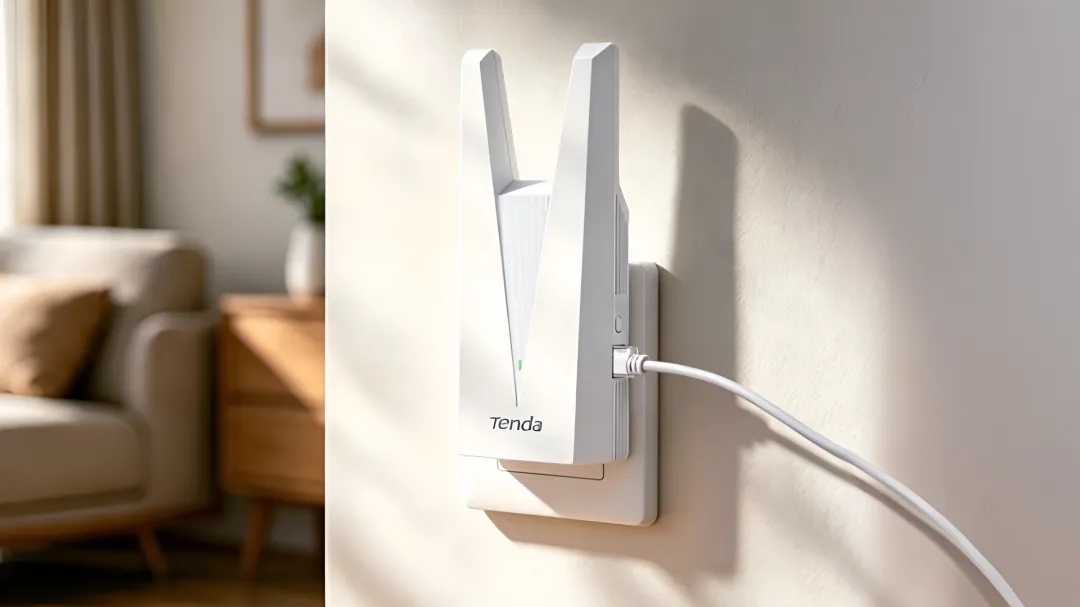
Tenda has expanded its networking portfolio with the release of the A33 V2.0, a Wi-Fi 6 range extender designed to eliminate dead zones in larger residential or office environments. The device, which supports the latest wireless standards and integrates mesh networking capabilities, aims to provide a seamless transition for users looking to upgrade their existing home infrastructure without replacing their primary router.
As a technology editor, I have monitored the shift toward Wi-Fi 6—officially known as 802.11ax—as the industry standard for handling high-density device environments. The Tenda A33 V2.0 utilizes this protocol to increase data throughput and improve efficiency compared to its Wi-Fi 5 predecessors. By incorporating mesh support, the unit allows users to create a unified network name (SSID), ensuring that mobile devices maintain a stable connection as users move between rooms.
Technical Specifications and Performance Capabilities
The Tenda A33 V2.0 operates as an AX3000-class extender, meaning it provides a combined theoretical speed of up to 3000 Mbps across dual-band frequencies. According to official product documentation from Tenda Technology, the device utilizes 160MHz bandwidth on the 5GHz band, which is a critical feature for users streaming 4K content or engaging in low-latency online gaming. The use of Wi-Fi 6 technology also introduces Target Wake Time (TWT) and OFDMA, which help manage traffic more effectively when multiple devices—such as smartphones, smart home sensors, and laptops—are connected simultaneously.

A notable design feature of the A33 V2.0 is its physical configuration, which includes high-gain external antennas intended to improve signal penetration through walls and floors. The inclusion of a Gigabit Ethernet port allows the device to function as a wireless access point when connected via a wired backhaul, providing a more stable connection for stationary devices like desktop PCs or game consoles. This versatility is a primary factor for users seeking to maximize the utility of existing Wi-Fi Certified 6 routers.
Integration with Mesh Networking
The transition from traditional “repeater” technology to “mesh” systems represents a significant shift in consumer networking. While older range extenders often forced users to manually switch between the router’s signal and the extender’s signal, the Tenda A33 V2.0 supports mesh protocols that automate this process. When paired with a compatible Tenda router, the extender creates a single, cohesive network environment.

This mesh functionality is managed primarily through the Tenda WiFi App, which allows for configuration and monitoring of signal strength in real-time. For users who are not tech-savvy, the inclusion of a WPS (Wi-Fi Protected Setup) button remains a standard, simplified method for pairing the extender with an existing router. The device also supports WPA3 security protocols, which provide more robust encryption for user credentials compared to the older WPA2 standard, as defined by the Wi-Fi Alliance.
Practical Considerations for Home Deployment
When deploying a range extender like the Tenda A33 V2.0, placement is the most critical factor for performance. To achieve optimal results, the device should be positioned at approximately the midpoint between the main router and the area with poor signal coverage. If the extender is placed in an area where the signal from the primary router is already weak, the throughput will be significantly limited regardless of the device’s technical specifications.
The A33 V2.0 is designed to be plug-and-play, fitting directly into a standard wall outlet. Its compact, vertical form factor is intended to minimize interference with adjacent power sockets. For global markets, Tenda typically releases regional variants of its power plugs, so users should verify compatibility with local electrical standards before purchase. As of the latest product updates, the manufacturer has focused on ensuring that the V2.0 firmware is optimized for stability, addressing some of the common connectivity drops reported in earlier, first-generation Wi-Fi 6 extenders.
The networking industry continues to move toward more integrated, automated home systems. By providing an accessible entry point into Wi-Fi 6 and mesh technology, the Tenda A33 V2.0 serves as a bridge for consumers who are not yet ready to invest in a full-scale, multi-node mesh system but require better coverage in specific areas of their homes.
For those interested in technical support or firmware updates, Tenda maintains a dedicated download center where users can access the latest software versions for their hardware. Have you recently upgraded your home network to Wi-Fi 6? Share your experience with range extension in the comments below.