
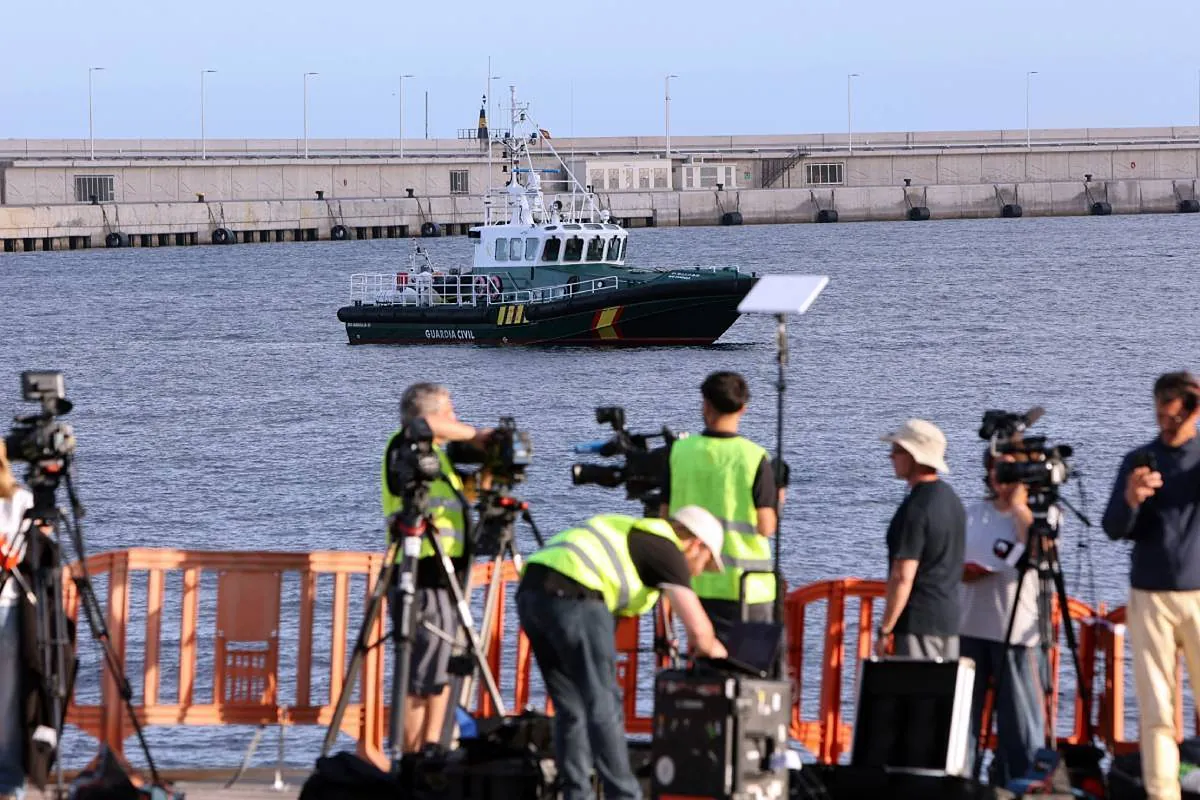
The arrival of the cruise ship MV Hondius in the Canary Islands has evolved from a medical emergency into a high-stakes jurisdictional battle between regional and central Spanish authorities. At the center of the dispute is a clash over public health security and maritime protocols, as the regional government of the Canary Islands initially resisted docking permissions, demanding a strict 24-hour limit on the vessel’s stay or a total ban on its landing.
The tension underscores the complex administrative friction inherent in Spain’s system of autonomous communities, where regional health mandates often collide with national border and transport policies. For the business of cruise tourism—a vital economic pillar for the archipelago—the standoff serves as a stark reminder of how quickly a localized health crisis can disrupt international logistics and ignite political volatility.
The controversy began following reports of a hantavirus outbreak aboard the MV Hondius. While the World Health Organization (WHO) has maintained that the risk to the general public remains low, the Canary Islands government expressed deep concerns regarding the potential for community transmission and the adequacy of the containment measures proposed by the central government in Madrid.
The 24-Hour Ultimatum: A Regional Standoff
The core of the conflict rested on the conditions under which the MV Hondius would be permitted to dock in Tenerife. Regional authorities in the Canary Islands reportedly pushed back against the central government’s framework, issuing a stark ultimatum: the ship could either be authorized for a strictly limited 24-hour window to facilitate essential transfers and medical interventions, or it would be denied entry entirely.
This “24 hours or nothing” stance reflected the regional government’s priority to minimize the window of exposure for the local population. In the cruise industry, where turnaround times are meticulously planned, such a restrictive window creates significant operational hurdles, potentially leaving healthy passengers stranded or complicating the logistical chain of medical evacuations.
From an economic perspective, this dispute highlights the fragility of the “just-in-time” logistics that power the Mediterranean and Atlantic cruise circuits. When a regional government exercises its health autonomy to block or restrict a vessel, the ripple effects extend beyond the ship itself, impacting port services, local suppliers, and the broader reputation of the destination as a safe and predictable hub for international travel.
Medical Evacuations and Health Risks
Before the vessel could proceed toward the Canary Islands, critical medical evacuations were carried out to reduce the biological load on the ship and stabilize the most affected individuals. Reports indicate that three people with suspected hantavirus—including a British doctor, and citizens of Germany and the Netherlands—were medically evacuated from the ship while it was in the vicinity of Cape Verde.

The evacuation of these high-risk patients was a prerequisite for the ship to continue its journey. By removing those in acute distress, health authorities aimed to lower the risk profile of the vessel, eventually allowing Spanish authorities to grant permission for the ship to dock.
To understand the gravity of the regional government’s hesitation, We see necessary to examine the nature of the pathogen. Hantaviruses are typically zoonotic, meaning they are transmitted from animals—specifically rodents—to humans through the inhalation of aerosolized virus particles from droppings, urine, or saliva. While person-to-person transmission is extremely rare (occurring primarily with specific strains like the Andes virus), the perceived risk in a confined environment like a cruise ship can trigger aggressive containment responses from local health officials.
The World Health Organization has consistently emphasized that the public health risk in such scenarios is generally low, provided that strict hygiene and isolation protocols are followed. However, for a regional administration responsible for the health of nearly a million residents in Tenerife alone, the political cost of a potential outbreak far outweighs the convenience of a standard docking procedure.
Jurisdictional Friction in Spanish Governance
The standoff over the MV Hondius is a textbook example of the tension between Spain’s central government and its Autonomous Communities. Under the Spanish Constitution, health services are largely devolved to the regions, giving the Canary Islands significant authority over how medical emergencies are handled on their soil. Conversely, the central government manages national borders, ports, and international relations.
When the central government in Madrid signaled that the ship could dock, it did so through the lens of international maritime law and national transport obligations. The Canary Islands government, however, viewed the situation through the lens of regional biosecurity. This misalignment created a vacuum of authority that left the passengers and crew of the MV Hondius in a state of uncertainty for several days.
This administrative tug-of-war has broader implications for the “Blue Economy” of the Canary Islands. As the archipelago seeks to diversify its tourism offerings and attract high-spend cruise passengers, the perception of instability or overly restrictive health policies could influence the routing decisions of major cruise lines. The ability to coordinate a seamless response to a health crisis is now as much a competitive advantage as the quality of the ports themselves.
Impact on Passengers and Crew
For the nearly 150 people on board the MV Hondius, the dispute was more than a political exercise; it was a period of confinement and anxiety. The delay in docking permissions meant that healthy passengers remained in a state of limbo, unsure of when they could disembark or return to their home countries.

The psychological toll of being on a “virus-hit ship” is significant. Even when the WHO declares the risk to the public as low, the stigma associated with quarantine and the fear of an unknown pathogen can create a volatile environment on board. The eventual decision to allow the ship to dock, following the evacuation of the most critical patients, provided a necessary release valve for this tension.
The logistics of the eventual landing required a coordinated effort between port health officers, emergency medical services, and the ship’s own medical team. The objective was to ensure that any remaining symptomatic individuals were transitioned directly into isolation facilities without intersecting with the general public, thereby satisfying the regional government’s safety requirements.
What Happens Next?
The resolution of the MV Hondius crisis is likely to prompt a review of health protocols for cruise ships entering the Canary Islands. There is an urgent need for a standardized “Health Entry Agreement” that clarifies the hierarchy of decision-making between Madrid and the regional capitals in the event of a maritime biological threat.
Industry analysts suggest that cruise lines may begin to implement more rigorous pre-departure health screenings and enhanced onboard monitoring to avoid the costly and reputationally damaging delays seen in this instance. The financial impact of a delayed docking—including fuel costs, passenger compensation, and port fees—can run into hundreds of thousands of dollars per incident.
The next confirmed checkpoint for this situation involves the final medical clearance of all remaining passengers and the official report from the Canary Islands’ health department regarding the containment of the virus. Once the vessel is fully cleared and the passengers have safely departed, the focus will shift to the epidemiological investigation to determine the exact source of the hantavirus outbreak on board.
We invite our readers to share their thoughts on the balance between regional health autonomy and international maritime obligations in the comments below.