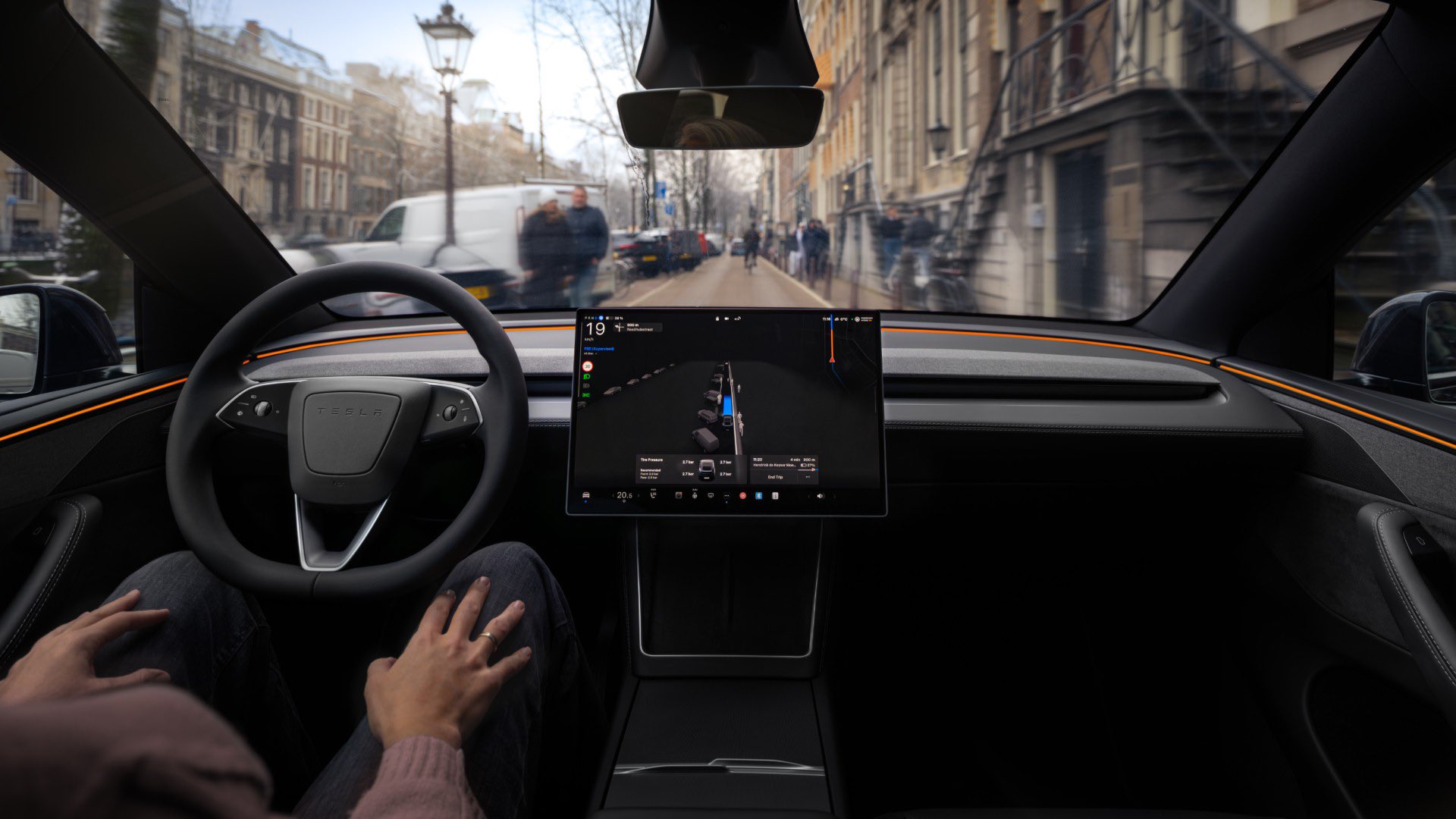
Tesla is navigating a pivotal moment in its European expansion as the company moves to bring its Full Self-Driving (FSD) capabilities to the continent. Recent developments in the Netherlands suggest a significant regulatory breakthrough that could serve as the catalyst for a broader rollout across the European Union.
The potential for Tesla FSD Netherlands approval represents more than just a local victory; it is a strategic entry point. By securing homologation in a single member state, Tesla can leverage EU regulatory frameworks to streamline the deployment of its supervised autonomous driving technology across other markets, including France.
For years, the European market has remained a challenging frontier for Tesla’s most advanced driver-assistance systems due to stringent road safety standards and complex automotive regulations. Even though, the current momentum in the Netherlands indicates that the company is closing the gap between North American capabilities and European compliance.
The Netherlands as a Gateway for EU Expansion
The Netherlands has emerged as a primary focal point for Tesla’s European strategy. While some industry reports suggest that approval has already been granted, other financial data indicates that Tesla expects Netherlands approval for FSD soon, which is viewed as the essential first step for an EU-wide rollout.
This process of autonomous vehicle homologation is rigorous. To operate in Europe, Tesla must demonstrate that its software aligns with the United Nations Economic Commission for Europe (UNECE) regulations, which govern everything from lane-keeping assistance to automated lane changes. The Netherlands’ willingness to engage with these supervised autonomous driving systems marks a shift in how European transport authorities are approaching the transition to AI-driven mobility.
From a business perspective, the Netherlands is an ideal testing ground. Its high density of electric vehicle (EV) infrastructure and a tech-forward consumer base provide Tesla with the data and environment needed to refine FSD for European road signage, narrow urban corridors, and diverse weather conditions.
What This Means for Tesla Owners in France
For Tesla drivers in France, the developments in the Netherlands are a direct signal that local deployment is approaching. Because of the way EU type-approval works, once a system is validated in one member state, the path to authorization in others becomes significantly less arduous.
Industry observers suggest that a deployment of Full Self-Driving in France may be imminent following the Dutch precedent. This would allow French users to transition from basic driver-assist features to a system capable of handling a wider array of urban and highway scenarios, provided the driver remains attentive and supervises the system at all times.
The impact on the French market could be twofold: it may increase the desirability of current Tesla models and potentially stimulate a new wave of upgrades for existing owners who have previously paid for the FSD package but were unable to use its full suite of features due to regional restrictions.
The Shift from Autopilot to Supervised FSD
A critical component of this rollout is the evolution of Tesla’s software branding and functionality. There is an ongoing transition where the company is moving away from the traditional Autopilot framework toward a more integrated “Supervised” FSD experience.
While Autopilot focused primarily on highway driving and basic steering adjustments, supervised autonomous driving aims to handle more complex navigation, including turns and intersection management. However, the “supervised” label is key; it emphasizes that the human driver is still legally and operationally responsible for the vehicle’s actions.
This distinction is vital for regulatory approval in Europe. By framing the technology as a supervised system rather than a fully autonomous one, Tesla can align more easily with current European laws that require a human operator to be in control of the vehicle at all times.
Key Implications of the FSD Rollout
| Stakeholder | Primary Impact | Key Consideration |
|---|---|---|
| Tesla Owners | Access to advanced navigation and urban driving features. | Requirement for constant driver supervision. |
| EU Regulators | Establishment of safety benchmarks for AI driving. | Balancing innovation with strict road safety laws. |
| Competitors | Increased pressure to accelerate autonomous software. | Need for similar homologation in EU member states. |
| Insurance Providers | Re-evaluation of risk profiles for autonomous-capable cars. | Determining liability in supervised driving incidents. |
The Path Forward for European Autonomy
As Tesla pushes for wider adoption, the focus will shift toward how these systems handle the unique complexities of European infrastructure. Unlike the wider roads of North America, European cities often feature tight roundabouts, varied cycling lanes, and diverse traffic signals that require a high degree of precision from the FSD neural networks.

The success of the Netherlands rollout will likely dictate the speed at which other nations, such as Germany and France, finalize their own approvals. If the data from Dutch roads proves that the system can operate safely within the bounds of EU law, You can expect a rapid domino effect across the continent.
For the global business community, this move is a litmus test for the scalability of AI in highly regulated environments. Tesla’s ability to navigate the bureaucracy of the European Union will provide a blueprint for other autonomous vehicle manufacturers seeking to enter the market.
The next confirmed checkpoint for stakeholders will be the official confirmation of the Netherlands’ regulatory sign-off and the subsequent release of the deployment timeline for the broader EU region. We will continue to monitor official filings from European transport authorities for updates on the France-specific rollout.
Do you believe supervised autonomous driving is ready for the complex streets of Europe? Share your thoughts in the comments below or share this analysis with your network.