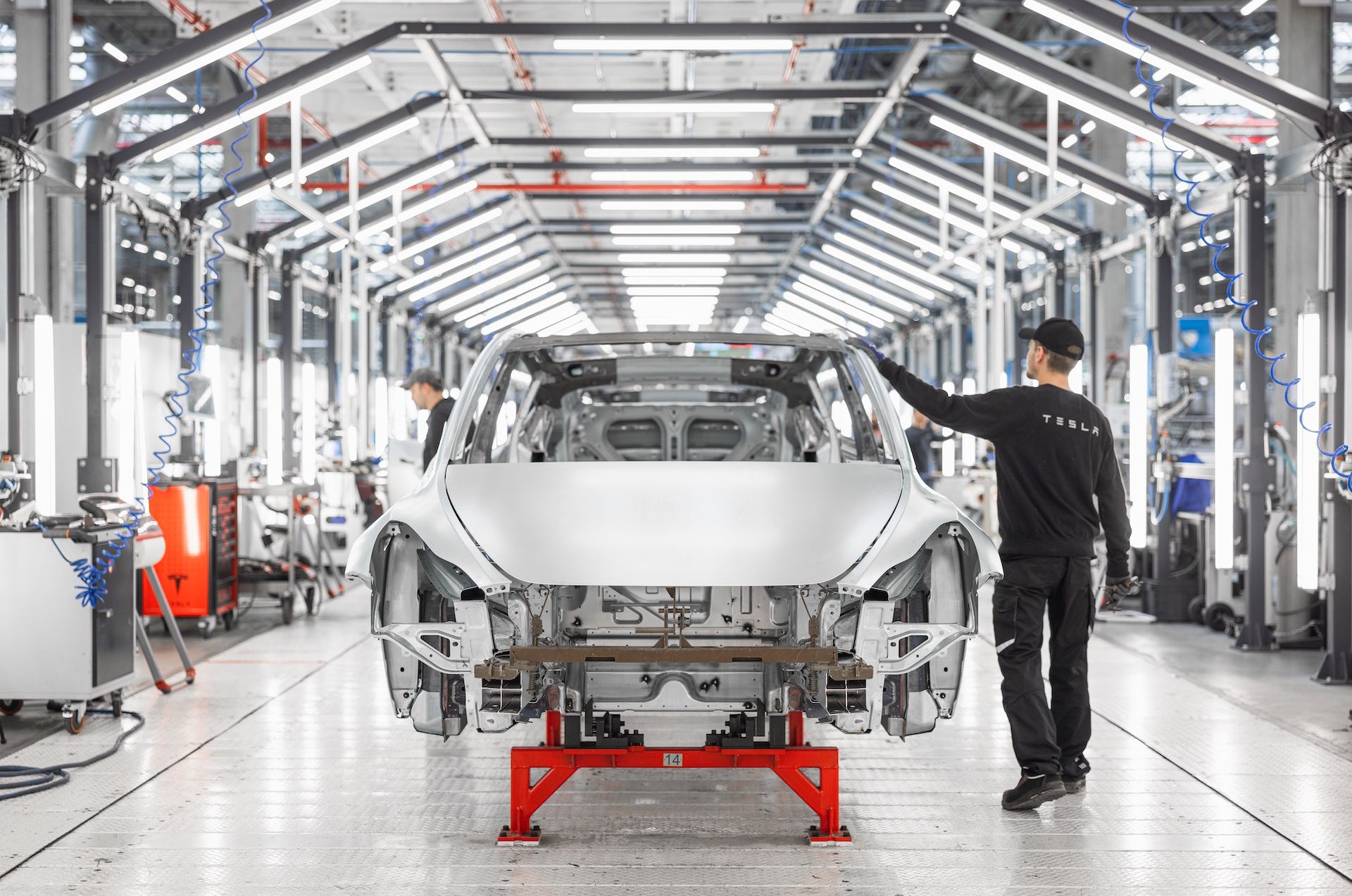
Grünheide, Germany – Tesla’s ambitious Gigafactory Berlin-Brandenburg is facing a confluence of challenges, from slowing European sales to escalating labor tensions, as Elon Musk issues a stark warning to employees regarding potential expansion plans. The situation underscores the complexities of establishing a large-scale manufacturing presence in Europe, particularly in a country with a strong tradition of worker rights and union representation. The factory, crucial to Tesla’s global production strategy, is now at a pivotal juncture, with its future growth potentially hinging on the outcome of upcoming works council elections.
Recent reports indicate a significant downturn in Tesla’s sales across Europe, adding pressure on the German facility. This decline coincides with increased competition from established European automakers and emerging Chinese EV manufacturers. Musk’s direct intervention, delivered via a pre-recorded video message to the factory’s 10,700 employees, signals the severity of the situation and the company’s willingness to take a firm stance against perceived threats to its operational model. The message, obtained by German newspaper Handelsblatt, has ignited a debate about labor relations and the future of Tesla’s investment in Germany.
Union Elections and Expansion Plans: A Direct Link
The core of Musk’s warning centers on the upcoming election for the works council, the employee representative body at the Gigafactory. According to the message, expansion of the plant will be halted if IG Metall, Germany’s powerful industrial union, gains significant influence. Musk reportedly cautioned that while the factory itself wouldn’t be closed, further investment and growth would be put on hold. This isn’t the first time concerns about union influence have been voiced; Grünheide plant manager Andre Thierig previously indicated that expansion was contingent on the election results, as reported by German press agency DPA late last year. Electrek details the specifics of Musk’s warning.
IG Metall is currently the largest faction on the works council but does not hold a majority. The upcoming vote is therefore critical, with the union seeking to increase its representation and potentially shape future labor practices at the plant. Musk’s intervention is widely seen as an attempt to influence the election outcome, a move that has drawn criticism from labor advocates who argue it constitutes undue pressure on employees. The timing of the message, just days before the election, is deliberate, aiming to highlight the potential consequences of a shift in power within the works council.
Beyond Labor: Production Capacity and Current Operations
The labor dispute isn’t the only challenge facing the Gigafactory. Reports indicate that the plant is currently operating well below its full capacity. According to DW.com, the factory is utilizing less than 40 percent of its potential production capacity. While Tesla has not publicly disclosed the reasons for this underutilization, factors such as supply chain constraints, production bottlenecks and lower-than-expected demand may be contributing to the issue. This limited capacity raises questions about the viability of ambitious expansion plans, even without the added complication of union influence.
The Gigafactory is intended to produce both vehicles and batteries, aiming to become a key hub for Tesla’s European operations. Still, achieving full production capacity requires a stable labor environment and efficient supply chains. The current situation, characterized by labor unrest and underutilization, presents a significant hurdle to Tesla’s long-term goals in the region. The plant’s location in Grünheide, Brandenburg, was chosen strategically to provide access to skilled labor and a favorable business climate, but these advantages are now being challenged by the evolving dynamics of the German labor market.
Polish Workers and the Labor Landscape
Adding another layer to the complexity, there has been a notable influx of Polish workers into the Gigafactory. Next Gazeta.pl reports this is the first instance of such a large-scale recruitment of foreign workers at the facility. This development has sparked discussions about labor standards and the potential for exploitation, with some workers reportedly seeking improved benefits, colloquially referred to as “bigos and extras” – a reference to traditional Polish cuisine and the desire for additional compensation. The involvement of Polish workers underscores the Gigafactory’s reliance on a diverse workforce and the challenges of managing a multicultural labor environment.
Musk’s Broader European Strategy
The challenges at the Berlin Gigafactory are occurring against the backdrop of Elon Musk’s broader ambitions for Tesla in Europe. Musk recently announced plans to bring Tesla’s Full Self-Driving (FSD) platform, Cybercab, and Optimus humanoid robot to the European market. Investor’s Business Daily reports that FSD approval in the Netherlands could come as early as next month, and that both Optimus and the Cybercab will be manufactured at the German facility. These plans highlight Tesla’s commitment to expanding its presence in Europe, but their success depends on resolving the current issues at the Berlin Gigafactory and establishing a stable and productive manufacturing base.
The German facility is intended to be a cornerstone of Tesla’s European expansion, serving as a hub for vehicle production, battery manufacturing, and potentially the assembly of future products like the Optimus robot. However, the current labor tensions and production challenges threaten to derail these plans. Musk’s warning to employees underscores the high stakes involved and the company’s determination to maintain control over its operations in Germany.
Looking Ahead: What to Expect
The outcome of the works council election will be a crucial determinant of the Gigafactory’s future. A victory for IG Metall could lead to increased worker rights and potentially higher labor costs, which Tesla has signaled it is unwilling to accept without reconsidering expansion plans. Conversely, a defeat for the union could allow Tesla to maintain its current operational model, but may also exacerbate labor tensions and potentially lead to further unrest. The next few weeks will be critical as the election unfolds and the future of Tesla’s German operations hangs in the balance.
Beyond the election, Tesla will require to address the issue of underutilized production capacity. Improving supply chain efficiency, streamlining production processes, and boosting demand for its vehicles will be essential to maximizing the Gigafactory’s potential. The company will also need to navigate the complex regulatory landscape in Germany and maintain a constructive dialogue with labor representatives to ensure a stable and productive working environment.
The situation at the Berlin Gigafactory serves as a cautionary tale for other companies seeking to establish large-scale manufacturing operations in Europe. Successfully navigating the region’s strong labor traditions, complex regulations, and competitive market requires a nuanced understanding of the local context and a willingness to engage in constructive dialogue with stakeholders. The coming months will reveal whether Tesla can overcome these challenges and realize its ambitions for the European market.
What’s next? The results of the works council election are expected in early April. We will continue to monitor the situation and provide updates as they become available. Share your thoughts on Tesla’s challenges in Europe in the comments below.
Worth a look