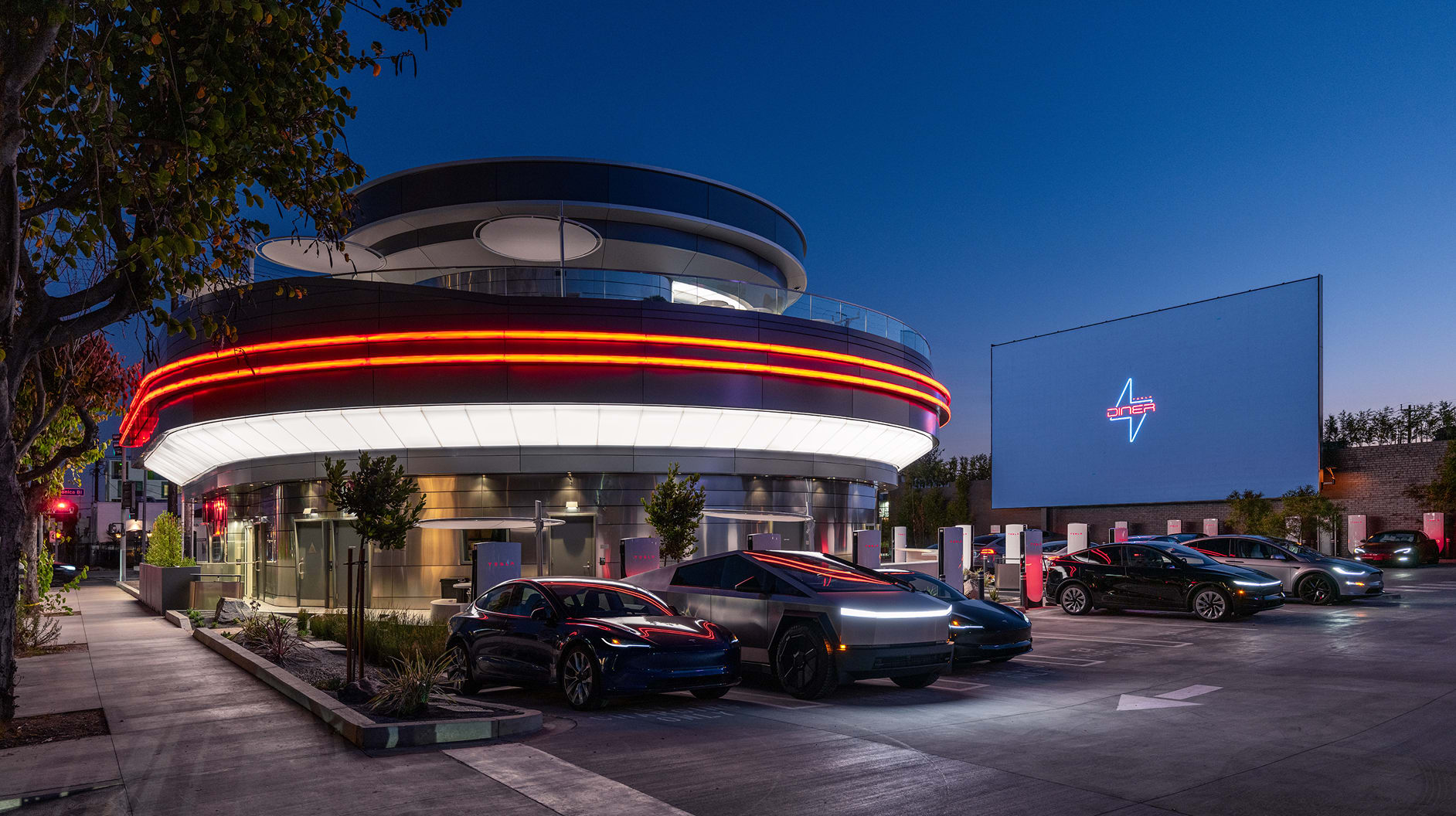
Tesla’s retro-themed drive-in movie theater and Supercharger hub in Los Angeles has officially emerged as the single busiest electric vehicle charging station in the global network, pulling in a staggering 21.2 gigawatt-hours of energy during its first year of operation. According to data released by Tesla, the high-profile location on West Hollywood’s historic stretch averages roughly 1,600 charging sessions every single day, blending nostalgic mid-century entertainment with cutting-edge fast-charging infrastructure. The site, which opened to immense public curiosity, features active dual movie screens, a 1950s-style diner, and dozens of high-speed charging stalls that continuously draw hundreds of local drivers and cross-country road-trippers alike.
The Los Angeles installation represents a major operational milestone for the automaker’s proprietary charging ecosystem, proving that destination amenities can effectively reshape urban transit routines. Data tracked across the global network shows that the West Hollywood facility outpaces traditional highway Supercharger hubs by a wide margin, driven largely by its unique combination of leisure and utility. Industry analysts note that while standard chargers function purely as fueling stops, the diner model successfully converts downtime into an entertainment experience, keeping stalls occupied by steady streams of customers who stay long enough to eat or watch a film.
Energy consumption figures released by the company highlight the sheer scale of modern high-capacity charging grids operating within major metropolitan centers. Delivering 21.2 GWh annually requires robust grid support and advanced power management to handle simultaneous peak loads, particularly during evening hours when local restaurant patrons and moviegoers converge on the lot. Local utility providers have worked closely with commercial developers to ensure the site’s massive power demands do not strain neighborhood infrastructure, utilizing localized battery storage and smart-charging protocols to balance the load throughout the day.
Designing the Future of Charging Infrastructure
The architectural layout of the Los Angeles Supercharger Diner breaks away from the sterile, industrial aesthetic traditionally associated with roadside fueling stations. Drawing inspiration from classic American roadside culture, the property pairs neon signage and retro-styled booth seating with state-of-the-art V3 and V4 charging pedestals. Drivers plug in their vehicles before ordering food via in-car displays or retro-styled ordering stations, transforming routine charging stops into social outings.
Urban planners and transit experts have monitored the site closely since its doors opened, evaluating how entertainment-integrated charging stations impact local traffic patterns and municipal zoning. Because the location occupies a high-density urban corridor, managing the influx of daily visitors requires dedicated traffic routing and clear on-site queueing systems. According to city transit reports, the site’s layout successfully mitigates street congestion by keeping waiting vehicles entirely off surrounding public roadways.
The economic impact on the immediate neighborhood has also proven substantial, drawing heightened foot traffic to nearby commercial districts along the famous boulevard. Small business owners in the surrounding area report an uptick in pedestrian activity as drivers explore neighboring storefronts while waiting for their vehicles to reach full capacity. This symbiotic relationship between EV infrastructure and local retail could serve as a blueprint for future urban renewal projects across North America.
Global Network Expansion and Next Steps
Building on the success of the West Hollywood pilot project, company executives have indicated plans to evaluate similar experiential charging hubs in other major metropolitan markets worldwide. While specific locations and timelines for future diner concepts remain unannounced, the high utilization rate demonstrated in Los Angeles provides a strong business case for continued investment in destination charging. Automotive industry observers expect further announcements regarding international rollouts during the upcoming quarterly shareholder updates.
Drivers looking to visit the Los Angeles Supercharger Diner can find real-time stall availability and operating hours directly through the vehicle’s onboard navigation system or the official Tesla mobile application. The facility operates continuously, though movie screenings and diner services adhere to designated daily schedules established by management. Official updates regarding network expansions and future site permits are published periodically through corporate investor relations filings and verified press channels.
Related reading