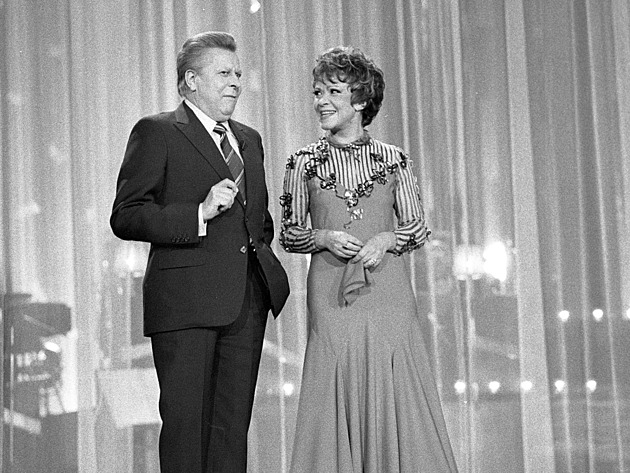
In the landscape of global entertainment, every nation has its definitive “golden era” of television—those rare programs that didn’t just attract viewers but defined the cultural zeitgeist of a generation. For the Czech Republic and the former Czechoslovakia, few programs hold as much nostalgic weight as Televarieté
, a variety show that blended sharp wit, theatrical precision, and a chemistry between its leads that remains a benchmark for television duos.
At the heart of this phenomenon were Yvetta Bohdalová and Josef Dvořák, two titans of the Czech stage and screen whose professional partnership transformed the variety format into a sophisticated art form. While modern audiences are accustomed to the rapid-fire pacing of digital content, Televarieté succeeded through a masterful blend of scripted sketches and spontaneous energy, capturing a specific moment in Central European broadcasting history.
The enduring legacy of the show is evidenced by its continued presence in public discourse, often resurfacing through retrospectives and nostalgic challenges that test the memories of those who watched it. Understanding Televarieté requires looking beyond the laughter to see how Bohdalová and Dvořák navigated the complexities of fame and artistic expression during a transformative era in Prague’s cultural life.
The Dynamic Duo: Bohdalová and Dvořák
The success of Televarieté was not merely a result of the writing, but of the casting. Yvetta Bohdalová, widely regarded as one of the most influential actresses in Czech history, brought a versatility that allowed her to pivot from high comedy to poignant drama in a single scene. Her ability to play the “straight man” or the chaotic catalyst made her the perfect foil for Josef Dvořák.
Josef Dvořák, known for his commanding presence and impeccable timing, provided the grounded energy necessary to balance the show’s more surreal elements. Together, they created a rhythmic dialogue—a “tennis match” of wit—that felt organic rather than rehearsed. This synergy allowed the program to experiment with satire and social commentary, often pushing the boundaries of what was permissible on state-controlled television at the time.
Their partnership extended beyond the screen, rooted in a deep mutual respect for the craft of acting. Bohdalová’s career, which spans several decades and includes numerous awards, and Dvořák’s status as a staple of Czech cinema, converged in Televarieté to create a product that felt both prestigious and accessible to the general public.
The Architecture of a Legend: The Variety Format
The “variety” or varieté format was a global trend in the mid-to-late 20th century, but the Czech iteration had its own distinct flavor. Televarieté was structured as a kaleidoscopic experience, weaving together several distinct elements:
- Theatrical Sketches: Short, punchy scenes that often parodied everyday life, bureaucracy, or high art.
- Musical Interludes: Integration of contemporary music and classical performances, ensuring the show appealed to a wide demographic.
- Guest Appearances: The show served as a hub for the biggest names in Czech entertainment, creating “must-watch” moments when unexpected stars appeared alongside the leads.
- Improvisational Flair: While largely scripted, the chemistry between Bohdalová and Dvořák allowed for moments of perceived spontaneity that endeared them to the audience.
This structure allowed the producers to maintain a high energy level, preventing the audience from settling into a predictable rhythm. By constantly shifting the tone—from a slapstick comedy bit to a sophisticated musical number—the show mirrored the eclectic nature of the variety theaters that had historically flourished in Prague.
Cultural Impact and the Nostalgia Factor
To understand why Televarieté remains a point of fascination today, the social context of its broadcast. During its peak, television was the primary window into the world for many Czech citizens. A show that could make the entire nation laugh simultaneously created a shared cultural language.
The nostalgia surrounding the program is not just about the content, but about the feeling of a collective experience. In an era before fragmented streaming services, Televarieté was a communal event. The recent trend of “memory quizzes” and retrospectives highlights a desire to reconnect with a period of entertainment that felt more human and less algorithmic.
the show is studied by historians of media as an example of how artists could maintain integrity and provide subtle critiques of society while working within the constraints of the era’s political climate. The humor was often layered; while the surface was light, the subtext frequently touched upon the absurdities of modern life in Central Europe.
Key Elements of the Televarieté Legacy
| Feature | Televarieté Era | Modern Era |
|---|---|---|
| Audience Reach | Unified national audience | Fragmented, niche demographics |
| Comedy Style | Theatrical, character-driven | Fast-paced, meme-centric |
| Lead Dynamic | Long-term stable partnership | Rotating hosts/guest-heavy |
| Production | Studio-based, highly scripted | Hybrid, live-streaming, interactive |
The Lasting Influence on Czech Television
The blueprint established by Televarieté can be seen in subsequent generations of Czech comedy and talk shows. The emphasis on the “chemistry of the duo” became a standard for later programs, and the blend of sketch and interview continues to be a popular format in Prague’s television studios.
Yvetta Bohdalová’s influence, in particular, continues to resonate. As a pioneer for women in Czech entertainment, her role in Televarieté demonstrated that a female lead could drive a major production through intellect and comedic timing rather than just traditional archetypes. Her legacy is not just in the laughs she provided, but in the doors she opened for future generations of performers.
For the global observer, Televarieté serves as a reminder that great entertainment transcends borders. The themes of human absurdity, the joy of a well-timed joke, and the power of a genuine professional partnership are universal, regardless of whether the show was broadcast in English, Portuguese, or Czech.
As archives of Czech Television continue to digitize and make these classic performances available to new generations, the work of Bohdalová and Dvořák ensures that the spirit of the variety show—spontaneous, eclectic, and profoundly human—lives on.
While there are no currently scheduled reunions or new iterations of the original format, the ongoing archival releases and cultural tributes keep the conversation alive. Those interested in the history of Central European media can often find curated clips and retrospectives through official Czech broadcasting archives.
Do you remember the golden age of variety television in your own country? Which duos defined the era for you? Share your memories in the comments below.
Keep reading