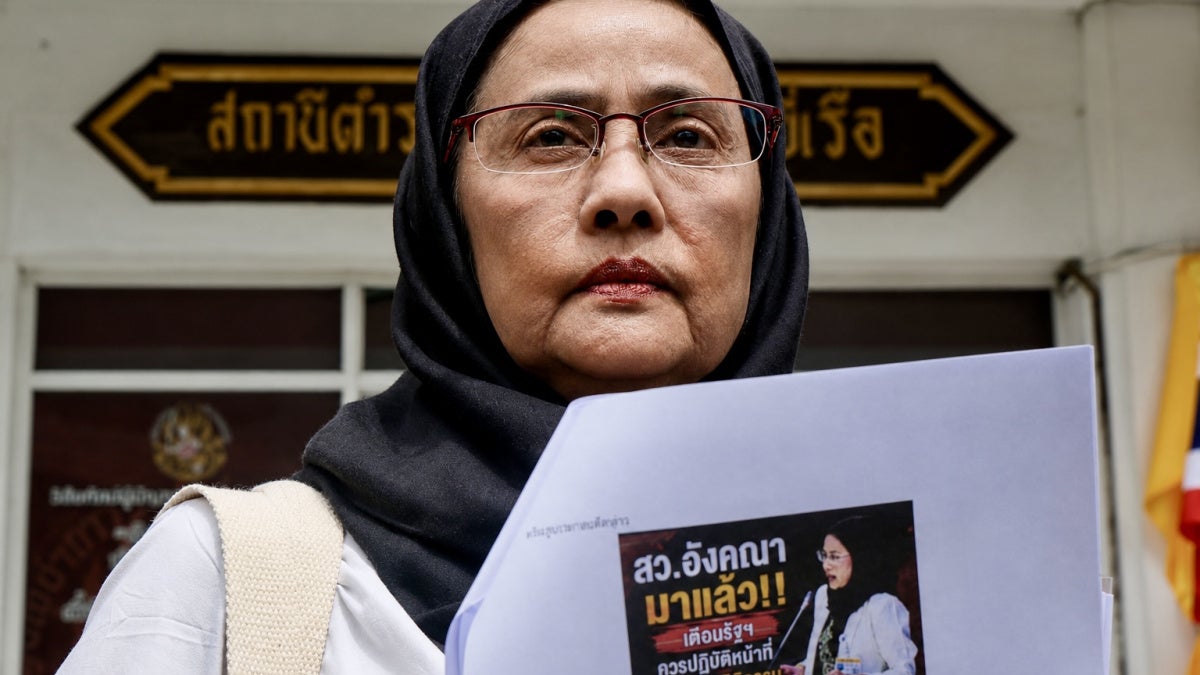
Thai authorities face mounting international pressure to independently investigate a wave of severe online death threats, hate campaigns, and disinformation targeting prominent human rights defenders and opposition politicians, according to Human Rights Watch. The ongoing digital harassment campaign—which includes explicit calls for targets to be killed or forcibly disappeared—has drawn urgent calls for protection and legal accountability from global monitors.
The situation escalated significantly when Angkhana Neelapaijit, a Thai senator and former member of Thailand’s National Human Rights Commission, filed a formal police complaint at the Bang Yi Reua police station in Bangkok on July 31, 2026, invoking the country’s Computer-Related Crime Act. According to Human Rights Watch, similar coordinated disinformation and abuse have been directed at Anchana Heemmina, founder of the Duay Jai human rights group, and Romadon Panjor, a member of parliament representing the opposition People’s Party.
“The Thai authorities should urgently and impartially investigate online attacks, including death threats, against Angkhana, Anchana, and Romadon, who have been widely recognized for their work defending human rights in Thailand’s deep south,” said Elaine Pearson, Asia director at Human Rights Watch. “Those responsible for serious threats should be brought to justice, regardless of their affiliation, to demonstrate Thailand’s commitment to protecting human rights defenders.”
Escalation Following Southern Insurgency Violence
Online hostility toward the defenders has intensified sharply following an insurgent attack in the Ra Ngae district of Narathiwat province on July 22, 2026, an incident that left five soldiers dead and six civilians injured. Abusive social media posts accused figures like Angkhana of being unpatriotic and sympathetic to the Barisan Revolusi Nasional (BRN) separatist movement, with specific posts demanding their extrajudicial elimination.
Investigators and monitors have noted that portions of these smear campaigns originate from online accounts allegedly linked to Thai government information operations. The legal battles against these state-backed campaigns have achieved some traction in domestic courts. In June, the Court of Appeal ordered the Internal Security Operations Command to pay financial compensation to Angkhana and Anchana for damages stemming from coordinated state-linked smear tactics.
Advocacy groups emphasize that digital intimidation carries lethal real-world consequences in Thailand’s deep south—encompassing the predominantly Muslim Malay provinces of Pattani, Yala, Narathiwat, and parts of Songkhla—where state security forces have combated the BRN insurgency since January 2004. In March 2004, Angkhana’s husband, human rights lawyer Somchai Neelapaijit, was abducted; his body has never been located, and substantial evidence has implicated police officers retaliating against his lawsuits alleging widespread security force torture.
Impunity and Regional Human Rights Obligations
Over the past 22 years, civil society monitors have documented a persistent pattern of harassment, judicial intimidation, enforced disappearances, and physical assaults targeting human rights advocates in the southern border region. None of these historical cases have achieved full judicial resolution by Thai authorities. High-profile violence persists, underscored by an April 2026 assassination attempt against Kamonsak Leewamoh, a Muslim member of parliament and prominent human rights lawyer in Narathiwat province, for which authorities issued arrest warrants against three former military personnel.
International scrutiny is intensifying ahead of the 53rd session of the United Nations Universal Periodic Review of Thailand’s human rights record, scheduled for November. Human Rights Watch noted in submissions that successive Thai administrations have failed to maintain a safe working environment for advocates, violating the UN Declaration on Human Rights Defenders. The UN human rights machinery previously voiced alarm in November 2025 over online abuse and death threats directed at Angkhana and Human Rights Watch Thailand senior adviser Sunai Phasuk following their public commentary on international humanitarian law compliance during regional border disputes.
Global Scrutiny Facing Prime Minister Anutin Charnvirakul
Having secured membership in the UN Human Rights Council in 2025, Thailand is formally expected to uphold the highest standards in protecting civic space and fundamental freedoms. Human Rights Watch has called directly upon Prime Minister Anutin Charnvirakul to establish an independent investigative mechanism into the harassment and signal clearly that political violence and digital vitriol will face zero tolerance.
“Concerned governments and UN agencies should press Prime Minister Anutin to hold accountable those who threaten or attack human rights defenders,” Pearson said. “Thailand should show the world that it has earned its UN Human Rights Council membership.”
Official follow-up actions depend on the response of the Royal Thai Police and the administration of Prime Minister Anutin Charnvirakul to the formal complaints filed under the Computer-Related Crime Act, alongside upcoming UN human rights evaluations in November.
Readers are encouraged to share this report and join the discussion in the comments section below.
Keep reading