The massive logistical operation, which involved 48 teams and the coordination of more than 400 government agencies for security, served as a significant test of American infrastructure and organizational capacity during a period of documented national pessimism.
Recent polling from the Pew Research Center indicates that 69% of Americans are dissatisfied with the current direction of the country, with 59% of respondents expressing the belief that the nation’s best days are in the past. Despite these prevailing sentiments, the successful execution of the 2026 tournament—which featured 75% of its matches on U.S. soil—offered a high-visibility platform to observe the domestic capacity for large-scale coordination. The event, held in the lead-up to the United States’ 250th anniversary in 2026, required complex inter-agency collaboration across federal, state, and local jurisdictions.
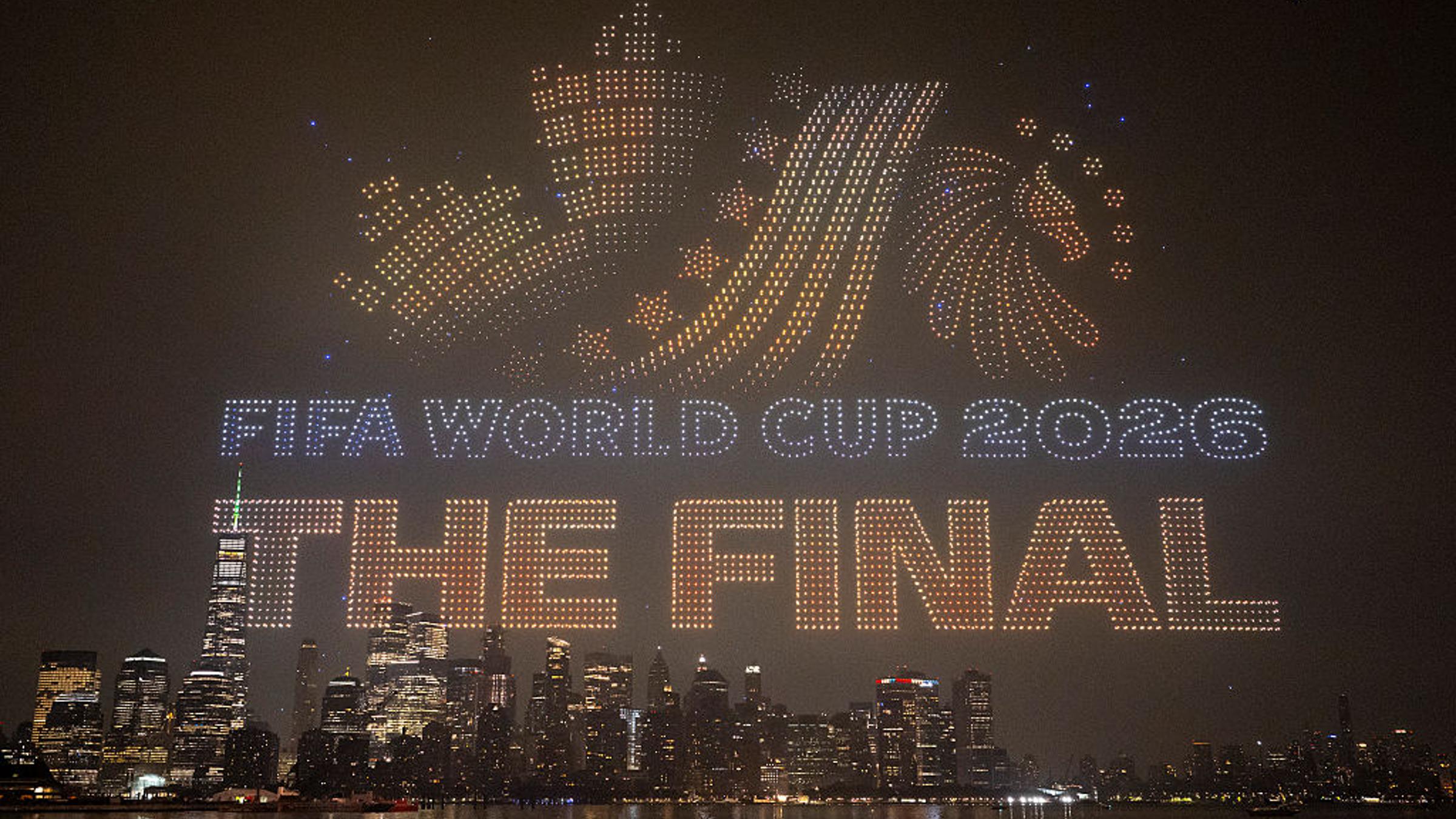
A drone show celebrating the 2026 World Cup Final against the Manhattan skyline on July 15, 2026 in Jersey City, New Jersey. —David Ramos—Getty Images
Logistical Coordination and the Federalist System
Hosting the expanded 48-team format required a level of decentralization unique to the American political structure. Unlike events managed by a single central authority, the 2026 World Cup relied on a network of 16 distinct host cities, each operating under its own municipal laws, budgetary constraints, and regional priorities.

The involvement of the federal government was focused primarily on infrastructure development and national security protocols. This decentralized model, while historically prone to logistical friction, functioned to integrate local civic institutions with broader national objectives.
The FIFA World Cup 2026 Semi-Final match between France and Spain on July 14, 2026, in Arlington, Texas. —David Buono—Icon Sportswire/Getty Images
Global Perception and National Identity
The influx of international visitors provided a localized counter-narrative to the prevailing global perception of a divided United States. Social media analysis from the duration of the tournament showed a high volume of engagement from foreign fans documenting their experiences in American cities.
From the Tartan Army’s presence in Boston to the Algerian fan base establishing an unofficial home in Lawrence, Kansas, the tournament functioned as a series of grassroots cultural exchanges. These interactions occurred at the municipal level, reinforcing the role of the individual states in shaping the national image. While the tournament faced internal challenges—including the controversy surrounding the United States Men’s National Team’s exit—the broader execution of the event remained focused on the logistical and cultural integration of a sprawling, diverse nation.
Evaluating the Economic and Social Impact
As the United States transitions into its 250th year, the legacy of the 2026 World Cup remains a subject of ongoing analysis. For many, the event provided a tangible example of the country’s ability to manage complex, multi-layered operations under intense public scrutiny.

Worth a look