
The Bay of Fundy, nestled between Nova Scotia and New Brunswick in Canada, holds a natural phenomenon so extraordinary it defies belief: twice every 24 hours, up to 160 billion tons of seawater surges through its narrow passages, creating tides that dwarf those of any other place on Earth. With water levels rising and falling by over 50 feet—equivalent to a four-story building—this coastal wonder is both a breathtaking spectacle and a frontier for renewable energy research. For surfers, scientists, and locals alike, the Bay of Fundy’s tidal extremes redefine what’s possible in the world’s oceans.
While most coastal regions experience tides averaging just three feet, the Bay of Fundy’s semi-diurnal tides (two high tides daily) can reach 53 feet (16 meters) in its Minas Basin, near Wolfville, Nova Scotia. This staggering volume of water—enough to power a small city if harnessed—has earned the bay global attention for its potential to revolutionize tidal energy. Yet, the challenges of capturing this force remain as formidable as the tides themselves.
The spectacle is equally dramatic for visitors. Areas that are walkable and dry at low tide become submerged within hours, creating a dynamic landscape that shifts with the rhythm of the moon’s gravitational pull. Timelapse videos of the phenomenon have captivated millions, offering a visual equivalent of water climbing a four-story building in minutes.
Timelapse of the Bay of Fundy’s record tides, where 160 billion tons of water surge twice daily.
The Science Behind the Bay of Fundy’s Unmatched Tides
The Bay of Fundy’s extreme tides are the result of a perfect storm of geography and celestial mechanics. The bay’s funnel-like shape—narrowing dramatically between the Atlantic Ocean and its inner basins—amplifies the natural rise and fall of seawater caused by the moon’s gravity. This resonance effect, combined with the bay’s depth and the timing of tidal cycles, creates a phenomenon known as a seiche, where water sloshes back and forth with exaggerated force.

According to the National Oceanic and Atmospheric Administration (NOAA), the Minas Basin—located within the Bay of Fundy—experiences the most extreme tidal range on Earth. While the global average tidal variation is just three feet, Wolfville’s tides can fluctuate by 53 feet, with high tides occurring roughly every 12 hours and 25 minutes. This semi-diurnal pattern is consistent along the Atlantic coast, though the Bay of Fundy’s tides are an outlier even by regional standards.
For comparison, the average tidal range along the Atlantic side of Nova Scotia—outside the Bay of Fundy—ranges from four to eight feet, with minimal variation in timing. The bay’s unique hydrodynamics make it a natural laboratory for studying tidal forces, and its energy potential has spurred decades of research into tidal power generation.
Harnessing the Bay’s Power: Tidal Energy and the Challenges Ahead
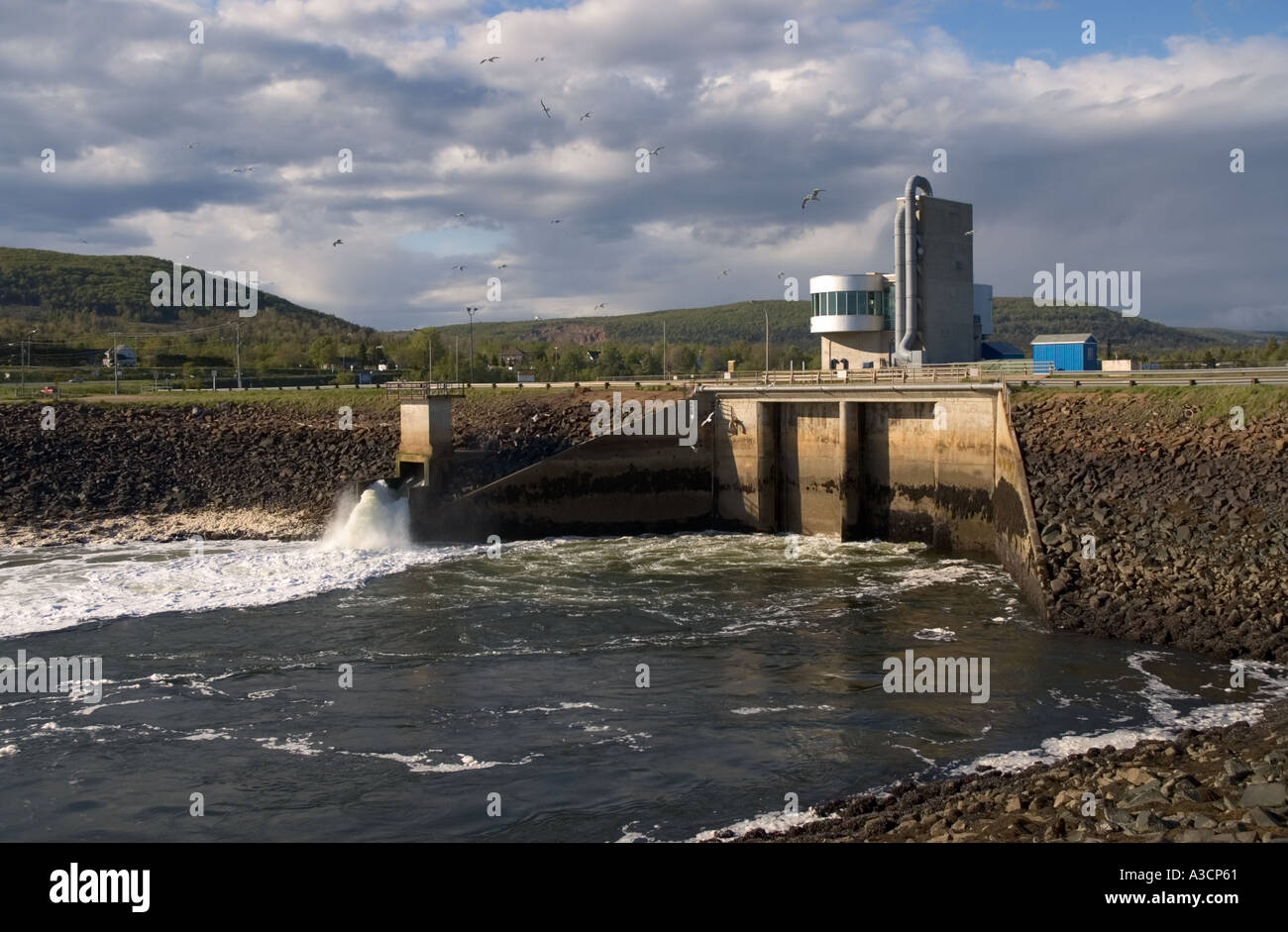
The sheer volume of water moving through the Bay of Fundy—160 billion tons twice daily—represents a nearly untapped energy resource. Estimates suggest the bay’s tidal currents could generate enough electricity to power hundreds of thousands of homes, yet commercial-scale tidal power projects remain in their infancy. The primary obstacle? Engineering a system robust enough to withstand the bay’s extreme conditions.
Projects like the Fundy Ocean Research Centre for Energy (FORCE) in Nova Scotia have tested tidal turbines and other technologies to capture this energy. However, the high costs of installation, maintenance, and environmental concerns—such as impacts on marine life—have slowed progress. Despite these challenges, the Bay of Fundy remains a global leader in tidal energy innovation, with researchers exploring new designs to make harnessing its power more feasible.
Beyond energy, the bay’s tides influence local ecosystems, tourism, and even transportation. The dramatic shifts in water levels have shaped the region’s geography over millennia, creating unique habitats for species like the American eel and Atlantic salmon. For tourists, the tides offer a once-in-a-lifetime experience, with guided walks at low tide revealing submerged forests and historical artifacts.
A Surfer’s Paradise and a Scientist’s Dream
While tidal energy and scientific research dominate discussions about the Bay of Fundy, the region is also a haven for adventurers. Surfers flock to its shores to ride the powerful currents and waves generated by the tides, though the extreme conditions demand caution. The bay’s reputation as a surfing hotspot is matched only by its role as a testing ground for renewable energy technologies.
Oceanographers and engineers continue to study the bay’s dynamics, using advanced modeling to predict tidal patterns and optimize energy capture. The data collected here could inform tidal projects worldwide, from the SeaGen turbine in Northern Ireland to proposed installations in the United States and Europe.
What’s Next for the Bay of Fundy?
As climate change intensifies, the Bay of Fundy’s tides may become even more pronounced, raising questions about coastal erosion, habitat loss, and the long-term sustainability of tidal energy. Researchers at FORCE and other institutions are monitoring these changes, while local communities adapt to the bay’s ever-shifting landscape.
For now, the Bay of Fundy remains a testament to nature’s power—a place where science, adventure, and renewable energy converge. Whether you’re watching 160 billion tons of water surge through its narrow passages or standing on a beach that disappears beneath the waves, the bay’s tides offer a reminder of how small we are in the face of Earth’s grand forces.
Key Takeaways
- The Bay of Fundy’s tides reach 53 feet, the highest in the world, with 160 billion tons of water moving twice daily.
- Its semi-diurnal tides are driven by the moon’s gravity and the bay’s unique funnel shape, creating a resonance effect.
- Tidal energy projects in the bay face engineering and environmental challenges but hold potential to power thousands of homes.
- The region is a hotspot for surfing, scientific research, and tourism, shaped by its extreme tidal cycles.
- Climate change may alter the bay’s tides, impacting ecosystems and renewable energy efforts.
Have you witnessed the Bay of Fundy’s tides firsthand? Share your experiences in the comments below—or let us know what other natural wonders you’d like to explore. For more on tidal energy and coastal science, follow World Today Journal’s Environment & Science section.
Related reading