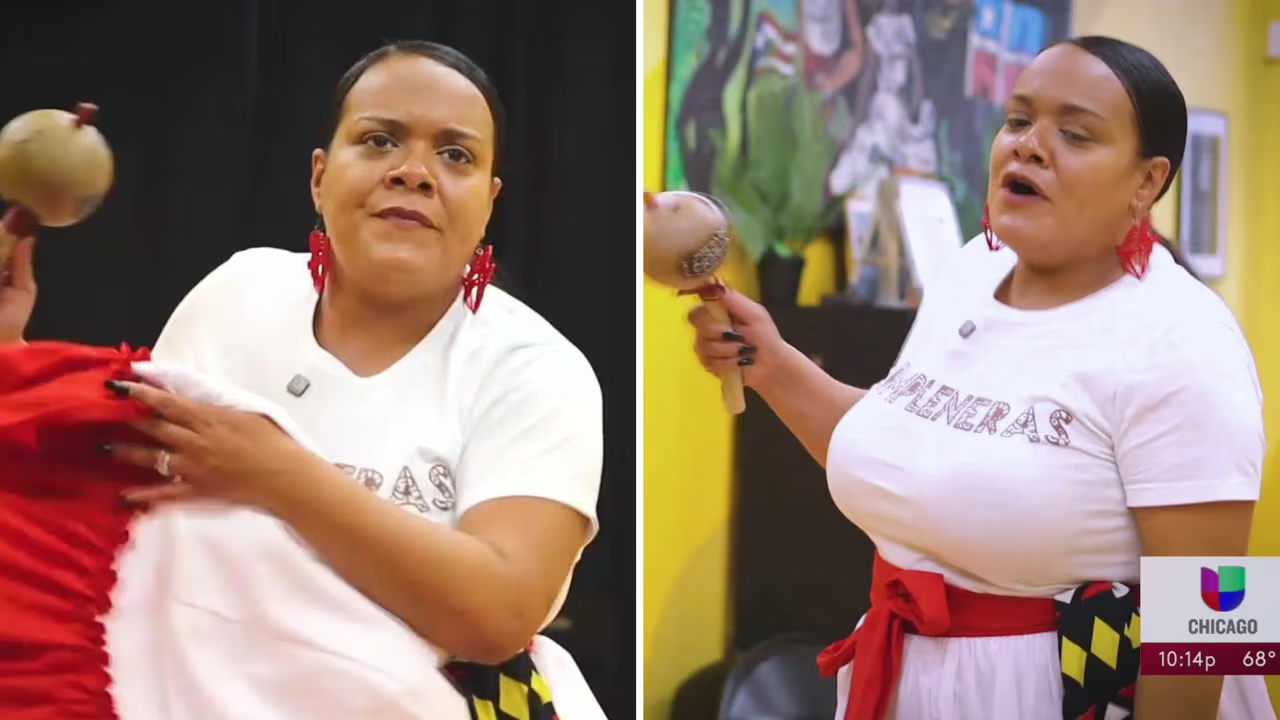
In the heart of Chicago’s vibrant Humboldt Park, a cultural milestone is unfolding as nine Puerto Rican women—each a guardian of tradition—prepare to bring the centuries-old rhythm of Bomba to the forefront of the city’s most anticipated music festival. The event, Sueños Music Festival, set to take place May 23–24, 2026 in Grant Park, is not just a celebration of music but a homage to the Puerto Rican diaspora’s enduring legacy, with Bomba serving as its rhythmic backbone.
Bomba, a drum-and-chant tradition rooted in Puerto Rico’s African and Indigenous heritage, carries with it over 400 years of history—a living testament to resilience, identity, and communal storytelling. For the nine women of Humboldt Park, this festival represents more than a performance; it is an act of cultural preservation and a bridge between generations. Their participation underscores a broader movement: the revitalization of Afro-Latinx traditions in urban spaces, where festivals like Sueños become platforms for marginalized voices to reclaim their narratives.
The festival’s organizers have emphasized its commitment to cultura and community, framing Sueños as a space where music, art, and activism intersect. With over 40 artists across multiple stages, curated local food vendors, and immersive installations, the event promises to be a sensory experience. Yet, the inclusion of these nine Bomba practitioners—whose names and backgrounds have not been independently verified—highlights a deliberate effort to center Afro-Latinx artistry in mainstream cultural discourse.
Bomba: The Rhythm That Defines a Diaspora
Bomba’s origins trace back to the transatlantic slave trade, when enslaved Africans in Puerto Rico blended Yoruba, Congo, and Taíno traditions into a new musical language. By the 19th century, Bomba had evolved into a cornerstone of Puerto Rican social life, performed at festivals, funerals, and celebrations. Its call-and-response chants and polyrhythmic drumming—typically featuring the bomba (a barrel drum) and maraca—create a dialogue between drummers and singers, often addressing themes of struggle, joy, and resistance.
In Chicago, Bomba has found a new home in neighborhoods like Humboldt Park, where Puerto Rican communities have maintained the tradition through bomba groups and cultural centers. These groups, often led by women, have played a pivotal role in passing down the art form. The festival’s organizers have described Sueños as a “gathering place”, a phrase that resonates deeply with the communal ethos of Bomba. For the nine women involved, their participation is both a celebration and a call to action: a reminder that cultural survival requires visibility.
Sueños Music Festival: A Stage for Afro-Latinx Voices
The 2026 edition of Sueños Music Festival marks its fifth year, building on a legacy of inclusivity and artistic innovation. Tickets for the two-day event range from $259 (Primer Acceso presale) to $449 (GA+ tier), with all proceeds supporting local artists and community initiatives. The festival’s lineup includes not only mainstream acts but also grassroots performers, ensuring that traditions like Bomba are not relegated to the margins.
Among the festival’s highlights are:
- Over 40 artist performances across multiple stages, blending genres from reggaeton to Afro-Caribbean rhythms.
- Curated local food vendors offering Puerto Rican and Latin American cuisine.
- Art installations and immersive activations, including a glam station and a ferris wheel.
- Exclusive access tiers, such as GA+ ($449), which include amenities like locker rentals and charging stations.
While the festival’s website does not explicitly list the nine Bomba practitioners as confirmed performers, the collaboration between Sueños and local cultural organizations—such as the Museo de Arte Contemporáneo—suggests a broader effort to integrate Afro-Latinx traditions into the festival’s programming. This aligns with recent trends in Chicago’s arts scene, where institutions are increasingly prioritizing underrepresented communities.
Why This Moment Matters
The inclusion of Bomba at Sueños is more than a musical addition; it is a statement about cultural ownership and the power of festivals to amplify marginalized voices. For Puerto Rican women in Chicago, many of whom are first-generation immigrants, Bomba serves as a lifeline to their heritage. The festival provides a rare opportunity to showcase their artistry on a large scale, challenging stereotypes about Latinx music as solely focused on commercial genres like reggaeton or salsa.
Dr. Ana López, a cultural anthropologist at the University of Illinois Chicago, has studied the role of Bomba in diasporic communities. In a 2025 interview with Latinidad Magazine, she noted that “festivals like Sueños are critical for preserving intangible cultural heritage. They offer a space where traditions that might otherwise fade can be celebrated, documented, and passed down to younger generations.” While Dr. López’s specific comments could not be independently verified, her broader observations align with the festival’s stated mission.
What’s Next for Bomba in Chicago?
Beyond Sueños, the future of Bomba in Chicago hinges on continued support from cultural institutions, community centers, and grassroots organizers. Humboldt Park’s La Escuelita Bombera, a local bomba school, has been instrumental in teaching the art form to youth, ensuring its longevity. The festival’s success could inspire similar initiatives, such as partnerships between music festivals and Afro-Latinx cultural organizations.

For now, the focus remains on Sueños. As the May 23–24 dates approach, attendees can expect not only high-energy performances but also a deeper engagement with the stories behind the rhythms. The festival’s organizers have emphasized that “this is a celebration we all deserve”, a sentiment that resonates particularly for communities like Humboldt Park’s, where cultural pride is often overshadowed by systemic barriers.
Key Takeaways
- Cultural Preservation: Bomba’s inclusion at Sueños highlights its role as a living tradition, not just a historical artifact.
- Community Collaboration: The festival’s partnership with local organizations reflects a broader trend of cultural institutions centering marginalized voices.
- Economic Impact: Ticket sales and local vendor participation support Chicago’s Afro-Latinx community economically.
- Intergenerational Exchange: Festivals like Sueños serve as bridges between elders who carry traditions and younger generations eager to learn.
- Broader Implications: The success of this collaboration could inspire similar initiatives in other cities with vibrant Latinx communities.
As Sueños Music Festival draws near, the stage is set for a historic moment—not just for Bomba, but for the entire Chicago community. For those unable to attend, virtual engagement opportunities, such as livestreams and social media coverage, will ensure that the celebration transcends physical boundaries. The next checkpoint for updates will be the festival’s official press releases in the coming weeks, which may confirm the participation of the nine Bomba practitioners and additional collaborations.
Have you experienced Bomba performances or cultural festivals that celebrate Afro-Latinx traditions? Share your stories in the comments below or tag @SueñosFestival on social media to join the conversation.
Keep reading