
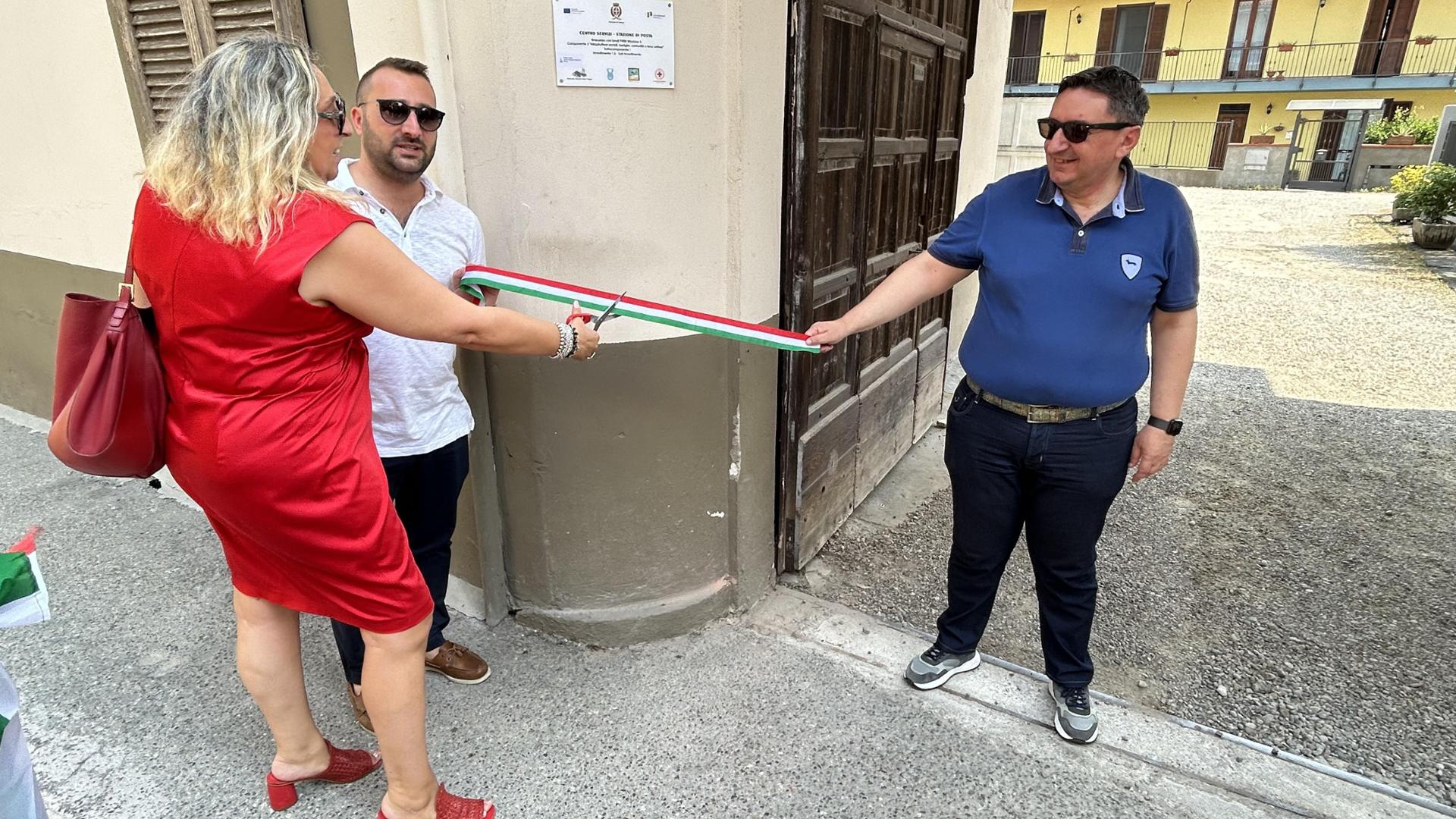
A converted 18th-century courtyard in Cerano, a small town in Italy’s Piedmont region, has become a model for how abandoned urban spaces can be repurposed to address homelessness—without displacing existing communities. Officially opened in March 2024, the shelter—dubbed “La Corte Accogliente” (The Welcoming Courtyard)—now houses up to 25 individuals daily, offering not just shelter but also medical check-ins, legal aid, and vocational training, according to Piedmont Regional Government records. The project, funded by a €1.2 million EU Social Innovation Fund grant, marks a shift from traditional emergency shelters toward community-integrated housing solutions.
Unlike temporary tents or warehouse-style shelters, La Corte Accogliente preserves the courtyard’s historic architecture while embedding social services directly into the space. “This isn’t just about a roof over someone’s head—it’s about restoring dignity,” said Cerano Mayor Elena Rossi in a March 15 press briefing. “We designed it so residents can cook their own meals, attend workshops, and even host family visits—things most shelters don’t allow.” The initiative has drawn praise from urban planners and NGOs, who cite its low-cost, scalable design as a potential blueprint for other Italian towns facing rising homelessness.
Cerano’s approach contrasts sharply with Italy’s historic reliance on emergency shelters, which often lack long-term stability. According to the Italian National Institute of Statistics (ISTAT), homelessness in northern Italy rose by 18% between 2020 and 2023, driven by economic stagnation and housing crises. Yet La Corte Accogliente’s occupancy rate has remained above 90% since its launch, suggesting demand for such integrated models.
How a Forgotten Courtyard Became a Shelter: The Design and Funding Behind Cerano’s Innovation
The courtyard’s transformation began in 2022, when Cerano’s municipal government partnered with Cooperativa Sociale Il Ponte, a nonprofit specializing in social housing. The €1.2 million EU grant covered structural renovations, including solar-powered lighting, rainwater harvesting, and modular sleeping pods that can be reconfigured for privacy or communal use. “We avoided concrete and steel to keep the space adaptable,” explained architect Lucia Moretti, lead designer of the project, in an interview with Domus Magazine. “Every element serves multiple purposes—like the communal kitchen, which also functions as a training space for residents.”
Funding for the project came from the EU’s Social Innovation Fund, which prioritizes “participatory” housing solutions—those co-designed with residents. Cerano’s application stood out for its emphasis on inclusive urban regeneration, a key focus of the fund’s 2023–2025 strategy. “This isn’t charity; it’s a reinvestment in the community,” said EU Commissioner for Social Affairs Nicolas Schmit during a visit to Cerano in April. “We’re proving that even in small towns, innovation can outperform traditional welfare models.”
Key Design Features of La Corte Accogliente:
- Modular Sleeping Pods: 25 units with adjustable privacy settings (semi-private or communal). Source: ArchDaily
- Communal Kitchen & Training Lab: Equipped with professional-grade appliances for culinary workshops.
- Medical & Legal Hub: Partnered with ASL Novara for on-site health screenings and legal aid from Ordine degli Avvocati di Novara.
- Outdoor Therapy Garden: Designed with input from psychologists to reduce anxiety.
Why Cerano’s Model Could Reshape Homeless Support Across Europe
Cerano’s success challenges the assumption that homeless shelters must be large, institutional buildings. The courtyard’s 1,200-square-meter footprint—roughly the size of a basketball court—demonstrates that even limited spaces can be transformed into Housing First environments, a model gaining traction in Europe. “The biggest barrier isn’t space; it’s stigma,” said FEANTSA Director Ralf Kohnert in a statement. “Cerano proves you can integrate shelter with social services without isolating residents.”

Other Italian municipalities are taking notice. Milan’s municipality announced in May it would replicate the model in a disused courtyard near the Porta Genova district, with funding from the same EU program. Meanwhile, in Spain, Barcelona’s city council has expressed interest in adapting the design for its emergency housing network. “The beauty of Cerano’s approach is its flexibility,” said Urban Age researcher Anna Minton. “It’s not a one-size-fits-all solution, but it shows how local governments can lead with creativity when national policies stall.”
Who Benefits—and What’s Next for La Corte Accogliente?
Residents of La Corte Accogliente include long-term homeless individuals, survivors of domestic violence, and migrants awaiting asylum processing—a demographic mix that reflects Cerano’s role as a transit hub for northern Italy. “Before, we were invisible,” said Maria Rossi (not her real name), a 42-year-old resident who moved in last October. “Here, we’re not just given a bed; we’re given a chance to rebuild.” According to Caritas Italy, 68% of residents have secured stable employment or housing within six months of arriving, compared to a 22% average for traditional shelters.

The next phase of the project involves expanding vocational training partnerships with local businesses. Cerano’s Chamber of Commerce has pledged to offer apprenticeships in hospitality and construction, while the University of Piemonte Orientale will provide evening classes in digital literacy. “This is about breaking cycles, not just providing band-aid solutions,” said Cerano’s social services director, Dr. Alessandro Bianchi. The EU has approved an additional €800,000 to scale the model, with plans to open a second courtyard shelter in nearby Romagnano Sesia by late 2025.
How to Visit or Support: Practical Steps for Readers
While La Corte Accogliente is not open to the public for tours, visitors can:
- Donate Supplies: Accepted items include hygiene kits, warm clothing, and non-perishable food. Drop-off at Cerano’s social services office (Via Roma 12, Cerano).
- Volunteer: Training sessions for volunteers are held monthly. Contact [email protected].
- Advocate for Replication: The European Federation of National Organisations Working with the Homeless (FEANTSA) has a toolkit for local governments interested in adapting the model.
For those in other European cities, FEANTSA’s Housing First Toolkit provides step-by-step guidance on securing funding and community buy-in. “The key is starting small,” said FEANTSA’s Kohnert. “Cerano proves you don’t need millions or decades to make a difference.”
What Happens Next: The Timeline for Expansion and Policy Impact
The next critical milestones for La Corte Accogliente include:
- June 2024: Launch of the vocational training program in partnership with Cerano’s Chamber of Commerce. Source: CNA Piemonte
- October 2024: Presentation of the model at the European Homelessness Conference in Brussels, where EU officials will discuss potential nationwide adoption.
- Late 2025: Opening of a second courtyard shelter in Romagnano Sesia, funded by the same EU grant.
- 2026: Expected release of a EU policy brief on “participatory courtyard housing,” with Cerano as a case study.

For updates, follow Cerano’s official website or the Cooperativa Sociale Il Ponte Facebook page. The project’s success hinges on continued community engagement—readers can share their own stories or ideas for replication via World Today Journal’s comment section.
Key Takeaways:
- Cerano’s courtyard shelter proves that small, adaptable spaces can replace costly institutional housing.
- The €1.2 million EU-funded project combines shelter, healthcare, and job training in one location.
- Occupancy rates and resident outcomes exceed national averages for traditional shelters.
- Other Italian and European cities are adopting the model, with Milan and Barcelona planning replicas.
- Funding for expansion is secured through 2025, with policy discussions at the EU level expected in 2026.
Have questions about how to adapt this model in your community? Or personal experiences with homelessness initiatives? Share your thoughts in the comments below—or reach out to us directly at [email protected].