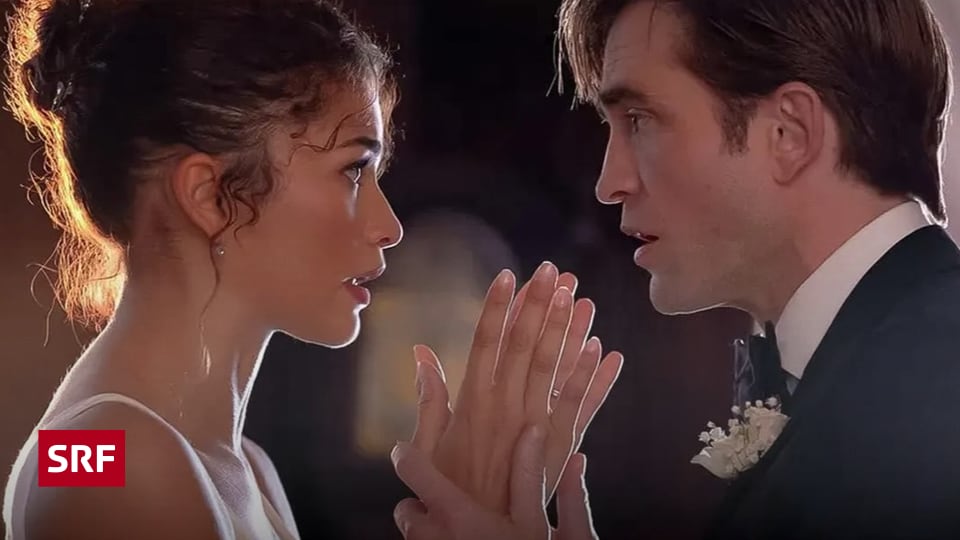
The film world is buzzing about “The Drama,” a new release starring Zendaya and Robert Pattinson that’s proving to be anything but predictable. The movie, directed by Norwegian filmmaker Kristoffer Borgli, has sparked considerable discussion – and even controversy – with its audacious premise and unsettling tone. Although initial reports hinted at a simple romantic comedy, audiences are discovering a far more complex and provocative work that delves into the weight of secrets and the fragility of relationships. The film is already generating strong reactions, with some praising its boldness and others finding it deeply disturbing.
“The Drama” centers around a seemingly idyllic couple whose world is thrown into turmoil just days before their wedding. The narrative unfolds as Emma, played by Zendaya, reveals a shocking confession to her fiancé, Charlie, portrayed by Robert Pattinson. This revelation isn’t a tale of infidelity, but something far more unsettling, forcing both characters – and the audience – to confront uncomfortable truths about the past and the potential for darkness within seemingly ordinary lives. The film’s exploration of this premise has been described as a “Euro-satire of American bourgeois prestige,” aiming to discomfit and provoke in a manner reminiscent of films like Ruben Östlund’s “Force Majeure” and Thomas Vinterberg’s “Festen.”
The dynamic between Zendaya and Pattinson is central to the film’s impact. Pattinson embodies Charlie as a “rumpled and bespectacled young British art historian” navigating life in the United States, while Zendaya portrays Emma as a captivating and enigmatic figure. Their initial meeting, described as a “meet-cute” in a coffee shop, is complicated by the fact that Emma is deaf in one ear and initially doesn’t notice Charlie’s attempts to engage her. This misunderstanding, initially mortifying for Charlie, ultimately becomes a charming anecdote, but Borgli imbues the scene with an unsettling undercurrent, hinting at the psychological complexities to approach. The film’s sound design, with its “weird, eerie ambient noises” and “uneasy, dissonant woodwind figures,” further contributes to this sense of unease.
A Premise Built on Discomfort and Revelation
The core of “The Drama” lies in the question of how much of one’s past should remain hidden, even from those we love most. The film doesn’t offer easy answers, instead presenting a scenario designed to challenge conventional notions of trust and forgiveness. The narrative deliberately pushes boundaries, exploring the potential consequences of revealing a deeply troubling secret on the eve of a life-altering commitment. Critics have noted the film’s willingness to be “insouciantly offensive,” suggesting that Borgli isn’t interested in providing comfort or reassurance, but rather in forcing audiences to confront uncomfortable realities.
The film’s impact is amplified by its unconventional approach to storytelling. Rather than relying on traditional romantic comedy tropes, “The Drama” subverts expectations, creating a sense of mounting anxiety and psychological tension. The initial charm of the central couple gradually gives way to a growing sense of dread as Emma’s confession unravels, forcing Charlie to grapple with the implications of her past. This shift in tone has been a key point of discussion among viewers, with some finding it jarring and others praising its effectiveness in creating a truly unsettling cinematic experience.
Zendaya and Pattinson: A Compelling On-Screen Pairing
The performances of Zendaya and Robert Pattinson are receiving widespread acclaim. Pattinson, known for his roles in films like “The Batman” and “Good Time,” brings a nuanced vulnerability to the character of Charlie, portraying a man whose carefully constructed world is shattered by a single revelation. Zendaya, a rising star with acclaimed roles in “Euphoria” and “Dune,” delivers a captivating performance as Emma, embodying both her allure and her hidden depths. IMDb lists both actors as central to the film’s cast, alongside Alana Haim and Mamoudou Athie.
The chemistry between the two actors is palpable, adding to the emotional weight of the narrative. Their ability to convey a range of emotions – from joy and affection to fear and uncertainty – is crucial to the film’s success. The film’s exploration of their relationship is not simply a romantic tale, but a psychological study of how secrets can erode trust and reshape perceptions. The actors’ performances are instrumental in conveying this complexity, drawing viewers into the emotional turmoil of their characters.
Critical Reception and Audience Reactions
“The Drama” has garnered a mixed but largely positive critical response. Reviews have praised the film’s boldness, its unsettling atmosphere, and the performances of its lead actors. However, some critics have found the film’s provocative nature to be gratuitous or its narrative structure to be contrived. The film’s willingness to challenge conventional cinematic norms has undoubtedly contributed to the divided opinions. The Guardian describes the film as a “controversial wedding film” that “delivers on its promise” of provocation.
Audience reactions have been equally varied. Some viewers have been deeply disturbed by the film’s premise and its exploration of dark themes, while others have found it to be a thought-provoking and emotionally resonant experience. Reports suggest that the film has sparked lively discussions among viewers, with many debating the ethical implications of Emma’s confession and the potential for forgiveness in the face of past transgressions. The film’s ability to generate such strong reactions is a testament to its power and its willingness to confront uncomfortable truths. The film is described by Spiegel as asking the question: “What is the worst thing you have ever done?”
A Divisive Film That Demands Discussion
The film’s divisive nature is perhaps its most defining characteristic. It’s a film that doesn’t shy away from difficult questions, and it doesn’t offer easy answers. This willingness to challenge audiences has resonated with some viewers, while alienating others. The aargauerzeitung.ch notes that the film is a “Kino-Schock ohne Warnung?” (cinema shock without warning?), highlighting the unexpected and unsettling nature of the narrative. The ORF describes the film as “Heiraten für Hartgesottene” (Marriage for the Hardened), suggesting that it’s not a film for the faint of heart.
“The Drama” is a film that demands to be discussed. It’s a provocative and unsettling work that challenges conventional notions of love, trust, and forgiveness. Whether viewers embrace its boldness or reject its unsettling premise, it’s a film that is unlikely to be forgotten anytime soon. The film’s exploration of the human psyche and its willingness to confront uncomfortable truths create it a compelling and thought-provoking cinematic experience.
As of today, April 3, 2026, “The Drama” continues its theatrical run in select cinemas. Further updates on the film’s distribution and availability will be reported as they turn into available. The film’s impact on the cinematic landscape and its lasting legacy remain to be seen, but it has already established itself as a significant and controversial work of contemporary cinema. We encourage readers to share their thoughts and reactions to “The Drama” in the comments section below.