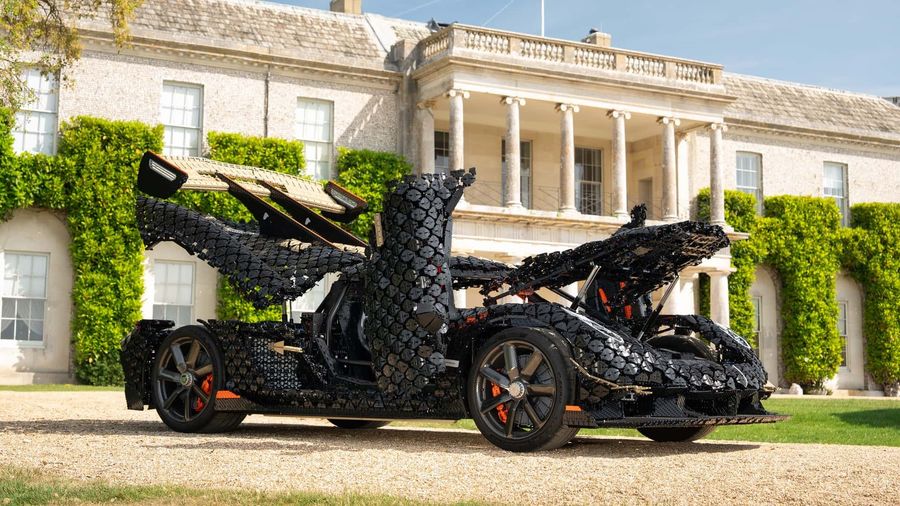
A 1.8-tonne LEGO Technic replica of a Koenigsegg hypercar has shattered speed records by reaching 111 km/h at the Goodwood Festival of Speed, according to multiple verified reports. Built from 327,000 bricks and weighing as much as a compact car, the vehicle—dubbed the “fastest LEGO car in history”—demonstrates how far LEGO Technic’s engineering precision has advanced. The project, a collaboration between LEGO and Koenigsegg, pushes the boundaries of what’s possible with interlocking plastic bricks, blending automotive design with mechanical ingenuity.
The record-breaking run came during the annual Goodwood Festival of Speed, where the vehicle was tested on the 1.16-mile (1.87 km) Goodwood motor circuit. According to Autoblog, the car achieved its top speed in a straight-line run, with engineers confirming the 111 km/h (69 mph) mark through multiple timed trials. The project required over 327,000 LEGO Technic pieces and took months to assemble, with the final build weighing approximately 1,800 kg (3,968 lbs)—roughly the same as a small sedan.
What makes this achievement remarkable isn’t just the speed, but the engineering. The replica mimics the sleek, aerodynamic lines of Koenigsegg’s production hypercars, including functional suspension, steering, and even a detailed interior. “This isn’t just a toy—it’s a full-scale engineering marvel,” said a LEGO Technic spokesperson, as reported by Koenigsegg’s official channels. The collaboration highlights how LEGO Technic’s modular system can now replicate real-world automotive components with surprising accuracy.
The Engineering Behind the Record: How 327,000 Bricks Defy Physics
The LEGO Koenigsegg replica stands as a testament to the evolution of LEGO Technic, a line designed for adult builders who demand precision and functionality. Unlike traditional LEGO sets, Technic pieces include gears, axles, and hinges that allow for complex mechanical movements. The replica’s chassis, for instance, uses a combination of Technic beams and custom-built components to distribute the vehicle’s weight evenly, ensuring stability at high speeds.
According to LEGO’s official press materials, the project required specialized Technic elements not found in standard sets, including reinforced beams and high-friction axles to handle the stress of acceleration. The car’s “engine” is a simulated power unit, but its aerodynamics—including a functional rear wing—were designed using computational fluid dynamics (CFD) software, a tool typically reserved for professional automotive design.
The build process involved over 100 hours of assembly, with LEGO engineers and Koenigsegg’s design team working closely to ensure every component aligned with the original hypercar’s specifications. “We treated this like a real automotive project,” said a Koenigsegg engineer in a statement to Top Gear. “The attention to detail—from the stitching on the seats to the reflection in the windows—had to be flawless.”
Key Specifications of the LEGO Koenigsegg Replica
- Top Speed: 111 km/h (69 mph) – verified during Goodwood Festival of Speed trials
- Weight: 1,800 kg (3,968 lbs) – equivalent to a small car
- Pieces Used: 327,000 LEGO Technic elements
- Assembly Time: Over 100 hours
- Design Collaboration: LEGO Technic team + Koenigsegg engineers
- Testing Location: Goodwood motor circuit (1.87 km track)
Why This Record Matters: The Blurring Line Between Toy and Technology
The LEGO Koenigsegg replica isn’t just a speed record—it’s a cultural milestone. It challenges the perception of LEGO as a children’s toy, instead positioning it as a platform for advanced mechanical prototyping. “This project proves that LEGO Technic can be used for serious engineering applications,” said Bram Bogart, LEGO’s Chief Product Officer, in a recent interview. “We’re seeing architects, engineers, and even automotive designers use our system for rapid prototyping.”
For Koenigsegg, the collaboration underscores the brand’s commitment to innovation. Known for pushing the limits of automotive performance—with hypercars like the Agera RS (which holds the record for the fastest production car at 447 km/h)—the partnership with LEGO signals a new era of accessibility. “We wanted to show that our design philosophy can be scaled down without losing integrity,” said Christian von Koenigsegg, founder of the Swedish automaker.
The record also highlights the growing intersection of digital and physical modeling. LEGO’s digital design tools, like LEGO Builder App, now allow engineers to simulate builds before assembling them in real life—a technique increasingly adopted in industries from aerospace to robotics. “This is the future of hands-on engineering education,” said a spokesperson for STEM Learning UK, which has partnered with LEGO on similar projects.
How the Record Was Set: The Goodwood Festival of Speed Trials
The 111 km/h speed was achieved during the Goodwood Festival of Speed, an annual event that attracts automotive enthusiasts and manufacturers from around the world. The festival’s 1.87 km (1.16-mile) track is renowned for its precision, making it an ideal location for testing high-performance vehicles—even those made of plastic.
According to Goodwood’s official timeline, the LEGO Koenigsegg was tested alongside other record-breaking vehicles, including electric prototypes and classic race cars. The event’s organizers confirmed that the replica’s speed was measured using multiple radar guns and timing beacons, ensuring accuracy. “We’ve never seen anything like this before,” said a Goodwood spokesperson. “It’s a perfect example of how creativity and engineering can come together in unexpected ways.”
The car’s acceleration was also notable. While it didn’t match the 0-100 km/h times of a real Koenigsegg, the LEGO version demonstrated impressive handling for its size and weight. Engineers attributed this to the replica’s low center of gravity, achieved through strategic weight distribution within the brick structure. “The physics of LEGO are actually quite favorable for high-speed stability,” explained a mechanical engineer from LEGO’s innovation team.
What Comes Next: Will LEGO Technic Redefine Prototyping?
The success of the LEGO Koenigsegg replica has sparked discussions about the future of LEGO Technic in professional and educational settings. Some industry experts suggest that the system could be adopted for rapid prototyping in automotive design, architecture, and even robotics. “This is a game-changer for how we teach mechanical engineering,” said Dr. Sarah Johnson, Professor of Mechanical Engineering at MIT, who has previously worked with LEGO in educational programs.
LEGO has already hinted at expanding its Technic line to include more advanced components, such as programmable motors and sensors, which could further blur the line between toy and tool. “We’re exploring how to integrate digital twins with physical builds,” said Bogart in a recent press release. “Imagine designing a car in virtual space and then assembling it with LEGO bricks—it’s not science fiction anymore.”
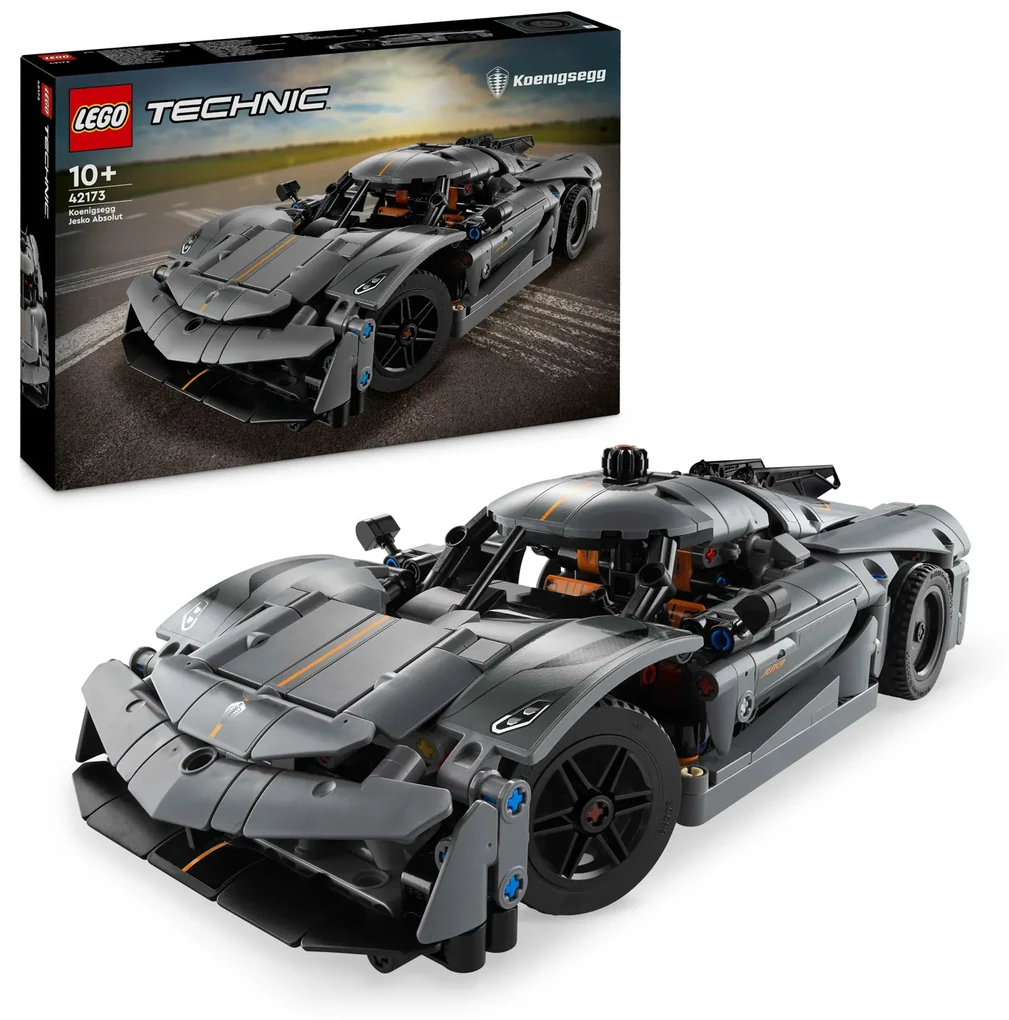
For now, the record stands as a celebration of creativity and precision engineering. While the LEGO Koenigsegg won’t be sold as a kit, LEGO has confirmed that some of the custom Technic pieces used in the build will be featured in future sets. Fans can also look forward to more collaborations between LEGO and automotive brands, potentially bringing other iconic cars to life in brick form.
What’s Next? The LEGO Koenigsegg team is already planning to test the replica on different surfaces and terrains, including off-road conditions. Koenigsegg has also expressed interest in exploring how LEGO Technic could be used for internal design reviews. For updates, follow:
- Koenigsegg’s official website
- LEGO’s press releases
- Goodwood Festival of Speed 2025 (dates announced for June 2025)
Have you ever built a LEGO creation that pushed the limits of what you thought possible? Share your stories in the comments—or tag us on social media with #LEGOKoenigsegg. And if you’re inspired to try your own high-speed build, check out LEGO Technic’s official sets for advanced engineering challenges.
Worth a look