
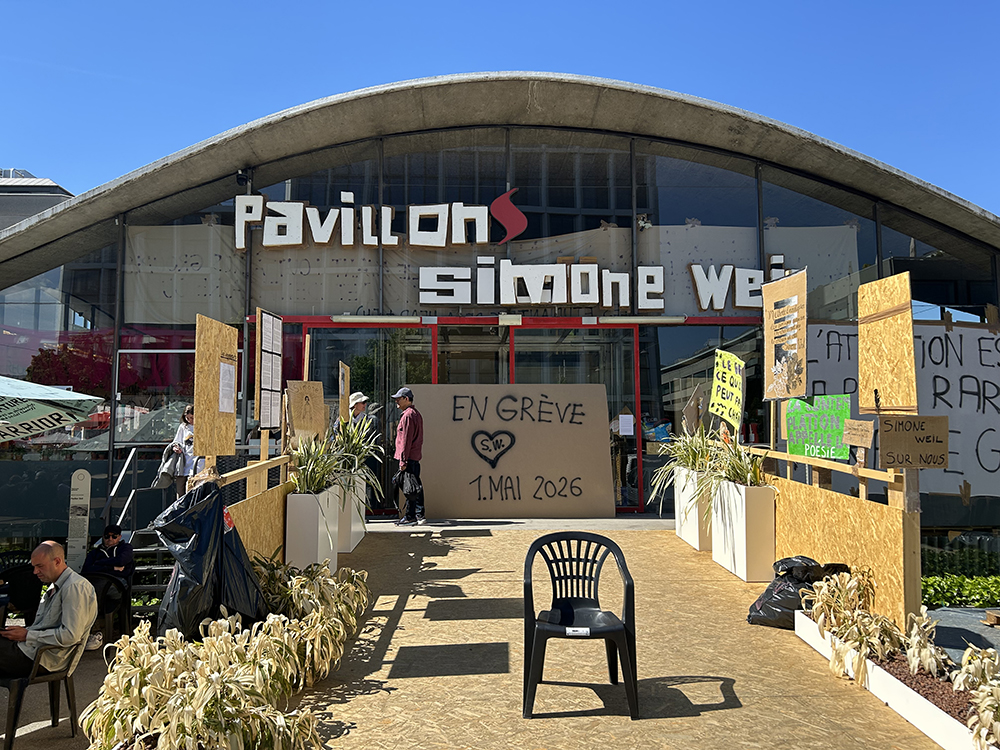
Geneva’s Pavillon Simone Weil: A Crisis of Vision and Security
The Pavillon Simone Weil, a landmark artistic and philosophical project in Geneva, has become a flashpoint of controversy and uncertainty. Originally conceived as a tribute to the French philosopher Simone Weil, the pavilion—located at the Pavillon Sicli—was set to host a series of participatory art installations by Swiss artist Thomas Hirschhorn from March 31 to June 16, 2026. The project, intended to blend art, philosophy, and community engagement, has instead become a symbol of institutional tension, security concerns, and the challenges of blending avant-garde creativity with public responsibility.
At the heart of the controversy lies the cancellation of school visits, a decision that underscores the growing unease over the pavilion’s direction. According to local reporting, the Geneva Department of Instruction and Publicity (DIP) announced that students would no longer be permitted to visit the site. The decision follows reports of alcohol being freely distributed to visitors, leading to altercations and a general atmosphere of disorder. While Hirschhorn’s team has reportedly adjusted the setup, the damage to the pavilion’s reputation has been significant.
The cancellation of school visits was framed as a matter of safety and appropriateness. Anne Hiltpold, a spokesperson for the DIP, stated that the environment was no longer suitable for children, citing returns from the field
that described the setting as inappropriate
. The pavilion’s organizers have insisted that the project remains open to the public, but the incident has cast a long shadow over its remaining weeks.
Artistic Vision vs. Public Safety
The Pavillon Simone Weil was envisioned as a living monument to Weil, a philosopher known for her radical ideas on justice, faith, and human suffering. Hirschhorn’s approach—rooted in participatory art and collective creation—was designed to invite visitors into a dialogue with Weil’s legacy. The project was scheduled to run for 78 days, with the artist present throughout, fostering an evolving and interactive experience.
However, the pavilion’s trajectory has been marked by challenges. Reports from Le Temps suggest that the pavilion is now on the brink of financial and operational collapse. The distribution of alcohol, which reportedly led to fights and other incidents, has become a focal point of criticism. While Hirschhorn’s team has scaled back these elements, the damage to the pavilion’s credibility—and its ability to fulfill its original mission—remains profound.
The financial strain on the pavilion is likewise a pressing issue. The project relies on public funding, grants, and partnerships, but the recent controversies have raised questions about whether the pavilion can continue to operate as planned. The Pavillon Sicli’s official website confirms that the pavilion remains open to the public until June 16, but the future of such large-scale artistic initiatives in Geneva is now in doubt.
Who Is Affected?
The cancellation of school visits directly impacts students in Geneva, particularly those in primary and secondary education. The DIP’s decision reflects broader concerns about the safety and educational value of public art spaces. For parents and educators, the incident raises questions about how such projects are managed and whether they align with the values of the community they serve.

Beyond the immediate controversy, the pavilion’s struggles highlight tensions between artistic freedom and public accountability. Hirschhorn’s work often pushes boundaries, but the Pavillon Simone Weil has become a case study in how even the most visionary projects can falter when security, funding, and community expectations collide.
What Happens Next?
As of May 3, 2026, the Pavillon Simone Weil remains open to the public, with events and workshops continuing as scheduled. However, the project’s future is uncertain. The cancellation of school visits and the broader controversy have left stakeholders questioning whether the pavilion can recover its original vision. The Geneva authorities have not announced any further decisions, but the financial and reputational challenges suggest that the pavilion’s organizers will need to address these issues urgently.
For now, visitors can still experience the pavilion’s installations, but the experience is overshadowed by the controversies that have defined its later weeks. The project’s legacy—once a celebration of Weil’s radical philosophy—now stands as a cautionary tale about the complexities of merging art, activism, and public engagement.
If you are planning to visit the Pavillon Simone Weil, it is advisable to check the official website for updates on hours, events, and any changes to the program. The pavilion’s organizers have not yet announced a definitive plan for its future beyond June 16, 2026.
Key Takeaways
- The Pavillon Simone Weil, a project by Thomas Hirschhorn, was intended to honor philosopher Simone Weil through participatory art.
- Controversies—including the distribution of alcohol and altercations—led to the cancellation of school visits by Geneva’s education department.
- The pavilion remains open to the public until June 16, 2026, but its future is uncertain due to financial and reputational challenges.
- The incident underscores tensions between artistic freedom and public safety in Geneva.
What do you think about the balance between artistic expression and public responsibility? Share your thoughts in the comments below or on our social media channels.
