
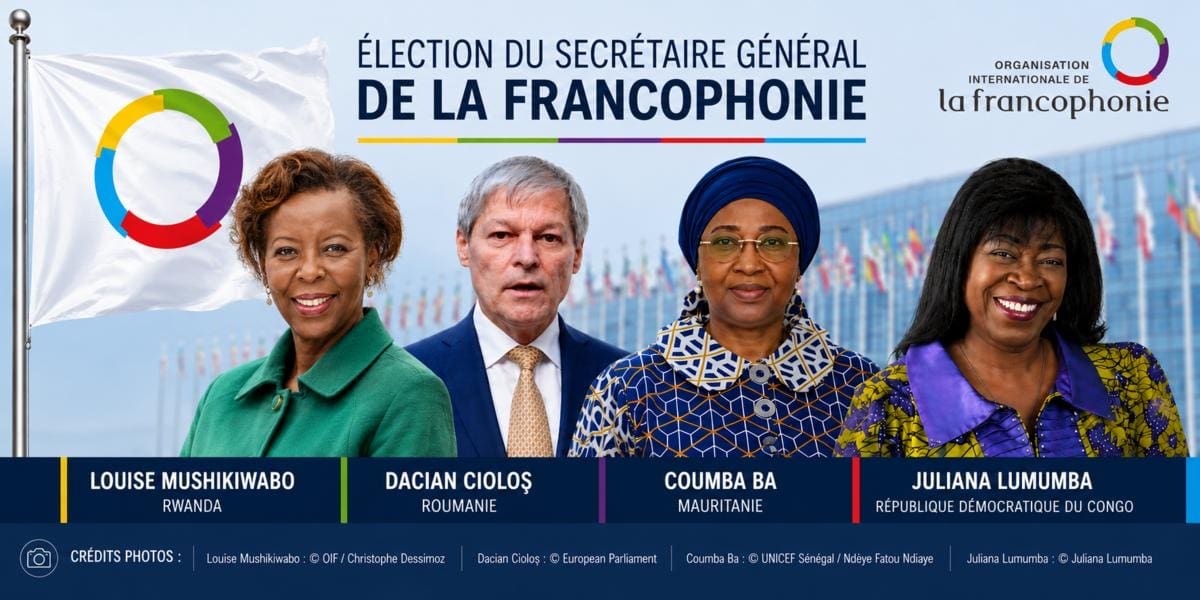
The International Organization of La Francophonie (OIF) is currently navigating a period of significant institutional transition, marked by a shift toward more transparent leadership selection processes and debates over the organization’s strategic future. For the first time in its 56 years of existence, the OIF has auditioned candidates for its direction, a move designed to replace traditional closed-door negotiations with public scrutiny of institutional visions.
This evolution in governance reflects broader questions about the role of the OIF in global diplomacy and its capacity to address the needs of its member states and governments. As the organization prepares for its upcoming milestones, the discourse surrounding its leadership underscores a tension between maintaining historical influence and adapting to the structural demands of a modern, diverse Francophone community.
Establishing a New Standard for Leadership
The decision to conduct a public “grand oral” for the four candidates represents a departure from the historical norms of the organization. According to official documentation from the OIF, this process was implemented to ensure that candidates for the Secretary General role could articulate their policy platforms directly to member states. The auditions serve as a platform for candidates to address issues ranging from the promotion of the French language to the organization’s role in promoting democratic values and sustainable development.

This shift follows years of internal and external critique regarding the transparency of the OIF’s decision-making bodies. By allowing for a public hearing, the organization aims to bolster its legitimacy and demonstrate a commitment to democratic principles. Member states are now tasked with evaluating these candidates not only on their political backgrounds but on their specific, actionable strategies for the future of the organization.
Key Candidates and the Future of the OIF
The current leadership cycle has drawn attention to the diverse priorities of the Francophone world. Observers note that the race for the Secretary General position involves a complex balancing act between the interests of African member states and the traditional influence of other partners.

Recent media coverage, including reporting by Jeune Afrique, highlights the candidacies of high-profile figures who each represent different visions for the organization, including Juliana Lumumba and Louise Mushikiwabo. These candidates have been evaluated on their ability to modernize the OIF’s administrative structure and increase its impact on the ground. The focus remains on how the next leader will manage the organization’s budget and how they will prioritize projects related to education, digital technology, and economic integration.
Structural Challenges and Institutional Reform
Beyond the selection of a new leader, the OIF faces structural pressures that have prompted calls for reform. Critics and analysts suggest that the organization must move beyond symbolic declarations to address concrete economic and political realities. This includes reforming how the OIF allocates its resources and ensuring that its initiatives are effectively reaching the youth populations of its member states, particularly in Africa.
The conversation regarding “structural choices” often centers on the tension between the OIF as a cultural entity and the OIF as a political actor. While the promotion of the French language remains its foundational objective, many stakeholders argue that the organization’s future relevance depends on its ability to act as a cohesive political bloc in international forums. This requires a more unified approach to issues such as climate change, migration, and digital sovereignty.
What Happens Next?
The next major checkpoint for the organization is the upcoming Summit of the Francophonie in Phnom Penh, where the final decision regarding the leadership will be formalized. Member states are expected to reach a consensus following the conclusion of the evaluation process for all four candidates. This event will serve as a bellwether for the organization’s direction.

For those tracking the progress of the OIF, official updates are regularly published on the organization’s website. The outcome of the selection process will determine whether the OIF continues with its established institutional course or shifts toward a more interventionist and reform-oriented agenda. The global community remains attentive to these developments, as the organization’s influence remains a significant factor in the cultural and political relations between its member nations.
We encourage readers to share their thoughts on the future of the Francophonie in the comments section below.