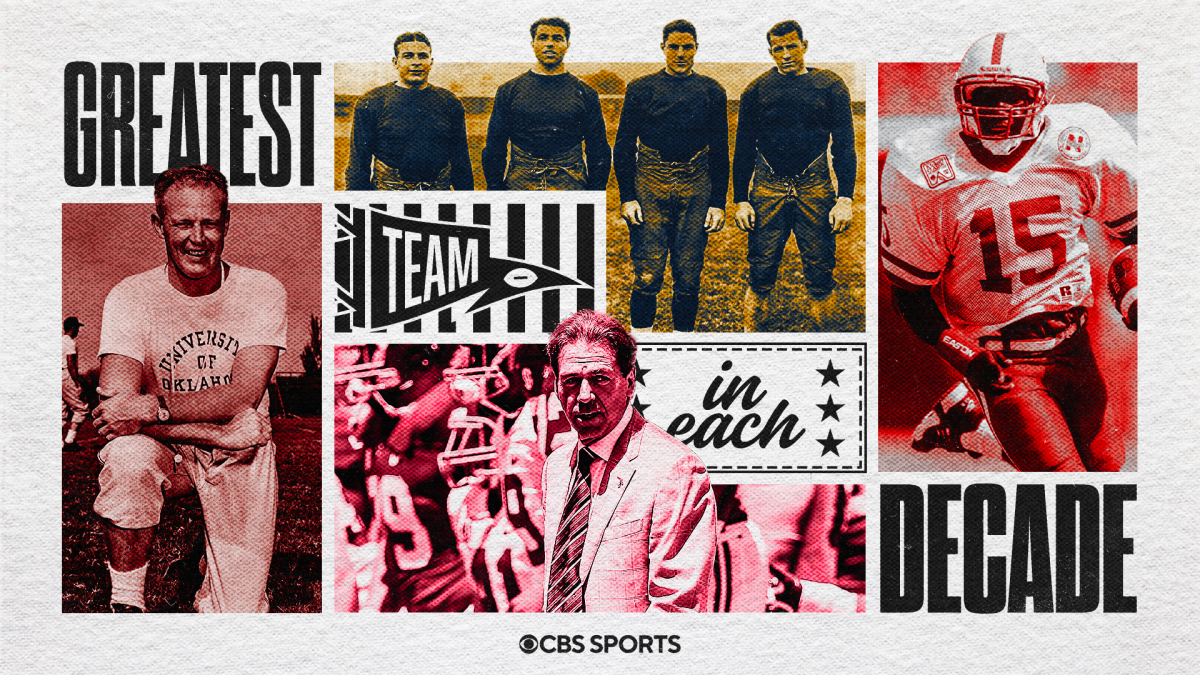
College football history is defined by dynasties that dominated their respective eras, from the disciplined squads of the early 20th century to the sophisticated, high-speed programs of the modern playoff age. While defining the “greatest” team of any decade involves subjective debate, the programs that secured multiple national titles and maintained unprecedented win percentages remain the standard-bearers for excellence in the sport.
According to NCAA historical records, the evolution of the game has shifted from the power-running formations of the 1920s to the complex, analytics-driven offenses seen in the 2020s. These teams did not merely win championships; they influenced how the game was coached, played, and recruited for decades following their peaks.
The 1920s: The Rise of Notre Dame
The 1920s were defined by the national emergence of Notre Dame under head coach Knute Rockne. The Fighting Irish, anchored by the iconic “Four Horsemen” backfield—Harry Stuhldreher, Don Miller, Jim Crowley, and Elmer Layden—captured national attention through a blend of speed and tactical precision. Between 1924 and 1930, Notre Dame claimed multiple consensus national championships.
Rockne’s tenure, which ended tragically with his death in 1931, established the blueprint for modern college football publicity and national scouting. The team’s ability to win in diverse environments across the country helped transform college football from a regional pastime into a national obsession. Records maintained by the National Football Foundation confirm that Rockne finished his career with an .881 winning percentage, the highest in major college football history.
The 1940s and 1950s: Oklahoma and Army’s Dominance
Following World War II, the landscape shifted toward the disciplined, high-scoring programs of Army and, eventually, Oklahoma. Army, led by Doc Blanchard and Glenn Davis, dominated the mid-1940s by winning consecutive national titles in 1944 and 1945. Their success was built on a foundation of military-grade conditioning and overwhelming physical superiority.
By the 1950s, Bud Wilkinson’s Oklahoma Sooners set a record that remains one of the most significant benchmarks in sports history: a 47-game winning streak. According to the University of Oklahoma athletic archives, the streak began in 1953 and lasted until 1957. Wilkinson’s “Split-T” offense revolutionized the game, creating space on the field that defenses of the era were ill-equipped to handle.
The 1970s: The Alabama and USC Tug-of-War
The 1970s were characterized by the tactical brilliance of Bear Bryant at Alabama and John McKay at USC. Bryant’s implementation of the Wishbone offense turned Alabama into a perennial powerhouse. During this decade, the Crimson Tide claimed three national championships (1973, 1978, 1979).
USC, meanwhile, provided the primary counterweight to Alabama’s dominance. Under McKay and later John Robinson, the Trojans utilized a pro-style passing attack and elite speed in the backfield. The competition between these two programs during the 1970s forced the entire sport to modernize its defensive schemes to account for the speed and formation versatility of the West Coast and Southern styles.
The 1990s: The Nebraska and Florida State Era
As the game entered the 1990s, Nebraska and Florida State emerged as the definitive programs of the decade. Tom Osborne’s Nebraska teams in the mid-90s are often cited by analysts for their sheer physical dominance on both lines of scrimmage. The 1995 Cornhuskers, in particular, are frequently ranked among the best teams in history, having outscored opponents by an average of 39.9 points per game, according to Sports Reference data.
Florida State, under Bobby Bowden, countered with the “Fast Break” offense. The Seminoles’ streak of 14 consecutive seasons finishing in the AP Top 5 remains a record of sustained excellence. This era marked the transition into the modern age of high-volume passing and specialized defensive sub-packages.
The 2010s to Today: The Alabama Dynasty
The modern era has been defined by the unprecedented success of Nick Saban at the University of Alabama. Between 2009 and 2020, Alabama secured six national championships. Saban’s approach combined elite recruiting with a process-oriented philosophy that prioritized depth and situational discipline.

While Georgia and Clemson have challenged this dominance in recent years, the Alabama program set the standard for how to manage the transition into the Name, Image, and Likeness (NIL) era and the expanded College Football Playoff format. The College Football Playoff, which replaced the Bowl Championship Series in 2014, has since centralized the focus on a four-to-twelve-team bracket, further emphasizing the need for roster depth.
Summary of Historical Powerhouses
| Decade | Defining Program | Key Characteristic |
|---|---|---|
| 1920s | Notre Dame | National brand development |
| 1950s | Oklahoma | 47-game winning streak |
| 1990s | Nebraska | Physical line dominance |
| 2010s | Alabama | Recruiting and depth |
As the sport prepares for the next season, fans and analysts continue to compare these historical giants against the emerging programs of the current playoff era. With the expansion of the postseason, the definition of a “dynasty” may shift, but the records set by these historical programs remain the benchmarks for any team seeking to cement its legacy. Updates on the upcoming season standings and playoff rankings can be tracked through the official NCAA portal.
Do you have a favorite team from the history of the sport? Share your thoughts in the comments section below.