

The city of Forlì recently became the center of a poignant intersection between art and memory as the “Nazionale cantanti” organized a fundraising event that raised 12,000 euros in honor of a local hero. The event sought to keep the memory of Silver Sirotti alive, a young man whose selfless actions during one of Italy’s darkest hours continue to inspire generations.
The initiative, which featured a talented singer who dedicated her performance to Sirotti, highlighted the enduring legacy of a man who chose to risk everything for the sake of strangers. By raising these funds, the community of Forlì reaffirms its commitment to remembering the bravery of a railway worker who became a symbol of civil courage in the face of terror.
Silver Sirotti’s story is not merely one of tragedy, but of profound humanity. At just 24 years old, he faced an unimaginable catastrophe with a level of bravery that earned him the highest civilian honor in Italy. His sacrifice remains a focal point for those seeking both remembrance and justice decades after the event.
A Legacy of Courage in Forlì
Born in Forlì on September 2, 1949, Silver Sirotti was a young man of ambition, and intellect. He graduated from the I.T.I.S. “Marconi” in Forlì in 1968 and later pursued studies at the Faculty of Engineering at the University of Bologna. In 1973, he began his professional career with the Ferrovie dello Stato (Italian State Railways), serving as a “conduttore” (controller) based at the Bologna Personnel Depot according to historical records.
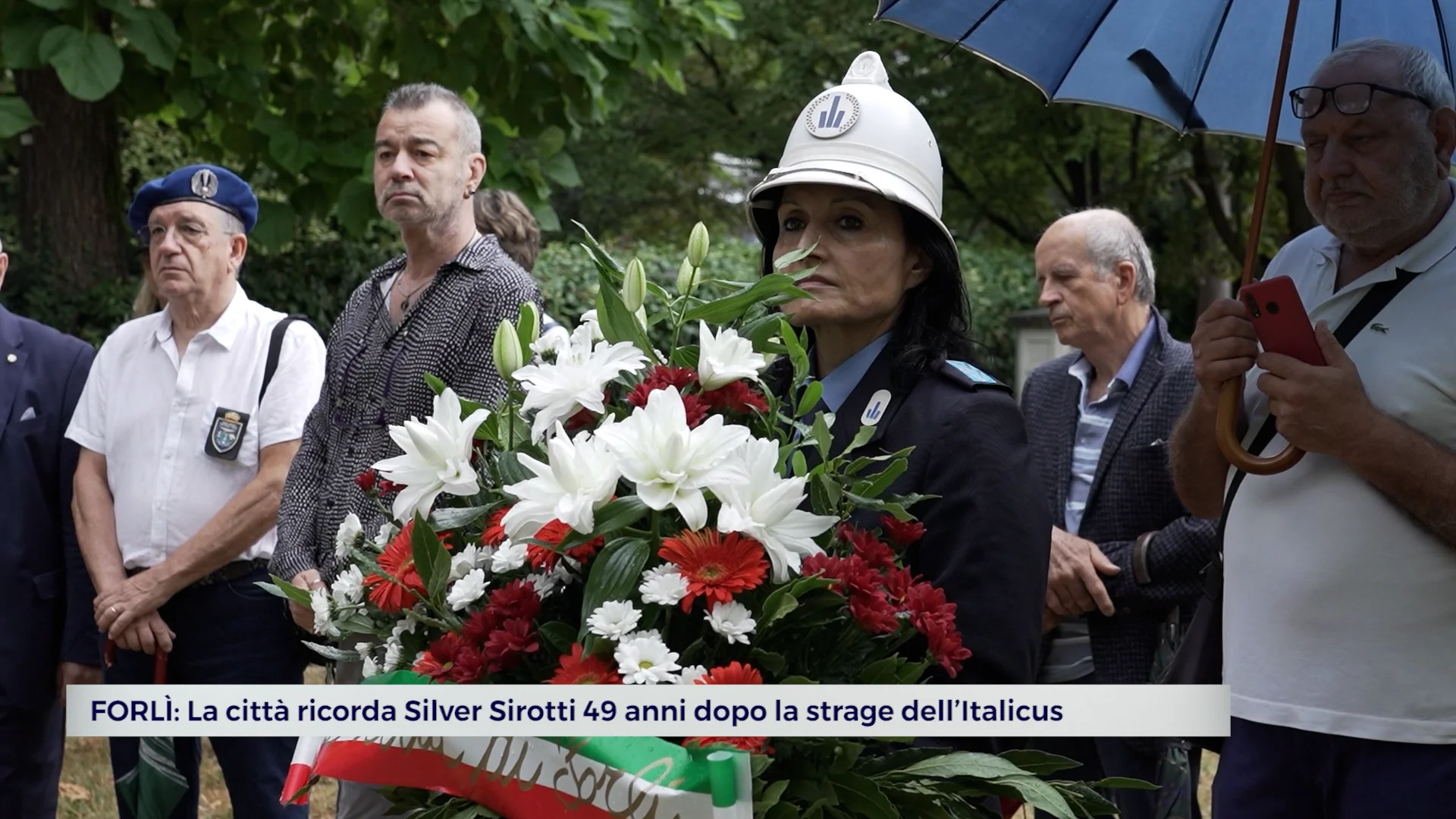
For the people of Forlì, Sirotti represents more than a historical figure; he is a local son whose life was cut short by an act of violence, but whose spirit was defined by his willingness to help others. The recent fundraising efforts by the “Nazionale cantanti” reflect a desire to ensure that his name is not forgotten by the youth of today, transforming a historical tragedy into a catalyst for community solidarity.
The Tragedy of the Italicus Bombing
The event that defined Silver Sirotti’s legacy occurred on the night of Sunday, August 4, 1974. At 1:23 a.m., a bomb exploded on the “Italicus” express train traveling from Rome to Monaco. The blast occurred as the train was passing through San Benedetto Val di Sambro as reported by ANSA.
The explosion was devastating, claiming the lives of 12 people and leaving many others injured. The train, carrying 342 passengers, became a scene of chaos and fire. Witnesses described the moment the tunnel illuminated with the blast, followed by a deafening roar that shook the surrounding mountains. The intensity of the fire was so great that the exterior metal of the carriages became incandescent, making it nearly impossible for rescuers to enter.
An Act of Extraordinary Valor
Silver Sirotti, who was serving as a guard on the Italicus train that night, survived the initial explosion because he was not in the carriage that detonated. However, rather than seeking safety, Sirotti witnessed the terror of the passengers trapped inside the burning wreckage. In a moment of pure altruism, he entered the scorching carriage equipped only with a simple fire extinguisher to attempt to rescue those trapped in the flames as documented by Wikipedia.
Police officers at the scene later recalled the harrowing sight of a railway worker standing in the center of the carriage, his skin severely burned, desperately trying to move debris and save lives. Sirotti did not survive his efforts. For his extraordinary bravery and sacrifice, he was posthumously awarded the Gold Medal for Civil Valor, the highest award given to Italian civilians for acts of courage.
The Ongoing Search for Truth and Justice
Even five decades later, the wounds of the Italicus massacre remain open for the families of the victims. On August 4, 2025, during a ceremony commemorating the 51st anniversary of the attack, Silver’s brother, Franco Sirotti, spoke emotionally about the need for closure. In a letter addressed to his late brother, Franco stated that the time has come to once again seek truth and justice for all the victims via Corriere Romagna.
Beyond the legal search for answers, Franco Sirotti has advocated for the creation of a national cultural prize dedicated to the memory of his brother. He believes that Silver’s example of selflessness serves as a vital lesson for new generations, urging the city of Forlì—as a capital of culture—to institutionalize this remembrance.
| Date | Event | Significance |
|---|---|---|
| August 4, 1974 | Italicus Train Bombing | 12 deaths; Silver Sirotti sacrifices his life to save others. |
| Post-1974 | Gold Medal Awarded | Sirotti receives the Gold Medal for Civil Valor. |
| August 4, 2025 | 51st Anniversary Ceremony | Franco Sirotti calls for truth, justice, and a cultural prize. |
| Recent (2026) | Nazionale cantanti Event | 12,000 euros raised in Forlì to honor Sirotti’s memory. |
The intersection of these events—the historical tragedy, the family’s quest for justice, and the community’s fundraising efforts—illustrates how the memory of Silver Sirotti has evolved from a private family grief into a public symbol of civic duty. The 12,000 euros raised by the “Nazionale cantanti” is more than just a financial contribution; it is a testament to the fact that the courage of a 24-year-old railway worker still resonates in the heart of Forlì.
As the community continues to honor his legacy, the focus remains on ensuring that the bravery shown in the face of terror is never forgotten and that the pursuit of justice for the victims of the Italicus massacre continues.
The next scheduled focus for the family and advocates remains the push for the establishment of a national cultural prize in Silver Sirotti’s name to inspire future generations.
Do you believe that cultural prizes are an effective way to keep the memory of local heroes alive? Share your thoughts in the comments below and share this story to honor those who sacrifice everything for others.