The geopolitical landscape of the Middle East shifted violently in early April 2026, bringing the world to the precipice of a wider conflict. In a span of just four days, the region weathered a sequence of events that analysts suggest may signal a permanent erosion of Western hegemony: aggressive threats from the U.S. Presidency on April 5, a precarious and uncertain two-week ceasefire announced on April 7 and a series of intense military assaults by Israel against Lebanon on April 8 verified via report.
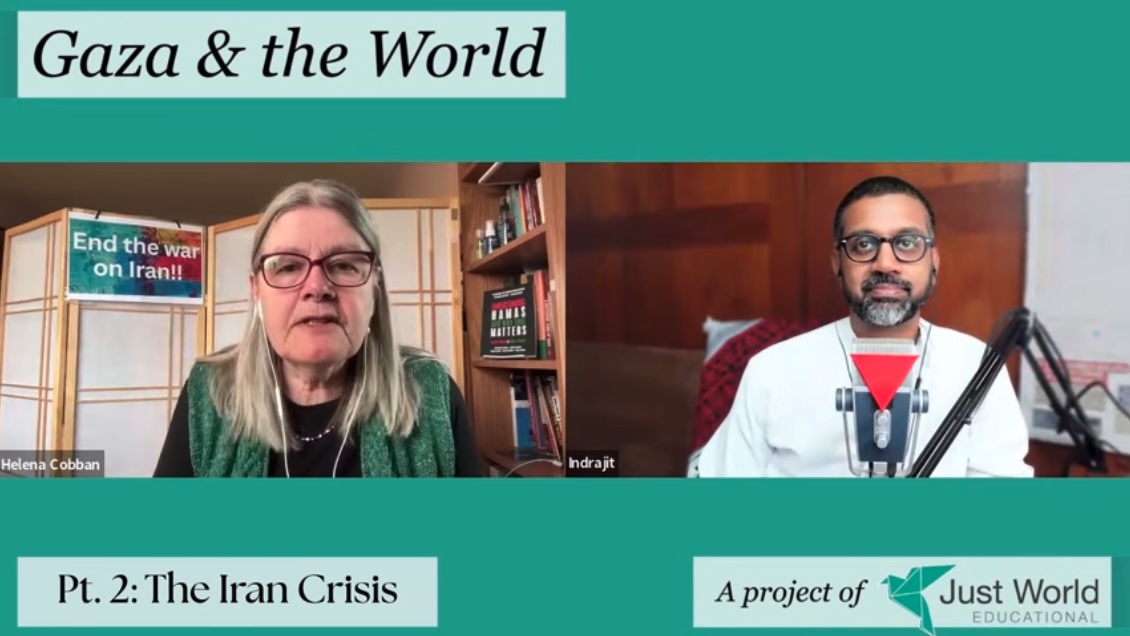
Against this backdrop of instability, Sri Lankan analyst and writer Indi Samarajiva engaged in a wide-ranging dialogue with Helena Cobban to analyze the global impact of the Iran war turmoil. The conversation, conducted on April 9, focused on a central, provocative premise: that the “subject of history” is changing. According to Samarajiva, the United States and the Trump administration are no longer the primary drivers of global events; instead, the initiative has shifted toward Iran and a broader movement of anti-empire resistance.
This shift is not merely a temporary diplomatic fluctuation but, as the speakers argued, a historical turning point. The dialogue explored the collapse of aged security architectures in the Gulf, the rise of a multipolar world order, and the systemic nature of colonial domination that continues to shape modern alliances. For those tracking the volatility of the Middle East, the discussion provides a framework for understanding why traditional Western levers of power are failing to produce their intended results.
The Erosion of U.S. Military Hegemony in the Gulf
A primary theme of the analysis was the perceived decline of U.S. Power projection within the Middle East. Samarajiva argued that the traditional security architecture of the Gulf has been fundamentally shaken. He asserted that American military infrastructure in the region has been effectively “defenestrated” by Iran’s precision strikes, rendering many U.S. Bases either unusable or critically vulnerable.
While Cobban noted that the United States maintains significant logistical reach through strategic partnerships in the United Kingdom and Cyprus, both agreed that the balance of forces has shifted in Iran’s favor. This transition suggests that the era of uncontested U.S. Military dominance in the region is ending, replaced by a reality where regional actors possess the capability to challenge and neutralize Western military assets.
This military shift is coupled with a technological evolution. The discussion highlighted Iran’s efforts to build an indigenous military and technological base, specifically noting a strategic move away from reliance on GPS systems controlled or infiltrated by the United States. Such autonomy reduces the effectiveness of Western electronic warfare and surveillance, further insulating the “Resistance” from traditional U.S. Pressure tactics.
The Concept of ‘White Empire’ and Historical Continuity
To understand the current turmoil, Samarajiva introduced the concept of the “white empire,” a term he uses to describe five centuries of colonial domination. This lineage, he argued, stretches from the early Portuguese expansions to the contemporary U.S.-Israeli alliance. By framing the current crisis within this long-term historical arc, the current conflict is viewed not as an isolated series of political disputes, but as the latest chapter in a persistent imperial logic of extraction and domination.
Cobban connected this historical perspective to the strategic importance of the Strait of Hormuz. Recalling the Portuguese efforts to control Indian Ocean trade routes, she described Hormuz as a “strategic hinge” that has long been the target of external powers seeking to dominate global commerce. This historical continuity illustrates how the struggle for the Middle East is fundamentally a struggle over the control of global movement and resources.
Samarajiva further expanded this critique by linking colonial extraction to modern predatory systems. He argued that the abuse of women and children, the colonization of land, and the extraction of wealth are not separate social issues but are all driven by the same imperial logic. In this view, the systemic exploitation seen in historical colonialism persists in modern forms of global power dynamics.
International Law as a Tool of Power
The conversation turned critically toward the role of global institutions and the application of international law. Samarajiva offered a blunt assessment, suggesting that international law often functions “as intended” by the empires that help shape it. He argued that bodies such as the United Nations (UN) and the International Criminal Court (ICC) are selective in their enforcement, acting as instruments to restrain some actors while providing cover for others.
According to this analysis, the language of legality is frequently employed to disguise the exercise of raw power. When Cobban raised the issue of recent UN vetoes by Russia and China, Samarajiva expressed skepticism regarding the neutrality of these institutions. However, he noted that while he has little faith in the institutions themselves, the fact that China, Russia, and Iran continue to contest them suggests that these structures remain relevant as arenas for diplomatic and political struggle.
The Rise of a Multipolar Order and China’s Role
A significant portion of the discussion focused on the emerging multipolar world and the specific role of China. Cobban emphasized China’s “behind-the-scenes” support for Iranian resilience, which has helped Iran weather Western sanctions and military pressure.
Samarajiva contrasted China’s approach to global influence with that of Western empires. He argued that China operates through a model of supply, trade, and support without the same inherent urge to dominate or colonize. He contrasted this with what he described as the “smash and grab” style of Western interventionism. In this emerging order, the goal is not necessarily the replacement of one empire with another, but a shift toward a global interaction rooted in reciprocity, sovereignty, and trade.
This transition toward multipolarity is most evident in the shifting alignments in the Middle East, where regional powers are increasingly looking toward Beijing and Moscow as alternatives to the Washington-centric security model. The result is a world where the U.S. Is one of several poles of power, rather than the sole arbiter of global affairs.
The Humanitarian Core: Palestine, Lebanon, and Gaza
Despite the high-level geopolitical analysis, the conversation repeatedly returned to the human cost of the crisis. The situations in Palestine, Lebanon, and Gaza were identified as the central nodes of the wider turmoil. Cobban stressed the catastrophic humanitarian toll resulting from U.S.-Israeli militarism, highlighting the failure of the international system to prevent mass suffering and death.

Samarajiva portrayed the anti-imperial resistance in these regions as reclaiming their role as “subjects of history.” Through force and endurance, these actors are no longer merely victims of geopolitical calculations but are actively shaping the outcome of the conflict. The dialogue framed the current phase of violence not as a series of random attacks, but as a systematic effort to erode U.S.-Israeli dominance in the region.
Key Takeaways from the Analysis
- Shift in Agency: The U.S. Is no longer the sole driver of Middle Eastern events; Iran and the “Resistance” are taking the initiative.
- Military Decline: Precision strikes have compromised U.S. Military infrastructure in the region, altering the balance of power.
- Imperial Continuity: Current alliances are viewed as a continuation of a 500-year “white empire” logic of colonial domination.
- Institutional Skepticism: International law and the UN are seen as selective tools of power rather than neutral arbiters.
- Multipolarity: China is providing an alternative model of engagement based on trade and sovereignty rather than conquest.
The conclusion reached by both Samarajiva and Cobban was that the world is witnessing a historical turning point. The erosion of the U.S.-Israeli security umbrella and the rise of new, non-Western alignments suggest that the global order is being fundamentally rewritten. Whether this leads to a more stable, reciprocal world or a period of prolonged volatility remains to be seen, but the evidence suggests that the old rules no longer apply.
As the region continues to navigate the aftermath of the April turmoil, the international community awaits further developments regarding the stability of ceasefires and the potential for renewed diplomatic engagement between the U.S. And Iran. Updates on these diplomatic tracks and any official filings from the UN Security Council will be critical in determining the next phase of this crisis.
We invite our readers to share their perspectives on the shift toward a multipolar Middle East in the comments below.