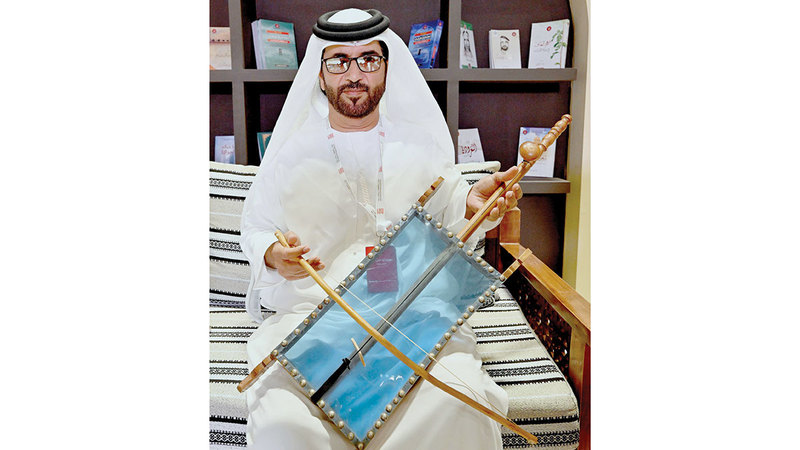
The evocative sounds of the Rababa, a traditional one-stringed instrument, continue to resonate through the cultural landscape of the United Arab Emirates, carrying the weight of history and the spirit of the desert. Among the most prominent figures preserving this sonic legacy is Ali bin Mohammed Al Kibali, an Emirati musician whose mastery of the instrument has turned a childhood curiosity into a professional calling dedicated to the “melodies of authentic Emirates.”
Al Kibali’s ascent in the world of Emirati Rababa music is deeply intertwined with the poetic legacy of the UAE’s founding father. His recognition grew significantly through his performances of poems written by the late Sheikh Zayed bin Sultan Al Nahyan, with the piece “Mashghoub Mink wa Mashghalni” serving as a pivotal point in his rise to prominence as reported on April 15, 2026.
By blending traditional rhythms with his own creative interpretations, Al Kibali has expanded the versatility of the Rababa. He has successfully integrated distinct cultural forms, such as the singing of Al Taghrouda and Al Harbiyah, onto the instrument, bringing a refined touch to the rhythms and composition styles that define the region’s heritage.
From Childhood Hobby to Professional Mastery
The journey of Ali bin Mohammed Al Kibali began in his early teens. He first started learning to play the Rababa at approximately 13 years of age. What began as a simple hobby gradually evolved into a lifelong passion and, eventually, a professional pursuit.
Unlike many musicians who undergo formal training, Al Kibali’s path was one of independence. He mastered the complexities of the one-stringed instrument through personal effort and self-study, achieving proficiency without the assistance of a formal instructor according to documented biographical details.
Influences and Artistic Evolution
While his technical skill was self-taught, his artistic inspiration was drawn from the masters of Emirati poetry and music. Al Kibali notes that he was heavily influenced by poets who were equally skilled in both the composition of verse and the playing of the Rababa. Among his primary inspirations were the poet Mohammed bin Raqragi and the poet Ahmed bin Ali Al Kindi, whose work encouraged him to delve deeper into the instrument.
With years of experience, Al Kibali has moved beyond mere imitation to add his own signature style to the Rababa. His ability to adapt traditional poetic forms to the instrument has made him a frequent participant in numerous heritage festivals and large-scale public events, where he showcases the enduring relevance of traditional Emirati sounds.
Key Elements of Al Kibali’s Contribution
- Integration of Folk Forms: Bringing Al Taghrouda and Al Harbiyah to the Rababa.
- Poetic Preservation: Utilizing the works of Sheikh Zayed bin Sultan Al Nahyan to connect modern audiences with historical poetry.
- Self-Taught Expertise: Demonstrating the viability of independent mastery in traditional arts.
As the UAE continues to celebrate its cultural identity, the work of artists like Ali bin Mohammed Al Kibali ensures that the Rababa remains more than just a museum piece; it remains a living, breathing part of the nation’s artistic expression.
For those interested in the intersection of poetry and traditional music, the performances of Al Kibali at heritage festivals remain a primary point of access to the authentic sounds of the Emirates.
We invite our readers to share their thoughts on the preservation of traditional instruments in the comments section below.
Related reading