
The academic discourse surrounding the intersection of post-colonial theory and modern statehood continues to evolve, particularly in regions shaped by complex histories of migration and displacement. A significant project, titled The Nation as Colony: Diaspora and Development in the Armenian Republic, offers a critical lens through which to examine these dynamics. By analyzing the unique position of Armenia within trans-imperial geographies, this research seeks to redefine traditional understandings of diaspora, moving away from concepts of national reconstitution toward more fluid, generative political futures.
As we observe these developments in international studies, it becomes clear that the framework of “developmentality”—a term utilized to describe how governmentality operates beyond the state through diasporic investment—is gaining traction among political theorists. This approach challenges the notion that diaspora is a condition to be “resolved,” suggesting instead that it functions as a form of fragmentation that can inform new political imaginaries in the South West Asia and North Africa (SWANA) region and beyond.
Rethinking Diaspora and Post-Colonial Logic
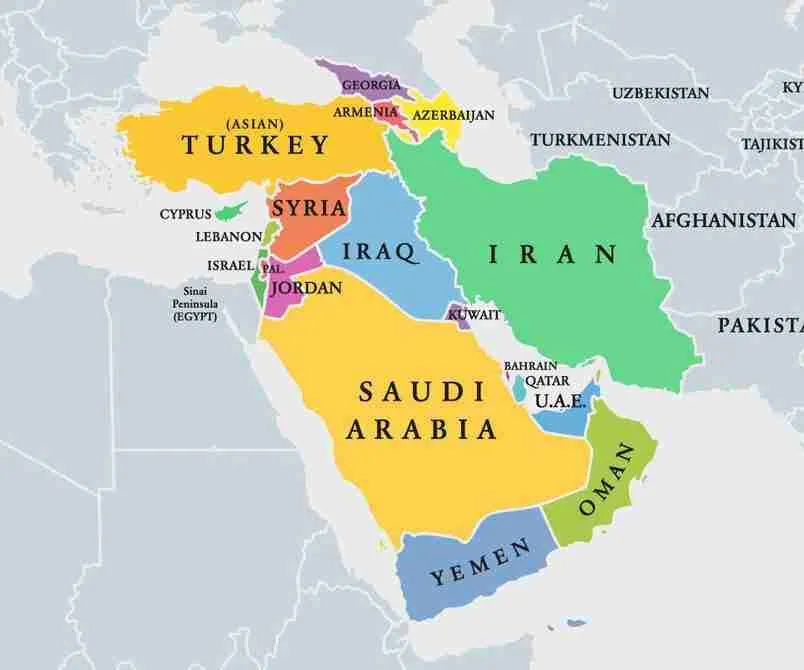
The core of this academic inquiry lies in how colonial logics of race, empire, and development have historically disarticulated place-based claims to Indigeneity in West Asia. By examining the Armenian experience as an intermediary between “East” and “West,” the research highlights how various forces—ranging from British colonial property regimes to Soviet-era emancipation projects—have shaped the contemporary Armenian state. This historical trajectory provides a necessary context for understanding the socio-economic pressures present in the region today.
For those interested in the broader implications of these studies, the University of California, Santa Cruz, maintains extensive archives and research profiles regarding the Department of Feminist Studies, which often hosts interdisciplinary research into the history of consciousness and migration. These institutional resources are vital for scholars tracking how academic projects move from theoretical frameworks to public lecture series, such as those hosted by international partners like University College Freiburg.
The Role of “Developmentality” in Modern Governance
A central tenet of this research is the concept of “developmentality.” This rationality of government is described as one that exceeds the formal boundaries of the state, operating instead through the complex web of diasporic investment and transnational solidarity. In the context of post-Soviet Armenia, this suggests that the state’s development is inextricably linked to its global diaspora, creating a unique, albeit challenging, political environment.
By applying a postcolonial feminist lens, the work invites a critical rethinking of how neoliberal development projects impact the political agency of displaced populations. It posits that by viewing the nation as a kind of colony—an ambivalent space shaped by external humanitarian interventions and internal aspirations—we can better understand the tensions between local governance and globalized economic expectations. This perspective is particularly relevant for those studying the University College Freiburg’s ongoing lecture series, which frequently addresses global migration and the socio-political structures of the modern world.
Key Insights for Global Observers
- Challenging National Reconstitution: The research argues against the traditional view that diaspora must be “resolved” through a return to a singular national identity.
- Trans-Imperial Geographies: By tracing movements from the Indian Ocean to the Mediterranean and North Atlantic, the project maps how colonial histories influence modern borderlands.
- The Future of Political Imaginaries: The study suggests that fragmentation may actually be a generative force for creating new, inclusive political futures.
Looking Ahead: Academic Engagement and Public Discourse
The discourse on the “Nation as Colony” is part of a broader, ongoing conversation within the humanities about how we define belonging in an era of global migration. As academic institutions like those in Freiburg continue to host international scholars, the exchange of these theoretical frameworks will likely influence how policy makers and civil society groups address the needs of diasporic populations. For students and researchers, keeping an eye on university-led research repositories remains the most reliable way to access the full scope of these findings.

As the academic calendar progresses, further discussions on post-socialism and neoliberal development are expected to take place in international forums. We encourage our readers to engage with these topics by monitoring the official publications and upcoming seminar schedules provided by academic centers of excellence. Your perspectives on these complex geopolitical shifts are vital. we invite you to share your thoughts in the comments section below or join the conversation on our social media platforms.
Related reading