
The historical complexities of the Vietnam War and the intricate diplomatic maneuvers that led to its conclusion are being revisited through two new literary releases. The National Political Publishing House has introduced a pair of special publications designed to decode the “battle of wits” that occurred during the 1973 Paris Peace Conference, offering a detailed look at the negotiations that shaped the fate of a nation.
These works focus on the Paris Peace Accords, specifically the strategic efforts to end the war and restore peace in Vietnam. By blending personal recollections from key diplomatic figures with historical analysis, the books aim to preserve the legacy of Vietnamese negotiation art and the pursuit of national sovereignty.
One of the featured volumes, titled “The Paris Agreement: a victory for the will of Vietnam’s independence, self-reliance and justice,” is authored by former Vice President Nguyen Thi Binh. The second publication, “The negotiations between Le Duc Tho and Kissinger in Paris,” is a collaborative work by Luu Van Loi and Nguyen Anh Vu. Together, these texts provide a comprehensive perspective on the diplomatic front that mirrored the physical resistance on the ground.
The Diplomatic Legacy of Nguyen Thi Binh
Former Vice President Nguyen Thi Binh played a pivotal role as the Head of the negotiation delegation at the Paris Peace Conference and served as the Minister of Foreign Affairs for the Provisional Revolutionary Government of the Republic of South Vietnam. Her contributions are central to the narrative of Vietnam’s “revolutionary diplomacy” during the Ho Chi Minh era.
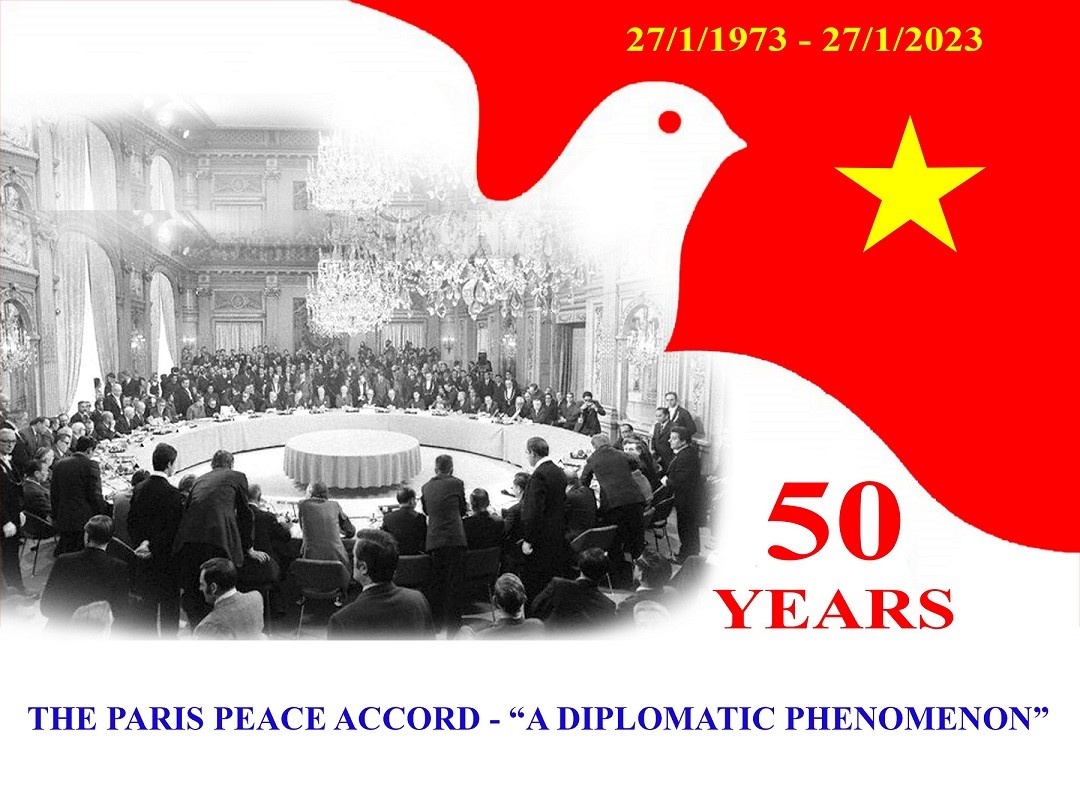
In her writing and public reflections, Binh characterizes the signing of the agreement as a resounding victory for the Vietnamese people’s military, political, and diplomatic resistance. She has emphasized that the accord was not merely a bilateral agreement but a victory for the global movement in support of Vietnam, noting that the resilient struggle of the people, coupled with unprecedented international support, eventually forced the United States government to negotiate and sign the Paris Peace Accord on ending the war and restoring peace in Vietnam.
Binh’s perspective highlights the symbolic power of international solidarity, recalling the profound impact of activists and “American friends” who protested the war, some even through extreme acts of self-sacrifice, to demand peace.
Analyzing the “Battle of Wits” in Paris
The negotiations in Paris were far from straightforward, described in the new publications as a “fierce battle of wits.” The process took place within a highly volatile historical context, where the socialist bloc was growing in strength but remained internally divided by differing views on how to build socialism and achieve national liberation.
Opposing these forces were the U.S. Imperialists, who possessed significant economic and military power. To navigate this imbalance, the Central Committee of the Vietnam Workers’ Party adopted a strategy rooted in two fundamental guiding principles: independence and self-reliance, balanced with international solidarity. These pillars guided the Vietnamese delegation from the onset of the negotiations through to the final signing.
The publication focusing on Le Duc Tho and Henry Kissinger delves into the specific interactions between these two primary negotiators. Their dialogue represented the clash of two different political worlds, where the goal for the Vietnamese side was the total restoration of peace and the recognition of national independence.
Key Milestones of the Paris Peace Accords
The culmination of these arduous diplomatic efforts was the official signing of the agreement. The Paris Peace Accords, signed on January 27, 1973, in France, served as the formal mechanism to end the war and facilitate the withdrawal of U.S. Forces.
This event is regarded as a historic turning point that paved the way for the liberation of the South and the eventual reunification of the country. The lessons derived from this period—particularly regarding the art of negotiation and the importance of maintaining a consistent national will—continue to be studied by Vietnamese diplomats today.
Timeline of Key Events
| Date | Event |
|---|---|
| 1965–1966 | U.S. Escalates war although proposing “fake peace” negotiations |
| January 27, 1973 | Official signing of the Paris Peace Accords in France |
| March 2, 1973 | Nguyen Thi Binh signs the Treaty of the International Conference on Vietnam |
| January 27, 2023 | 50th anniversary of the signing of the Paris Peace Accord |
Why These Publications Matter Today
The release of these books by the National Political Publishing House serves as more than just a historical record; it is an effort to ensure that the “valuable lessons” of the 1973 conference are not lost to time. For a global audience, these texts provide insight into how a smaller nation utilized diplomacy as a strategic tool to counter a superpower.
By documenting the memories of those who were directly involved in the mission, such as Nguyen Thi Binh, the publications bridge the gap between official government documents and the lived experience of the negotiators. This adds a layer of human complexity to the political history, illustrating the mental and emotional toll of high-stakes international diplomacy.
The focus on “independence and self-reliance” remains a central theme in Vietnamese foreign policy, and these books explain the origin of that philosophy during one of the most contested periods of the 20th century.
As the world continues to navigate complex geopolitical tensions, the study of the 1973 Paris Peace Accords offers a case study in persistence, the power of international public opinion, and the strategic use of negotiation to achieve national sovereignty.
For those seeking further information on the historical context of these accords, official archives from the Vietnamese government and international diplomatic records provide additional documentation on the treaties signed during this era.
We invite our readers to share their thoughts on the lasting impact of the Paris Peace Accords in the comments section below.