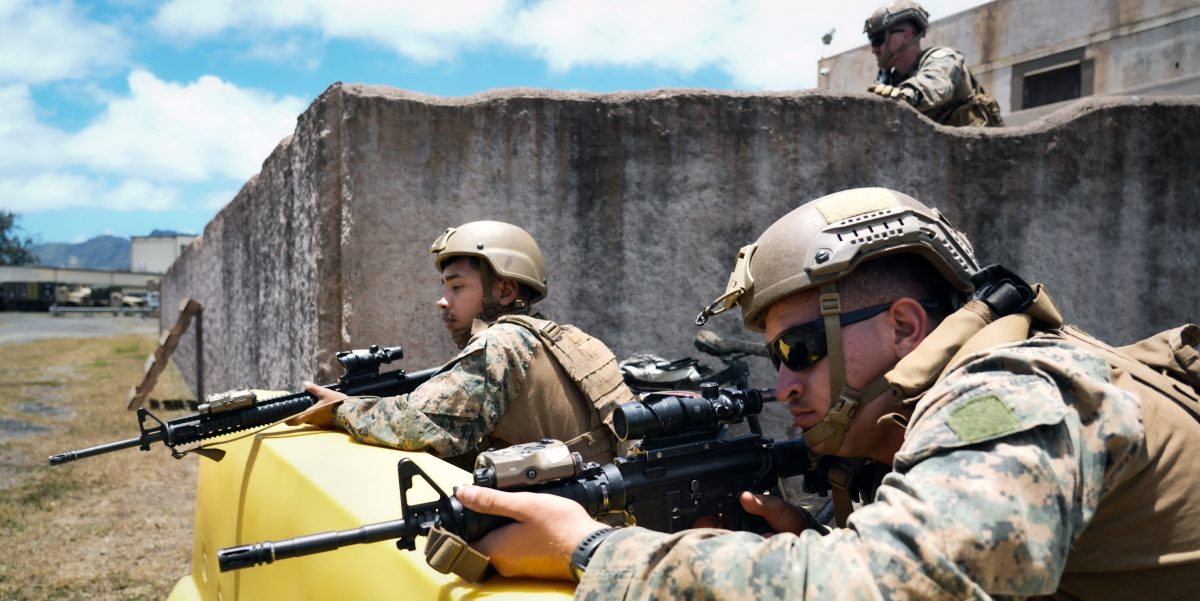
The Pentagon’s strategic pivot toward the Indo-Pacific has placed Hawai‘i directly on the front lines of potential great-power conflict, according to a recent analysis published by the Institute for Policy Studies. As Washington eyes a record-shattering defense budget request, analysts and local advocates warn that the military’s forward-deployed posture not only raises the stakes of a potential confrontation with Beijing but also deepens decades of environmental degradation and economic strain across the islands.
President Donald Trump and Pete Hegseth are pushing for a post-World War II record $1.6 trillion Pentagon budget for next year, as reported by TomDispatch. The proposed $600 billion increase alone is nearly twice the total annual military budget of China, America’s primary strategic competitor. This massive financial mobilization underpins an Indo-Pacific strategy that assumes deterring Beijing requires an aggressive, forward-deployed strike posture anchored in the Hawaiian archipelago.
According to the Institute for Policy Studies report, titled “The True Cost of the U.S. Military in Hawai‘i,” this military focus transforms the islands into a primary target for a potential adversary in any U.S.–China conflict. Such targeting mirrors the strategic vulnerability experienced during World War II, while compounding longstanding local grievances regarding land use, contamination, and unfulfilled federal obligations.
The Economic Realities of the Military Buildup
Proponents of the Pacific buildup frequently point to the defense sector as a vital economic engine for Hawai‘i.
In addition to these economic discrepancies, the report asserts that the federal government owes Hawai‘i up to $133.7 billion in back rent for occupied lands, independent of massive environmental remediation costs.
Environmental Contamination and Resource Pressures
The strategic expansion has left a severe ecological footprint across the islands, marked by long-term contamination of soil, groundwater, and coastal ecosystems. Decades of military operations have involved widespread use of per- and polyfluoroalkyl substances, commonly known as PFAS or “forever chemicals,” which have spread far beyond official base perimeters.
Remediation efforts at just three military installations are projected to cost nearly $500 million. The environmental toll was starkly underscored by a leak at the Navy’s Red Hill Bulk Fuel Storage Facility on Oʻahu, which previously stored approximately 250 million gallons of jet fuel and ultimately contaminated the local drinking water supply for 93,000 residents. Local advocates note that trading long-term environmental hazards for short-term federal employment creates acute health and safety risks for residents across the archipelago.
Strategic Horizons and Future Policy Debates
As the U.S. military looks to expand facilities, build new bases, and secure access across a vast network stretching from Guam and the Philippines to Australia, policymakers face growing domestic calls to reevaluate the strategy in the Pacific.
Keep reading