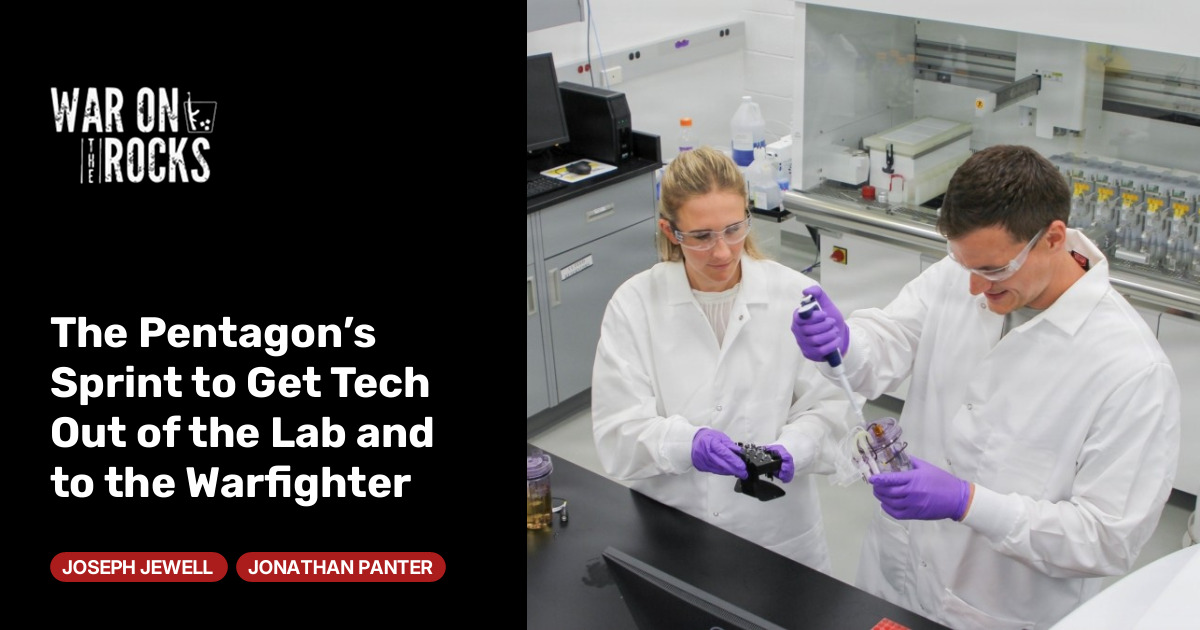
The U.S. This push, centered on bridging the "valley of death" between scientific research and deployment, aims to ensure the U.S. military maintains a technological edge in an era of rapid global innovation. Central to this strategy is the recruitment of academic and technical experts into Pentagon oversight roles to streamline how research translates into warfighter capabilities.
The transition of specialized researchers into government roles is a key component of the Pentagon's broader science and technology enterprise. This movement is designed to foster a more integrated approach to defense innovation, where technical feasibility and tactical utility are evaluated in tandem.
The Pentagon's science and technology enterprise is governed by a complex framework that includes the Office of the Under Secretary of Defense for Research and Engineering (OUSD(R&E)). These priorities include artificial intelligence, biotechnology, and hypersonic systems, all of which require close collaboration between government labs, private industry, and academic institutions.
The Challenge of Scaling Defense Technology
The “valley of death” remains a primary obstacle for military innovation. This term describes the phase where a technology has been successfully prototyped in a lab but fails to secure the funding or interest required for full-scale production and integration. To address this, the Pentagon has increasingly relied on Other Transaction Authority (OTA) agreements and rapid prototyping initiatives. These mechanisms allow the military to bypass traditional, lengthy procurement cycles when acquiring experimental technology, according to the Congressional Research Service.
For researchers moving from academia to the defense sector, the transition involves shifting from a focus on peer-reviewed fundamental research to a focus on mission-oriented development. This involves understanding the constraints of the battlefield—such as durability, power supply, and ease of use in austere environments. The goal is not merely to create high-performance technology, but to create technology that can be reliably maintained and operated by service members.
Integrating Academic Insights into Strategy
Academic institutions play a critical role in the Pentagon’s long-term research strategy. Many of the most significant breakthroughs in fields like quantum computing and advanced sensors originate in university laboratories. Pentagon officials have noted that maintaining a robust pipeline of talent and ideas from these institutions is essential for national security. This includes fostering partnerships through University Affiliated Research Centers (UARCs), which provide the military with access to specialized academic research while maintaining a long-term, stable relationship.
The influence of academia on defense policy also extends to the recruitment of subject matter experts. When researchers with backgrounds in highly technical fields take on roles within the Pentagon, they bring an understanding of the current state of scientific progress. This ensures that defense investments are directed toward projects that are not only theoretically sound but also feasible within the constraints of modern engineering and manufacturing capabilities.
Modernization Priorities and the Warfighter
These areas, which include hypersonics, directed energy, and space technology, are the focus of current efforts to speed up the transition from lab to field.

The success of these efforts is measured by the ability of the military to integrate new systems into existing platforms. For example, the incorporation of advanced AI algorithms into existing drone hardware or the deployment of new hypersonic glide vehicles requires a high degree of coordination between the research office and the military services. This integration is supported by rigorous testing and evaluation, often conducted at military test ranges across the United States.
The next major update regarding the Pentagon's science and technology acquisition strategy is expected to be outlined in the upcoming fiscal year budget requests and the annual report from the Office of the Under Secretary of Defense for Research and Engineering. Interested parties can monitor these developments through the official U.S. Readers are encouraged to share their perspectives on the role of academic-military cooperation in the comments section below.