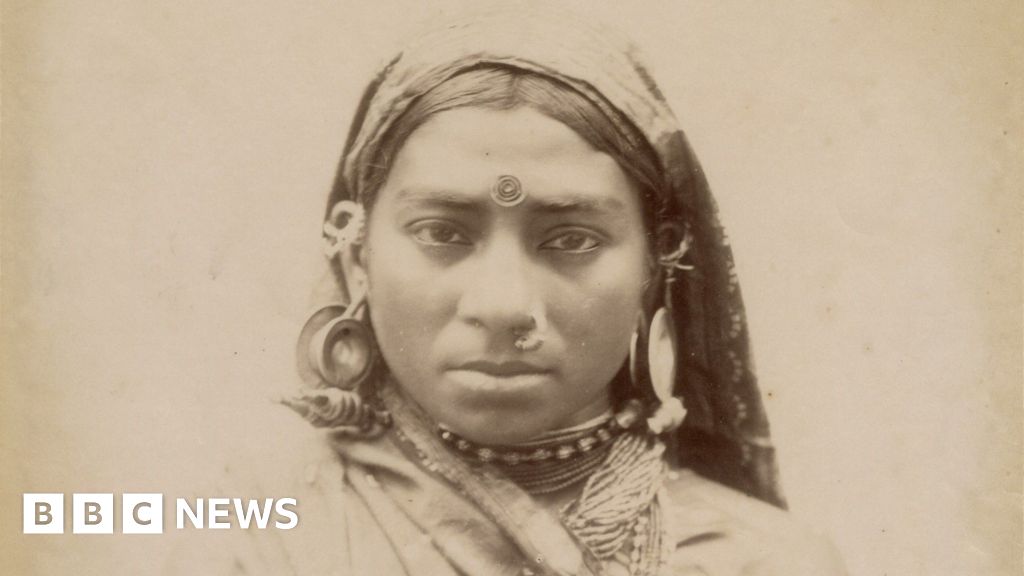
The British Empire’s ambition to understand and control India in the 19th century extended beyond military and administrative strategies. A crucial, often overlooked, component of this effort was the systematic apply of photography to categorize and document the Indian population, creating a visual archive that served colonial objectives. This practice, and its lasting impact, is the focus of a recent exhibition exploring how the burgeoning art form was deployed to classify communities, fix identities, and render India’s complex social landscape legible to the colonial government.
The exhibition, titled “Typecasting: Photographing the Peoples of India, 1855-1920,” and organized by DAG, a Delhi-based art gallery, brings together nearly 200 rare photographs spanning 65 years. It maps a broad human geography, encompassing communities from the Lepcha and Bhutia in the northeast to the Afridis in the northwest, the Todas in the Nilgiris to Parsi and Gujarati elites in western India. Crucially, the exhibition also turns its attention to those relegated to the lower rungs of colonial society – dancing girls, agricultural laborers, barbers, and snake charmers – revealing a deliberate attempt to create a typology of Indian society.
The People of India: A Photographic Survey
At the heart of the exhibition are folios from “The People of India,” an ambitious eight-volume photographic survey published between 1868 and 1875. This monumental project, initiated under the direction of Lord Curzon, then Viceroy of India, aimed to provide the British administration with a comprehensive visual compendium for governance and control. Curzon believed a detailed photographic record was essential for effective administration of the vast and diverse Indian subcontinent. The survey wasn’t simply a record of faces; it was a deliberate attempt to categorize individuals by caste, occupation, religion, and tribal affiliation.
The project emerged in the wake of the 1857 Indian Rebellion, also known as the Sepoy Mutiny, a period of widespread uprising against British rule. Following the rebellion, the British felt a pressing need to better “understand” India and its people, and photography was seen as a powerful tool to achieve this. As historian Sudeshna Guha notes, the camera, marketed as neutral and objective, became one of colonialism’s most powerful bureaucratic tools. The photographs actively shaped perceptions of India’s diversity, translating fluid, lived realities into seemingly stable and knowable “types.”
Photographers and the Colonial Gaze
The exhibition showcases the work of numerous photographers who contributed to this visual documentation of India. Among them are Samuel Bourne, Lala Deen Dayal, John Burke, and the studio Shepherd & Robertson. These practitioners helped define the visual language of the time, employing techniques like albumen and silver-gelatin prints to capture their subjects.
Edward Taurines, one of the first European photographers to establish a studio in Bombay (now Mumbai), specialized in photographs showcasing the city for a Western audience. His work, like that of others, contributed to the construction of a particular image of India for consumption in the West. The photographers often worked in challenging conditions, lugging heavy equipment across diverse terrains, from bustling towns to remote mountain passes.
Beyond Documentation: Shaping Identity
The exhibition doesn’t present these photographs as neutral records. Instead, it critically examines how the images actively shaped perceptions of Indian society. The photographs didn’t merely document diversity; they created categories and reinforced existing colonial hierarchies. The captions accompanying the images often judged character, behavior, and social worth, reflecting the biases of the colonial observers.
The scale of “The People of India” was immense, involving a vast network of photographers and assistants. The eight volumes contained hundreds of photographs, meticulously documenting diverse communities. The project’s ambition reflects the British Empire’s desire for comprehensive knowledge and control over its Indian colony. However, the exhibition prompts viewers to question what was left out of this visual record and how the colonial gaze influenced the representation of Indian society.
The Legacy of Colonial Photography
The impact of this colonial-era photography extends far beyond the historical record. The images created during this period continue to shape perceptions of India and its people. The exhibition encourages visitors to critically examine these images and consider their historical context. It raises significant questions about the relationship between photography, power, and the construction of identity.
The exhibition also highlights the complexities of ethnographic photography and its potential for both documentation and manipulation. While the photographs provide valuable insights into the lives of people in 19th-century India, they also reflect the biases and assumptions of the colonial photographers. Understanding this context is crucial for interpreting these images and appreciating their historical significance.
A Critical Examination
“Typecasting: Photographing the Peoples of India 1855-1920” isn’t simply a display of historical photographs; it’s a critical examination of a pivotal moment in the history of both photography and colonialism. It challenges viewers to question the objectivity of the photographic image and to consider the power dynamics inherent in the act of representation. The exhibition, curated by historian Sudeshna Guha, offers a nuanced and thought-provoking perspective on the complex relationship between photography, colonialism, and the construction of identity in India.
The exhibition, currently on display at DAG in Delhi, provides a valuable opportunity to engage with this important history and to reflect on the lasting legacy of colonial photography. It serves as a reminder of the need to critically examine visual representations of culture and to challenge dominant narratives. The exhibition encourages a deeper understanding of how the past continues to shape the present.
The next confirmed event related to this exhibition is a series of public lectures and panel discussions scheduled to take place at DAG throughout March 2026, focusing on the ethical considerations of ethnographic photography and its impact on contemporary art. For more information about the exhibition and related events, please visit the DAG website at https://www.dagworld.com/. We encourage you to share your thoughts on this important exhibition in the comments below.
Keep reading