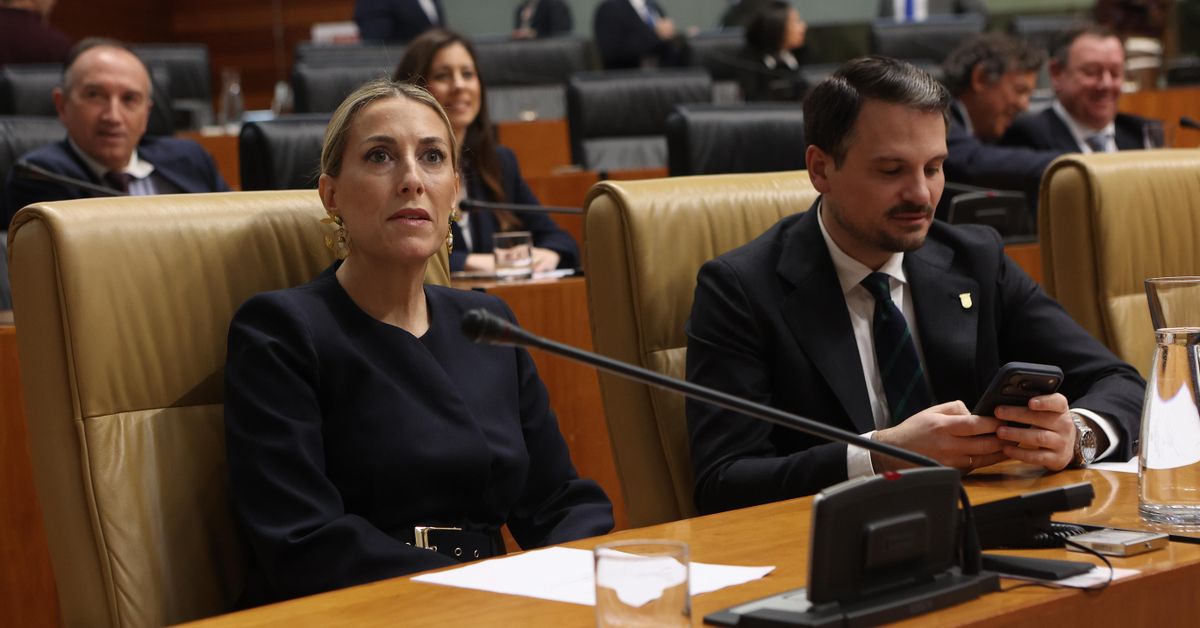
The coalition agreement between Spain’s People’s Party (PP) and Vox in Extremadura has ignited national debate over immigration policy, social welfare access, and the potential blueprint for future governance at the national level. Signed in July 2024 to enable María Guardiola’s presidency of the regional government, the pact includes provisions that critics argue lay the groundwork for a two-tier system of citizenship rights based on birthplace and length of residency. Although framed by its architects as a measure to ensure fairness in social benefit distribution, the agreement has drawn sharp rebukes from civil society organizations, opposition parties, and regional leaders who contend it violates constitutional principles of equality and exceeds the jurisdictional authority of Spain’s autonomous communities.
At the heart of the controversy is the pact’s endorsement of a “national priority” principle in access to social aids, a concept that would prioritize individuals born in Spain over legal residents who are foreign nationals. Although the PP and Vox have maintained that the measure must comply with existing legislation and avoid overt discrimination, legal experts note that achieving such differentiation would require amendments to national organic laws—powers reserved exclusively for the Spanish Cortes Generales, not regional administrations. The Extremadura agreement explicitly calls for inspiring future reforms in line with this principle, positioning the region as a testing ground for policies that could be scaled nationally should the PP and Vox secure a majority in a future general election.
Independent verification confirms that immigrants constitute only 4.1% of Extremadura’s population, the lowest proportion among Spain’s 17 autonomous communities, according to data from the National Statistics Institute (INE) published in 2024. This demographic reality contradicts frequent claims by PP leader Alberto Núñez Feijóo and Vox leader Santiago Abascal that immigration poses a disproportionate burden on public services in regions like Extremadura. Instead, the region faces significant challenges related to depopulation, having lost approximately 10% of its population since the early 1970s, with 86% of its municipalities now recording fewer inhabitants than they did five decades ago. Youth outmigration remains acute, with 36% of individuals born in Extremadura residing in other autonomous communities as of 2024, a trend driven largely by limited employment opportunities rather than immigration pressures.
The pact’s social policy provisions have been challenged on both legal and ethical grounds. Isabel Díaz Ayuso, President of the Community of Madrid and a fellow PP member, publicly stated that the agreement “makes no sense either legally or politically,” arguing that excluding long-term residents who contribute through taxes and labor from accessing public services such as healthcare undermines social cohesion and contravenes principles of contributory justice. Her remarks, reported by elDiario.es in April 2024, underscored growing unease within the PP about the ideological concessions made to secure Vox’s support in regional governments.
Legal analysts emphasize that while autonomous communities can administer social services within frameworks set by national law, they lack the authority to unilaterally establish eligibility criteria that discriminate based on nationality or birthplace. The Spanish Constitution guarantees equality before the law and prohibits discrimination on grounds of birth, race, religion, or national origin. Any attempt to create a tiered system of social rights would likely face immediate legal challenges before the Constitutional Court, particularly if implemented in a manner that denies access to healthcare, education, or housing assistance to lawful residents based solely on their foreign birth.
Beyond immigration, the Extremadura pact includes commitments to oppose European Union environmental regulations, reject the EU-Mercosur trade agreement, and resist what it describes as “impositions from Brussels” on agriculture and livestock farming. These positions align with broader eurosceptic tendencies within certain factions of the PP and reflect Vox’s longstanding opposition to supranational governance. Critics argue that such stances risk isolating Extremadura from EU funding programs and agricultural subsidies, potentially exacerbating the region’s economic vulnerabilities.
The agreement likewise sparked controversy for its silence on gender-based violence, a notable omission given María Guardiola’s prior public statements condemning denial of machismo-related violence. In February 2024, Guardiola declared that her feminism was “the feminism that Vox defends,” a remark that drew widespread criticism from women’s rights groups and prompted accusations of ideological capitulation to secure the coalition. Subsequent versions of the pact removed references to gender equality initiatives previously included in PP-only governance plans, a shift interpreted by observers as a concession to Vox’s socially conservative agenda.
As of April 2025, the implementation of the pact’s social welfare provisions remains limited, pending clarification on how the “national priority” principle will be operationalized without violating national law. The PP has pointed to a proposed points-based system reportedly discussed with El Mundo, under which access to aids would be weighted by duration of registered residency rather than birthplace—a mechanism that, while less overtly discriminatory, could still disproportionately affect recent migrants. However, no official decree or regulatory framework has been published by the Extremaduran government detailing such a system, and the Junta de Extremadura has not confirmed its adoption.
The broader implications of the Extremadura agreement continue to be debated in national political circles. Observers note that similar PP-Vox coalitions have emerged in Castilla y León and are being explored in Andalusia, suggesting a pattern of regional experimentation with policies that could inform a future national platform. Whether these agreements represent a transient tactical alignment or a strategic shift toward more restrictive immigration and social policies remains uncertain, pending electoral outcomes and judicial review of any implemented measures.
For readers seeking official updates on the Extremadura coalition agreement and its implementation, the Official Gazette of the Junta de Extremadura (Boletín Oficial de Extremadura) publishes all decrees and resolutions adopted by the regional government. The Spanish Ministry of Inclusion, Social Security and Migration provides authoritative data on immigration statistics and social benefit distribution, while the Constitutional Court’s website offers access to rulings on challenges to regional legislation affecting fundamental rights.
What are your thoughts on the balance between regional autonomy and national equality principles in Spain’s immigration and social welfare policies? Share your perspective in the comments below, and consider sharing this article to support inform ongoing public discourse.
Keep reading
- Barack Obama’s 2026 Summer Reading List: Every Book Pick Revealed
- How This Small Haberdashery Grew Its Social Media Following
- Spain Deploys Military to Ceuta After Massive Migrant Surge From Morocco (archyworldys.com)
- Europe Wildfires: Latest Updates and Impact Across France, Greece, and Spain (archynewsy.com)