
In the landscape of contemporary cinema, few performers possess the magnetic gravity of Dustin Hoffman. His latest outing, The Revisionist, serves as a poignant reminder of that rare, transformative power. Directed by Alex Vlack in his narrative feature debut, the film attempts to navigate the treacherous waters of family dysfunction, creative ego and the blurred lines between personal narrative and objective truth. While the film occasionally struggles to maintain its narrative momentum, Hoffman’s performance provides a vital, energetic anchor that prevents the drama from drifting into overly familiar territory.
The film centers on David, a celebrated writer whose reputation as a “national treasure” is frequently eclipsed by his status as a “royal pain.” The central tension arises from his son, Jacob—portrayed by two-time Tony nominee Tom Sturridge—who has spent years attempting to document his father’s life. For Jacob, a biography represents both a professional breakthrough and an opportunity to untangle the complexities of a childhood marked by his father’s elusive, often cold nature. The stakes are raised by his marriage to Elise, played by Alison Brie, who finds herself caught in the crossfire of this generational impasse.
The Dynamics of Creative Conflict
The narrative complexity of The Revisionist deepens with the arrival of John, an old friend of Jacob’s brought into the fold by Elise. Played with compelling intensity by André Holland, known for his work in Moonlight, John represents everything Jacob feels he is not: successful, published in the New Yorker, and seemingly capable of unlocking the enigmatic David. This introduction of an “outsider” serves as a catalyst for the film’s central conflict, shifting the focus from a simple father-son dynamic to a web of professional jealousy and underlying subterfuge.
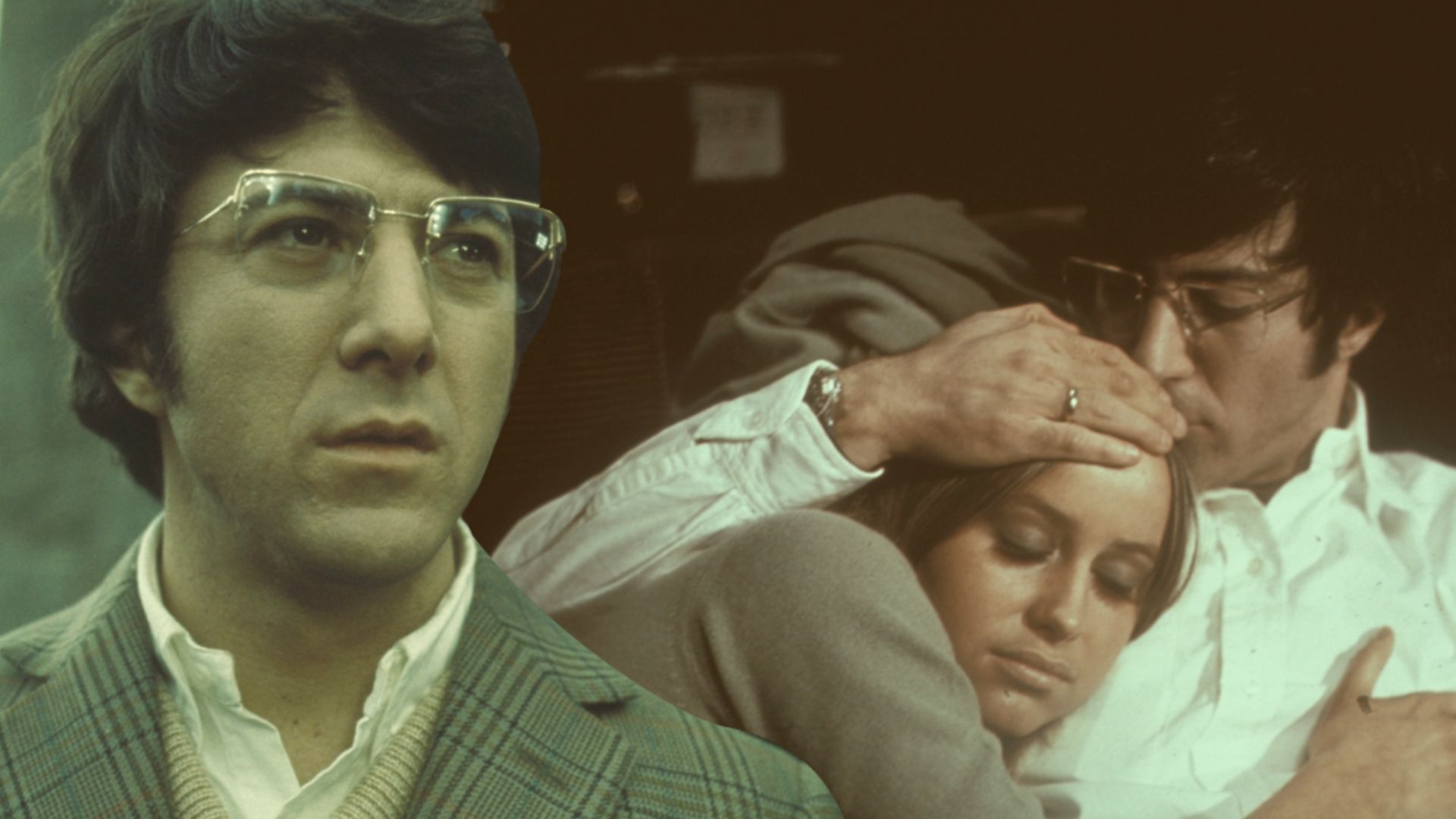
:max_bytes(150000):strip_icc():focal(999x0:1001x2)/dustin-hoffman-kids-jacob-4-8c1b7f906feb4285800b873b259681c0.jpg "Dustin Hoffman Revives Jacob")
Vlack’s script leans heavily into the idea that everyone in this orbit is operating with hidden agendas. As Jacob struggles to find his footing in the shadow of his father’s literary legacy, John’s presence acts as both a mirror and a rival. While Sturridge delivers a convincingly sullen performance, effectively capturing the insecurity of a man trying to write advertising copy while longing for literary validation, It’s the interaction between him and Holland that underscores the film’s exploration of ambition. However, the film’s pacing falters when it shifts focus toward the female perspective, particularly with Elise. Despite the potential for her character to serve as the narrative’s moral center, she is often relegated to a reactive role, struggling to find purpose within the men’s circular power dynamics.
Hoffman’s Compelling Return to Form
The most exhilarating moments of The Revisionist invariably arrive when Dustin Hoffman occupies the screen. His portrayal of David is unapologetically raw; he captures the character’s capriciousness and cruelty with a playfulness that makes him impossible to ignore. Whether he is shouting, swearing, or simply dominating the room with a weary, intellectual authority, Hoffman breathes life into the production. It is a masterclass in scene-stealing that highlights why he remains one of the most enduring figures in American acting.
For audiences, the appeal lies in the tension between David’s undeniable charisma and his capacity for dismissive behavior. The film succeeds most when it forces the viewer to confront why we are drawn to such tough, larger-than-life personalities. Even as Jacob suffers under the weight of his father’s neglect, the audience—much like the other characters in the film—is lured back to David, captivated by the very magnetism that causes so much internal strife. It is this specific dynamic that prevents the movie from becoming just another weary drama about family trauma.
Reflections on Narrative Ambition
Alex Vlack’s directorial debut is an ambitious project that attempts to synthesize the personal with the professional. While the film’s structure occasionally strains under the weight of its own intellectual aspirations, the core performances offer a compelling look at the toll of creative obsession. The film invites viewers to consider the cost of “revision”—not just in a literary sense, but in how we edit our own memories to make sense of the people who shaped us.
The Revisionist is a testament to the fact that even in a film with narrative unevenness, a singular, powerful performance can elevate the material. Hoffman’s ability to find the humanity in a character who is, by all accounts, a difficult man, provides the emotional resonance that the film occasionally lacks in its quieter, more contemplative moments. For those interested in character-driven dramas that explore the intricacies of legacy and artistic identity, this film provides a thought-provoking, if imperfect, journey.
As the film continues its distribution and reaches wider audiences, viewers are encouraged to look past the occasional narrative drag and focus on the nuanced work delivered by the cast. Whether you are a fan of character studies or simply a devotee of Hoffman’s storied career, The Revisionist offers plenty to discuss. We invite our readers to share their thoughts on the film’s portrayal of creative ego and family dynamics in the comments section below.