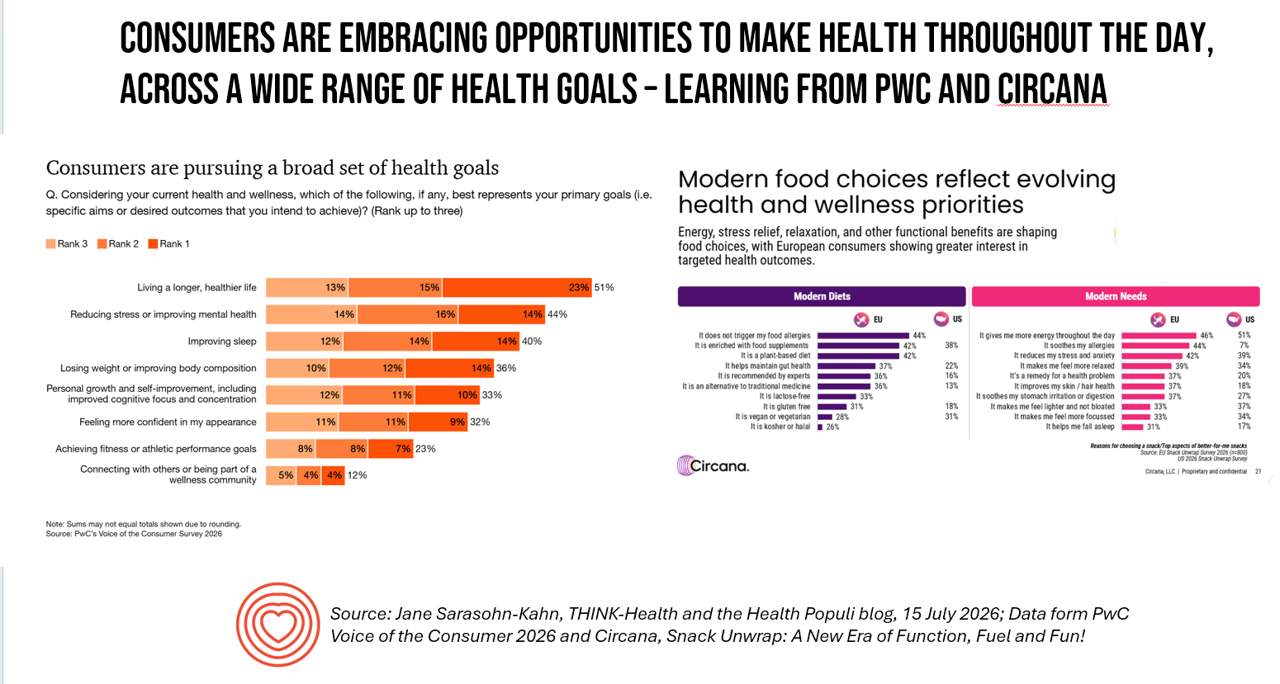
This shift toward “everyday health” sees individuals allocating household budgets toward retail health solutions, functional nutrition, and self-care tools to manage physical and mental well-being in real-time.
The PwC Voice of the Consumer 2026 survey indicates that health is no longer confined to doctor’s offices or hospitals. Instead, consumers are seeking cognitive support, body composition improvements, and community-based wellness. This trend reflects a broader transition where patients act as “health consumers,” bearing more financial risk and utilizing digital tools to manage their own care pathways.
Spending patterns are shifting toward preventative and functional solutions. While vitamins, minerals, and supplements (VMS) remain the top retail health expenditure, PwC reports a growing consumer appetite for health insights, diagnostics, and behavior-change coaching. These categories represent a move toward data-driven self-care and proactive health management.
The Impact of GLP-1 Medications on Consumer Agency
The rise of GLP-1 receptor agonists—used for diabetes and chronic weight management—is fundamentally altering how consumers approach self-care. According to PwC, the adoption of these medicines among self-pay and proactive consumers has increased individual confidence and agency in managing their own health outcomes.
The influence of GLP-1s extends beyond clinical weight loss. PwC data suggests these medications are reshaping broader lifestyle behaviors, including how consumers reconsider their time spent on travel and socializing. This shift indicates that medical interventions are now triggering holistic changes in daily living and personal identity.
Functional Nutrition and the ‘Benefit’ of Snacking
Retail data from Circana complements the PwC findings by highlighting how health goals infiltrate the grocery aisle. In its “Snack Unwrap” report, Circana identifies a trend where food choices in the U.S., Europe, and Australia are driven by functional needs such as stress relief, relaxation, and energy boosts.
For consumers aged 45 and under, snacking occurs up to three times a day, making it a primary vehicle for health delivery. Sally Lyons Wyatt, Global EVP and Chief Advisor for CPG and Foodservice at Circana, states that snacking now performs four simultaneous roles: addressing hunger, cravings, enjoyment, and nutrition. Both Wyatt and Ananda Roy, Circana’s head of thought leadership in Europe, emphasize that modern snacks must deliver a specific functional benefit to attract today’s consumer.
In the U.S. specifically, Circana reports that the primary motivations for these functional food choices are supporting energy levels, followed by reducing stress and anxiety, achieving a feeling of being “lighter” or less bloated, and improving mental focus.
Omni-Channel Discovery and the Role of AI
As health care becomes decentralized, the way consumers discover products and services has fragmented. Circana notes that the “front door” to health discovery is no longer a single point of entry, such as a physician’s recommendation or a pharmacy visit. Instead, discovery is happening across an omni-channel portfolio.
Consumers are now utilizing AI-powered tools and social platforms—including TikTok, Instagram, and YouTube—alongside traditional e-commerce and physical stores to find health solutions. This fragmentation of media and attention requires health and wellness providers to adopt a diversified digital strategy to reach consumers where they spend their time.
This evolution mirrors the concept of “HealthConsuming,” a term describing the convergence of patients as medical bill payers, self-carers using search engines to vet prescriptions and providers, and individuals who are simultaneously consumers of care and burdened by medical costs.
Industry analysts continue to monitor how these retail trends intersect with clinical outcomes as more consumers move toward out-of-pocket spending for wellness experiences and social growth touchpoints. Further data on the 2026 consumer outlook is expected as PwC and Circana update their respective retail and consumer sentiment trackers.
Share your thoughts on the rise of “everyday health” in the comments below or share this report with your network.
Related reading